
DTC Ecommerce Trends for 2026: 9 Shifts Shaping Direct-to-Consumer Brands

Summarize this article with AI


AI shopping assistants, TikTok Shop, pricier ads, bundles, quizzes, retail and the end of duty-free parcels: the 9 ecommerce trends DTC brands are dealing with in 2026, with sources.
DTC (direct-to-consumer) brands spent the 2010s growing on cheap Facebook ads and a single Shopify store. In 2026 that playbook is gone. Shoppers now find products through AI chatbots and TikTok videos, ads cost more each year, and the US and the EU have both ended duty-free small parcels.
This guide covers the 9 ecommerce trends that matter most for DTC brands this year. Each one comes with the data behind it and a first move you can make on Shopify. Unlike most trend lists, every figure links to its source.
What is a DTC brand (and a DNVB)?
A DTC brand sells its own products straight to customers, mostly through its own website, instead of relying on retailers or marketplaces. It owns the customer relationship: the data, the email list and the margin.
A DNVB (digitally native vertical brand) is a DTC brand born online that controls its whole chain, from product design to delivery. Warby Parker, Glossier and Allbirds are textbook examples. Every DNVB is a DTC brand, but a manufacturer that adds an online store is DTC without being a DNVB.
The 9 DTC ecommerce trends at a glance
Trend | What changed | First move |
|---|---|---|
1. AI shopping assistants | ChatGPT, Gemini and Copilot now send shoppers, and some can check out | Clean product data and turn on Shopify Agentic Storefronts |
2. Social commerce | TikTok Shop US sales reached $15.1B in 2025 | Post short product videos every week, with creators |
3. Pricier paid acquisition | Meta charges more per ad and auctions are crowded | Track contribution margin per order, not just ROAS |
4. Average order value | Each order has to pay back a costlier click | Bundles, volume discounts and post-purchase upsells |
5. Zero-party data | Shoppers expect personalization; tracking is weaker | A product quiz or a build-your-own box |
6. Omnichannel | Digital-first brands now sell in Sephora, Target or Walmart | Test one retail or wholesale partner |
7. Subscriptions and retention | Subscriber acquisition is slowing | Offer pause and skip before cancel |
8. Cross-border costs | US and EU end duty-free small parcels | Recalculate landed cost per market |
9. Mobile checkout | 56.4% of US holiday sales were made on a phone | Speed up mobile pages and use accelerated checkout |
1. AI shopping assistants become a sales channel
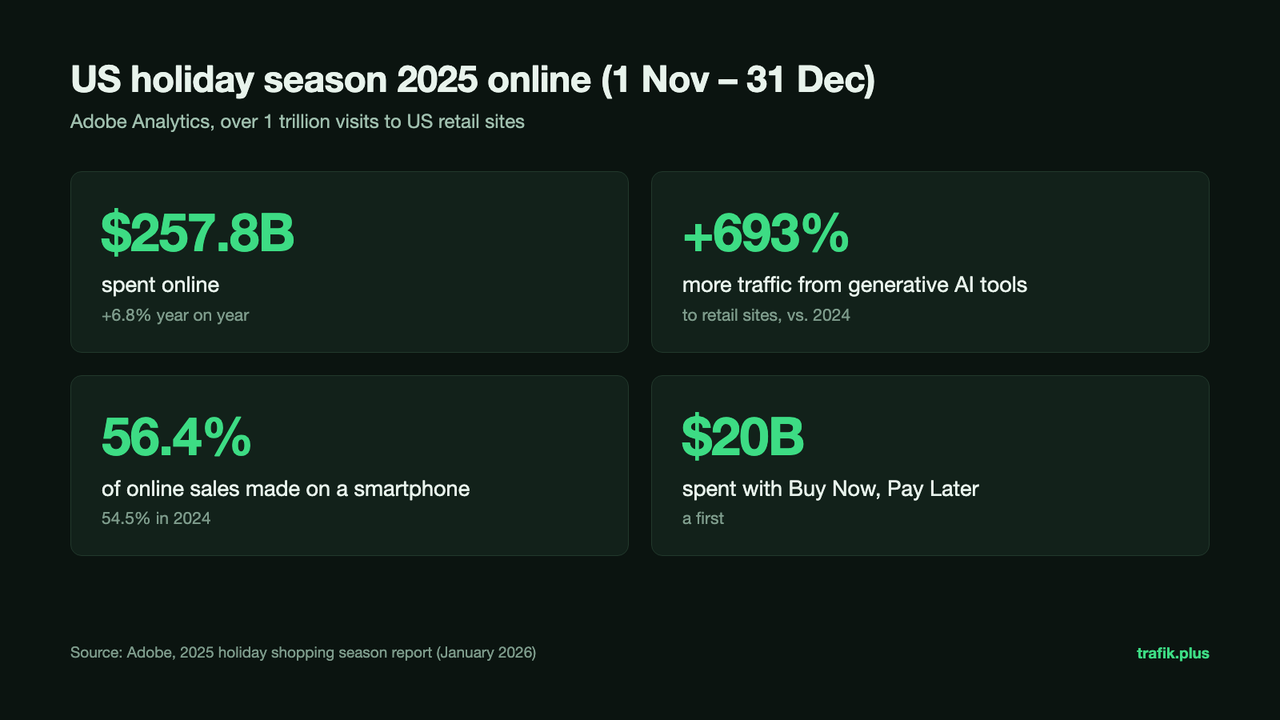
The biggest change of 2026 is where product discovery starts. During the 2025 US holiday season, Adobe measured(opens in a new tab) a 693% jump in traffic from generative AI tools to retail sites. That is still a small share of total visits, but it is the fastest-growing source by far.
The big platforms are now turning that traffic into checkouts:
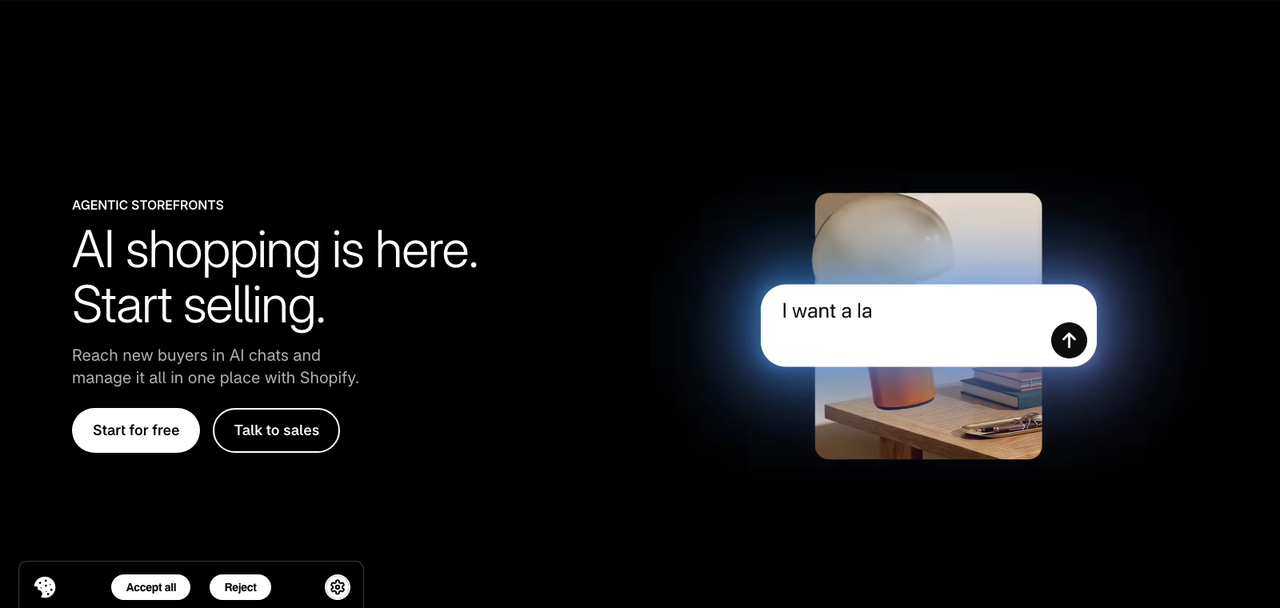
- Shopify Agentic Storefronts put a merchant’s catalog inside ChatGPT, Microsoft Copilot and other AI assistants. Products sync through Shopify Catalog, and the order finishes on the merchant’s own checkout. According to Modern Retail(opens in a new tab), the ChatGPT launch went live in March 2026 and is switched on by default for eligible stores.
- Google’s Universal Commerce Protocol (UCP), unveiled at NRF in January 2026 with Shopify, Etsy, Wayfair, Target and Walmart, lets shoppers buy directly in AI Mode and Gemini(opens in a new tab). The specification is public at ucp.dev(opens in a new tab).
- OpenAI scaled back its own Instant Checkout and now leans on merchants’ checkouts instead, which keeps the order, the customer and the data with the brand.
What to do
An AI assistant reads your product data, not your banner. Write product titles that say what the product is, fill in every variant attribute (size, material, color), and answer common questions on the product page itself. Then check the Agentic Storefronts settings in your Shopify admin to see which channels are on.
2. Social commerce grows up
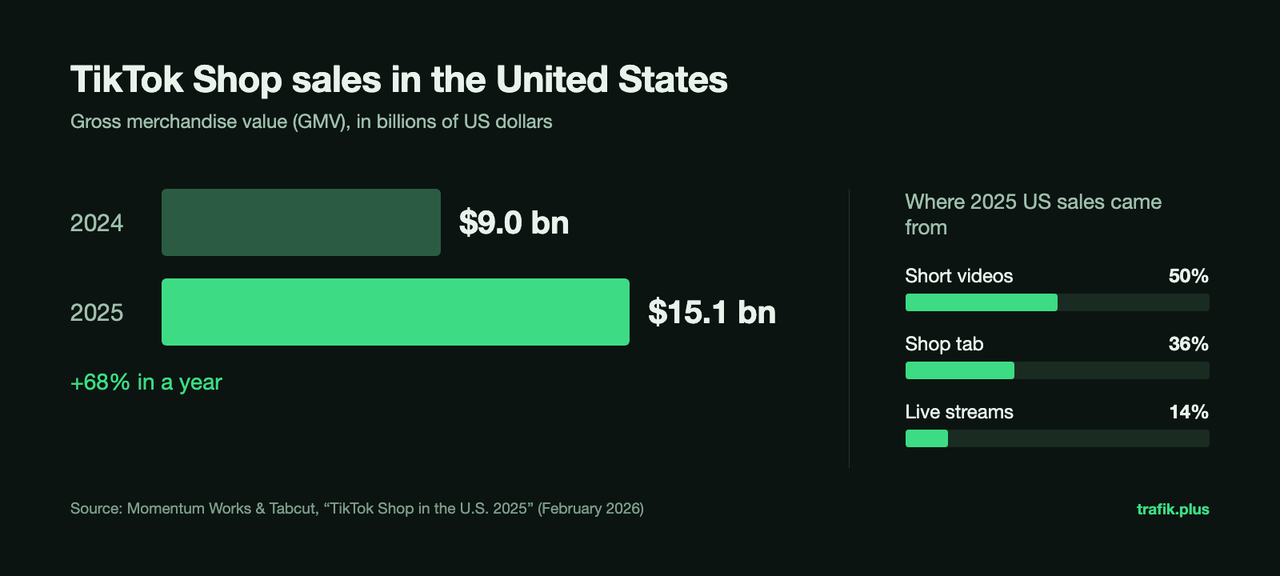
TikTok Shop is no longer an experiment. Its US sales reached $15.1 billion in 2025, up 68% in a year, according to Momentum Works and Tabcut(opens in a new tab). Beauty and personal care is its top category. Half of those sales came from short videos, and live shopping grew from 10% to 14% of the total.
Established DTC brands followed. Glossier, which built its name on Instagram, joined TikTok Shop in July 2025(opens in a new tab). The format favors people over polished ads: founders who explain the product, employees who show how it is made, and creators paid on commission.
What to do
Treat short video as your new product page. Film the product in use, post several times a week, and work with a few creators on affiliate commission before paying for reach. To see which videos and ads are working for your competitors, an ad spy tool like Trendtrack saves hours of scrolling.
3. Paid acquisition keeps getting pricier
Meta is still the main growth engine for most DTC brands, and it keeps getting more expensive. In its Q2 2025 results(opens in a new tab), Meta reported 11% more ad impressions and a 9% higher average price per ad. More brands bidding for the same feeds pushes costs up every year.
The fallout is a shift from "growth at all costs" to profit first. Brands now judge ads on contribution margin (what is left after product cost, shipping, fees and ad spend), not on ROAS alone.
What to do
Work out your contribution margin per order and the maximum you can pay to acquire a customer. If an ad only works at a loss, the fix is usually in the basket, not in the ad. That leads to the next trend.
4. Average order value becomes the main lever
When every click costs more, the cheapest growth is selling more to the shopper who is already buying. That is why so many brands are working on average order value (AOV) in 2026:
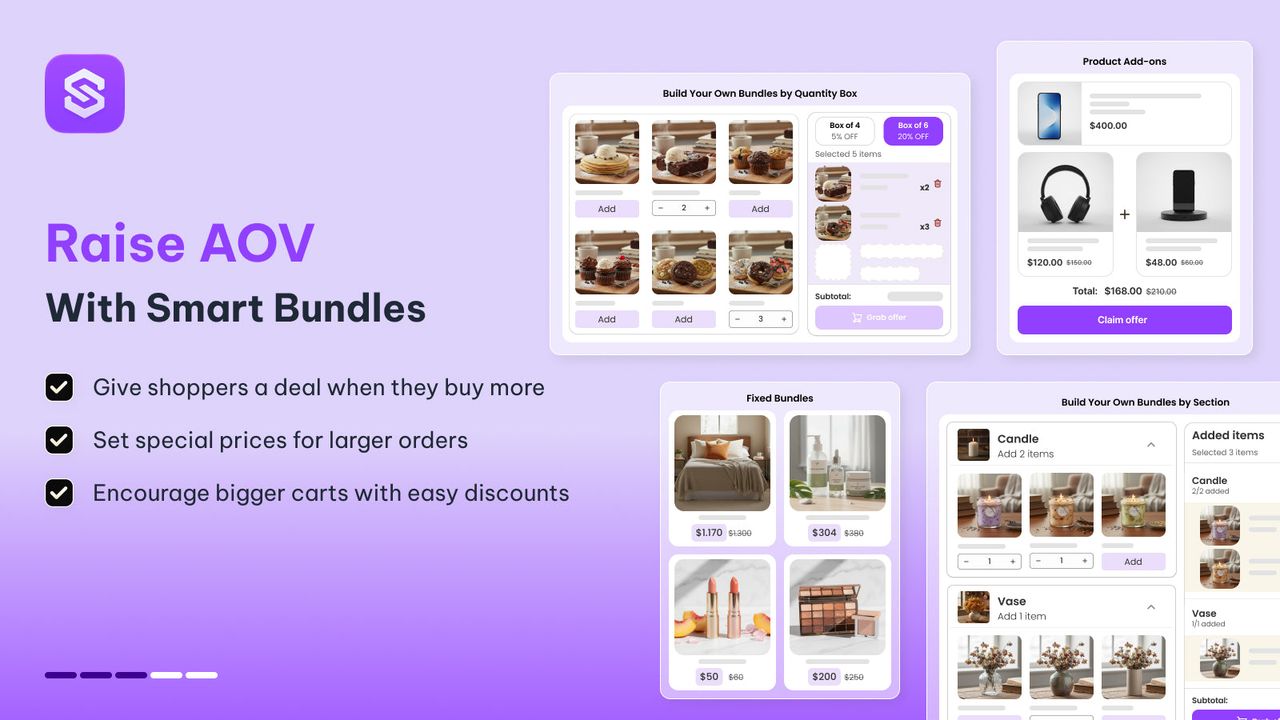
- Product bundles: sets of products sold together at a better price.
- Volume discounts: "buy 2, save 10%" tiers that reward bigger baskets.
- Upsells and cross-sells in the cart, and post-purchase upsells right after payment, when the shopper has already said yes.
- A free shipping threshold set just above your current AOV.
Shoppers are also spreading payments. Adobe counted $20 billion of Buy Now, Pay Later spending over the 2025 holiday season, a first. Larger baskets feel easier when they are split in four.
What to do
Pick your best seller and build one bundle and one volume tier around it. On Shopify, Snap Bundle(opens in a new tab) handles bundles, volume discounts and upsells in one app. Our comparison of the best volume discount apps covers the alternatives.
5. Zero-party data and personalization
With cookies and ad tracking weaker every year, the most reliable data is the data shoppers give you on purpose: their hair type, their goals, their size. That is zero-party data.
Shoppers expect something in return. McKinsey found(opens in a new tab) that 71% of consumers expect companies to personalize their interactions, and 76% get frustrated when they don’t.
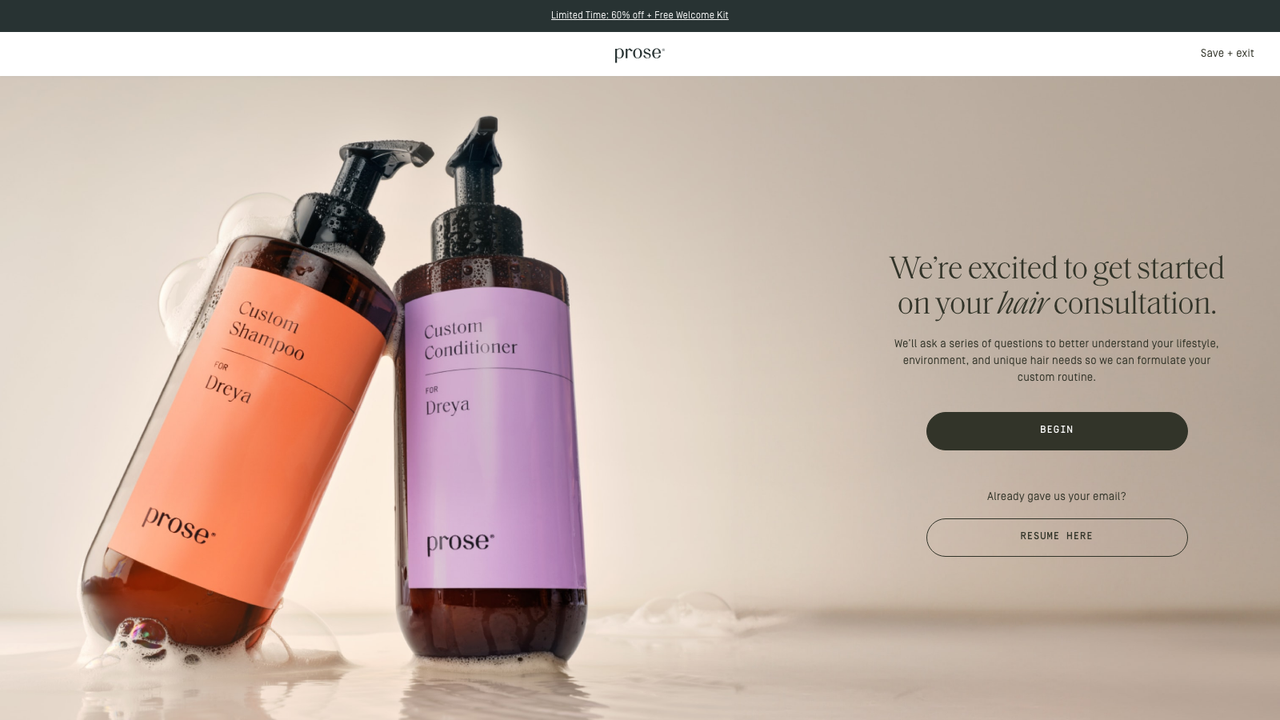
Prose shows how far this can go: every order starts with a hair consultation, and the answers decide the formula.
What to do
Start with a short product quiz (5 to 7 questions) that ends on a recommendation and an email opt-in. A build-your-own box also works: the shopper tells you what they want by picking it, and the IKEA effect makes them value a box they built themselves.
6. DTC brands go omnichannel
"Online only" was once part of the DTC identity. Today many digitally native brands use retail to reach shoppers that ads can’t. Glossier signed its first wholesale deal with Sephora(opens in a new tab) in 2023. Olipop grew past $400 million in revenue in 2024(opens in a new tab) while selling through Walmart, Target and Whole Foods.
Retail does not replace the website. It works as advertising that pays for itself, and the website remains the place for the full range, bundles and subscriptions.
What to do
Test one partner before signing a national deal: a regional chain, a concept store or a marketplace. Keep your exclusive bundles and best prices on your own store so customers still have a reason to come back to you.
7. Subscriptions shift from acquisition to retention
Subscriptions still work for consumables, but new subscribers are harder to win. Recurly’s data, reported by Advanced Television(opens in a new tab), shows the average acquisition rate falling from 4.1% in 2021 to 2.8%. Retention is where the gains are now: 25% of subscribers offered a pause took it instead of cancelling, and returning subscribers made up 20% of new sign-ups.
What to do
Before the cancel button, offer to pause, skip a delivery or change the frequency. Let subscribers swap products easily. A subscriber who pauses for a month is worth far more than one who leaves.
8. Cross-border selling gets more expensive
For years, a small parcel could cross borders without duties. That is ending on both sides of the Atlantic:
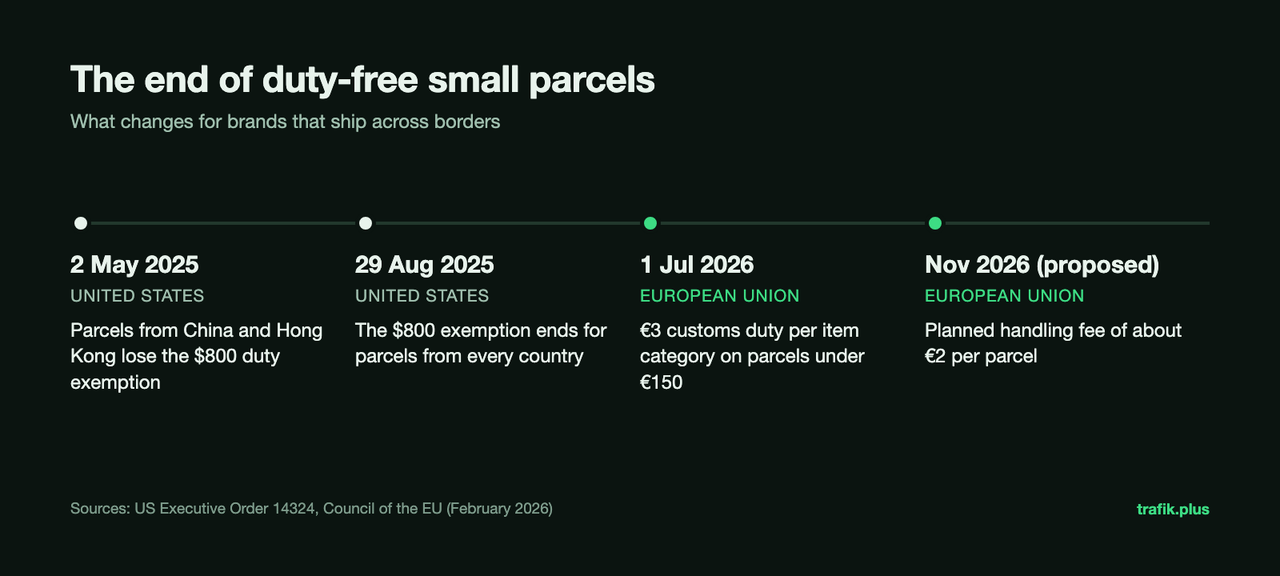
- United States: the $800 de minimis exemption ended for parcels from China and Hong Kong on May 2, 2025, then for every country on August 29, 2025.
- European Union: from July 1, 2026, parcels under €150 pay a flat €3 customs duty per item category, according to Deloitte(opens in a new tab). A handling fee of about €2 per parcel is also being discussed.
What to do
Recalculate your landed cost (product, shipping, duties and fees) for each market you ship to. Show duties at checkout so customers are not surprised at the door, and consider local stock in your largest market if volumes justify it.
9. Mobile-first, faster checkout
Mobile is now the default. In the 2025 US holiday season, 56.4% of online sales were made on a smartphone, up from 54.5% a year earlier, according to Adobe(opens in a new tab). Mobile shoppers drop off quickly when a page is slow or a form is long.
Shopify itself keeps growing fast: in its Q2 2026 results(opens in a new tab), GMV reached $115.6 billion, with growth above 30% for the fifth quarter in a row. Accelerated checkouts like Shop Pay fill in the address and card in one tap, which matters most on a small screen.
What to do
Test your store on a real phone, on 4G. Remove apps you don’t use, compress images and follow our Shopify speed optimization guide. Keep Shop Pay and Apple Pay at the top of the checkout.
How to prioritize these trends
You don’t need all nine at once. A simple order for most Shopify brands:
- Fix the margin first (trends 3 and 4). Know your contribution margin, then raise AOV with bundles and upsells. Every other channel gets cheaper when each order is worth more.
- Get discoverable (trends 1 and 2). Clean product data for AI assistants, and a steady flow of short videos.
- Build loyalty (trends 5 and 7). A quiz to collect zero-party data, and a subscription that people pause rather than cancel.
- Expand carefully (trends 6 and 8). Retail and new countries, once the numbers per order are solid.
If you are getting ready for the busiest weeks of the year, our Black Friday checklist for Shopify turns these ideas into a to-do list.
FAQ
What are the biggest ecommerce trends in 2026?
The biggest shifts are AI shopping assistants that can send shoppers or check them out, the growth of social commerce on TikTok Shop, rising ad costs that push brands toward higher average order value, zero-party data, omnichannel retail, subscription retention, new duties on small parcels and mobile-first checkout.
What does DTC mean?
DTC stands for direct-to-consumer. A DTC brand sells its own products directly to customers, usually through its own online store, instead of going through retailers or marketplaces.
What is the difference between DTC and DNVB?
A DNVB (digitally native vertical brand) is a DTC brand that was born online and controls its whole chain, from product design to delivery. All DNVBs are DTC brands, but a traditional manufacturer selling online is DTC without being a DNVB.
Is DTC dead in 2026?
No, but the model has changed. Cheap paid acquisition is over, so successful DTC brands now combine their own store with TikTok Shop, AI assistants and sometimes retail, and focus on margin per order and retention.
How can a small Shopify brand act on these trends?
Start with average order value: add a bundle and a volume discount to your best seller, then add a post-purchase upsell. Then clean up product titles and attributes so AI assistants can understand your catalog, and post short product videos every week.

Keep reading

Shopify Search Optimization: Turn Searchers Into Buyers
How Shopify search works, how to set up the free Search & Discovery app, fix zero-result queries and decide when a paid search app is worth it.

SEO vs PPC: Organic vs Paid Search on a Fixed Budget
SEO vs PPC for a Shopify store with a fixed budget: cost per click vs cost per page, click share data, when to move spend, and a worked $3,000 budget split.

How to Reduce Cart Abandonment on Shopify: 12 On-Site Fixes
Seven in ten carts are abandoned. Here is how to measure your rate in Shopify, why shoppers leave, and 12 cart and checkout fixes that keep more of them.