The IKEA Effect: What It Is, Real Examples, and How to Use It to Sell More

Summarize this article with AI


The IKEA effect makes people value what they help create. Here is the research behind it, brands that use it, and how to turn it into build-your-own bundles.
Customers love what they build. That is the whole idea behind the IKEA effect, and it explains why a box a shopper fills themselves often outsells the same products sold as a ready-made set.
This guide covers what the IKEA effect is, the study that named it, the three reasons it works, brands that use it today, and seven ways to put it to work in your own store.
What is the IKEA effect?
The IKEA effect is a cognitive bias: people place a higher value on things they helped create. The product is the same; the effort they put into it is what makes it feel worth more.
The name comes from IKEA flat-pack furniture. A bookshelf you assembled yourself, slightly crooked, still feels better than an identical one delivered built.
The study behind the IKEA effect
In 2012 Michael Norton, Daniel Mochon and Dan Ariely published “The IKEA Effect: When Labor Leads to Love”(opens in a new tab) in the Journal of Consumer Psychology. Their experiments found:
- Storage boxes. Participants who assembled a plain IKEA storage box bid about 63% more for it than participants offered the same box already built.
- Origami. People who folded their own origami frogs and cranes valued their amateur work almost as highly as models made by experts. Other people saw it as close to worthless.
- Finishing matters. When participants built something and then had to take it apart, or did not finish it, the extra value disappeared.
That last finding is the one most marketers skip. The effect comes from effort that ends in success, not from effort alone.
Why the IKEA effect works: three drivers
Driver | What happens in the shopper’s head | What it looks like in a store |
|---|---|---|
Effort | “I worked on this, so it must be worth it.” | Picking each item for a box instead of clicking one button |
Competence | “I chose well.” | A finished box, a progress bar that fills, a total that drops |
Ownership | “This one is mine.” | A bundle that reflects their taste, sometimes with their name on it |
1. Effort justification
We do not like to think we wasted our time. After putting effort into something, we raise its value in our own minds so the effort feels worth it.
2. Competence
Finishing a task, even a small one, shows us we are capable. The product becomes proof of a good decision, and people defend their good decisions.
3. Ownership and identity
What we make reflects us. A box of products you picked says something about your taste, so it feels more like yours than a set someone else chose.
IKEA effect examples from real brands
Betty Crocker and the “add an egg” story
The most quoted IKEA effect example is the 1950s cake mix: sales supposedly picked up once the recipe asked bakers to add a fresh egg. The story is debated, and there were technical reasons for the change too. It lasts because the idea behind it rings true: a little effort made the cake feel like the baker’s own.
Nike By You
Nike lets shoppers design their own sneakers, choosing colours, materials and sometimes a personal text. The customised pair costs more than the stock version, and buyers happily pay it.
Sugarfina’s candy bento box
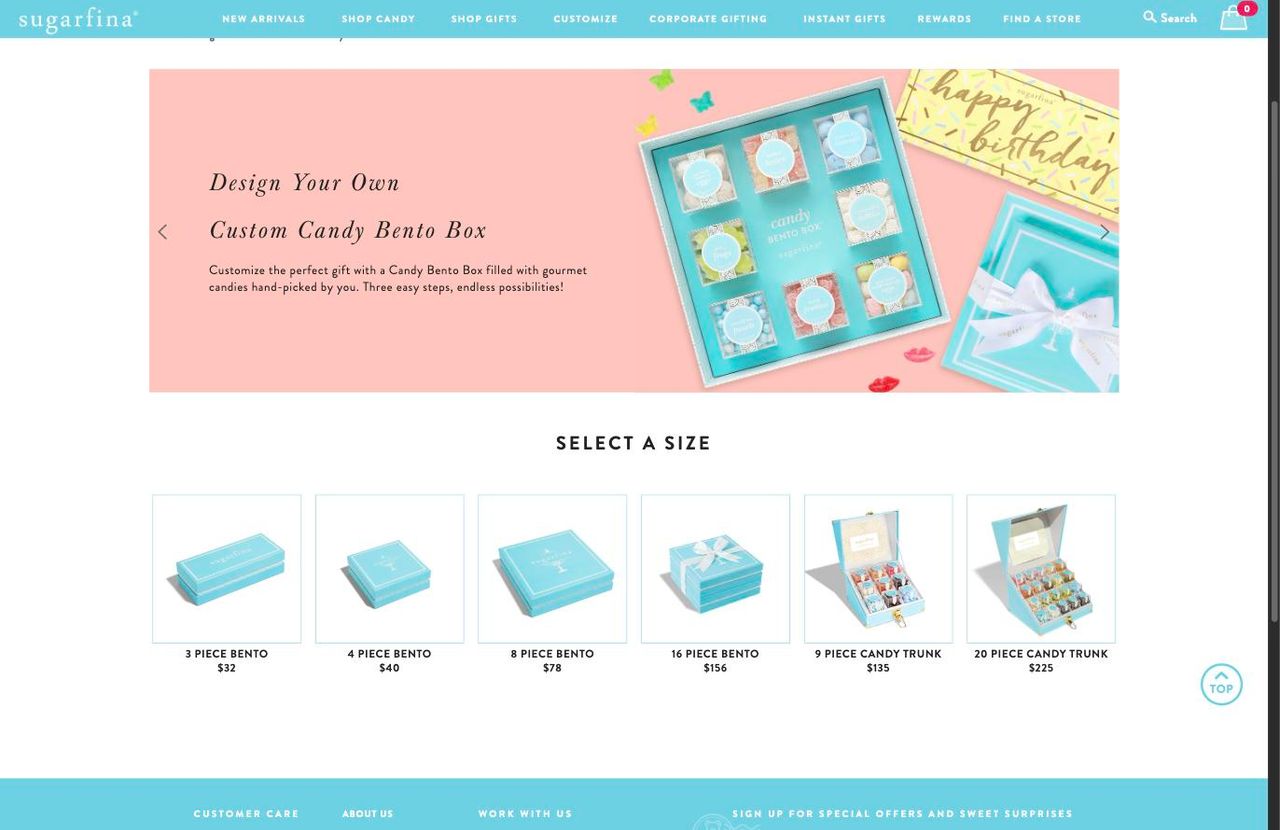
Sugarfina, the gourmet candy brand, built its stores and its website around a “Design Your Own Candy Bento Box”. Shoppers first pick a size, from a 3-piece box to a 20-piece trunk, then fill each slot with candy cubes. A fixed number of slots, a clear end point and a gift-ready result: a textbook build-your-own bundle.
Jeni’s Splendid Ice Creams
Jeni’s sells curated pint collections, but shoppers can also build their own order from the full flavour list, with a minimum of five pints. Each flavour card has a short tasting note and an add button.
Magic Spoon
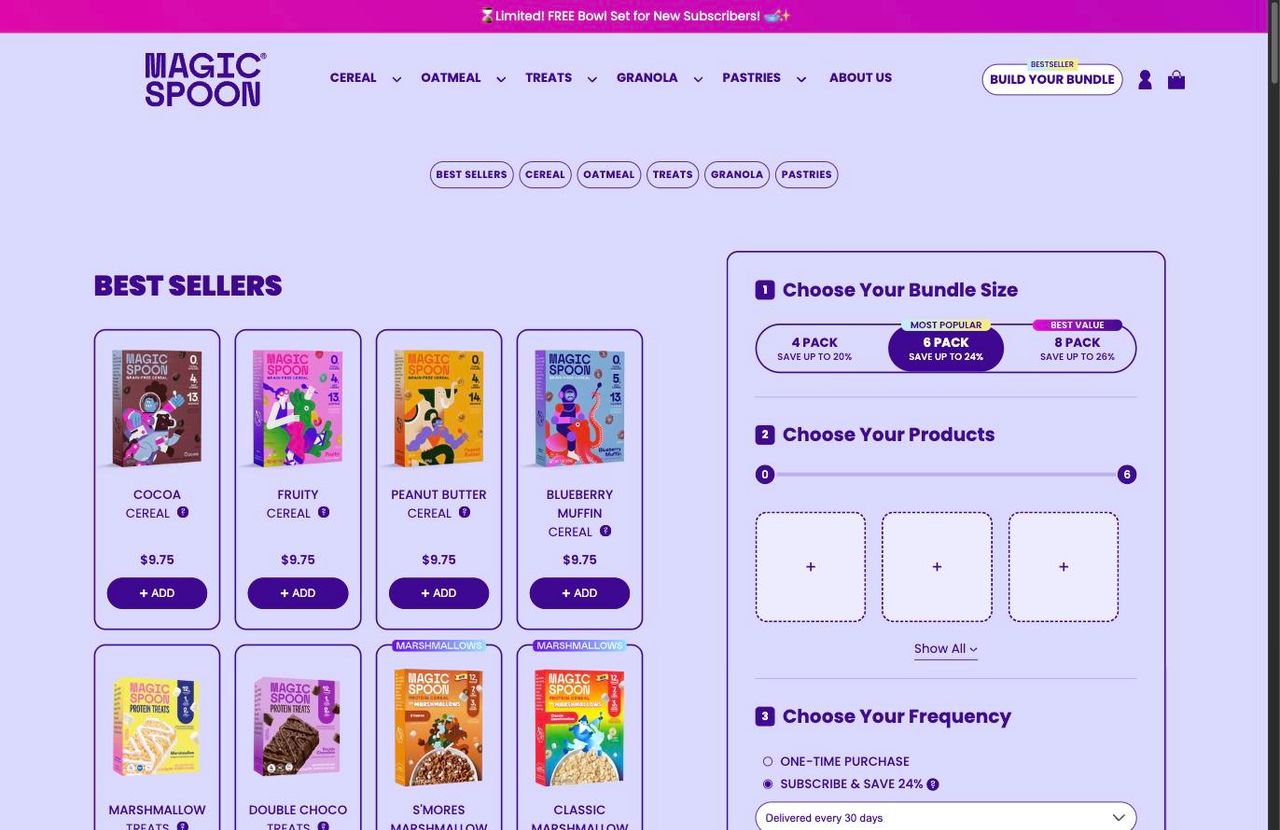
The protein cereal brand puts “Build your bundle” in its main navigation. The page uses almost every tactic in the next section: shoppers choose a 4, 6 or 8 pack, the saving grows with the pack size, a progress bar counts the empty slots as they fill, and Subscribe & Save is preselected. One is a variety pack; the other is their pack.
How to use the IKEA effect in ecommerce
On a Shopify store the most direct way to use the IKEA effect is a build-your-own bundle. Instead of “Starter Kit, 3 products”, the shopper picks the three. Here is how to set one up so the effect works for you, not against you.
1. Let shoppers build the bundle
Offer a build-a-box or mix & match bundle next to your best pre-made set. Pre-made bundles still have a place for shoppers who want a fast choice, but the build-your-own version gives the effort and ownership drivers something to work on. Our build-a-box guide walks through the setup.
2. Keep the choice small: 4 to 8 options
Effort helps; confusion does not. In Sheena Iyengar and Mark Lepper’s well-known jam study, shoppers who saw 6 jams were far more likely to buy than those who saw 24. For a bundle builder, aim for roughly 4 to 8 products per step, or split a long catalogue into steps.
3. Make the end point obvious
The study showed the effect vanishes when the task is not finished. Use a fixed number of slots (“Pick 3”, “Fill your box of 6”) and a progress bar that shows how close the shopper is. Every shopper should reach the finished state.
4. Reward each step with a tiered discount
Tie the discount to the effort: 10% off for 2 items, 15% for 3, 20% for 4. Each added item feels like progress and lifts average order value. Volume discounts work the same way on a single product.
5. Show the running total and the saving
A live total that drops as the discount kicks in is the competence driver at work: the shopper can see they made a smart choice. As a rule of thumb, show the saving as a percentage on cheaper bundles and as an amount on pricier ones, whichever number looks bigger.
6. Use smart defaults
Pre-select a sensible option, such as the most popular size or a subscribe-and-save choice, so the shopper starts from a good place and only changes what matters to them. Less friction, same sense of ownership.
7. Design for mobile first
Most bundle builders are used on a phone. Large tap targets, a sticky “Add to cart” button and a summary that stays visible keep the task short. Google’s research found that 53% of mobile visits are abandoned when a page takes over 3 seconds to load, so keep the builder light.
Common mistakes
- Too many options. A 40-product grid turns a fun task into homework.
- No finish line. Open-ended builders with no slot count leave shoppers unsure when they are done.
- Hidden pricing. If the price only appears in the cart, the competence driver never kicks in.
- Only offering build-your-own. Some shoppers want a quick pick. Keep a pre-made bundle for them.
Where to start
Pick your best-selling product category, choose 4 to 8 products that go well together, and launch a “pick 3, save 15%” builder next to your existing kit. Compare conversion rate and average order value after a few weeks. For more ways to price and package products, see what bundles in ecommerce are and how to price them.
Disclosure: we make Snap Bundle, a Shopify app for build-a-box bundles, mix & match bundles and volume discounts. Try Snap Bundle for free(opens in a new tab) to run a build-your-own bundle on your store, or compare it with other options in our roundup of the best volume discount apps.
FAQ
What is the IKEA effect in simple terms?
It is the tendency to value something more because you helped make it. People who assemble a product, or choose what goes into it, will pay more for it than for the same thing made for them.
Who discovered the IKEA effect?
Michael Norton (Harvard Business School), Daniel Mochon (Yale) and Dan Ariely (Duke) named it in “The IKEA Effect: When Labor Leads to Love”, published in the Journal of Consumer Psychology in 2012.
Is the IKEA effect a cognitive bias?
Yes. The product does not change, only the value people place on it, so it is classed as a cognitive bias, alongside the endowment effect and effort justification.
What is the difference between the IKEA effect and the endowment effect?
The endowment effect makes people value something more simply because they own it. The IKEA effect adds labour: value rises because they built or shaped it. In a build-your-own bundle both apply at once.
When does the IKEA effect not work?
When the task is left unfinished or is too hard. In the original studies, people who built and then undid their work did not value it more. Keep the task short and make sure every shopper reaches a finished result.
How do you use the IKEA effect in ecommerce?
Let customers build their own bundle: a fixed number of slots, 4 to 8 well-chosen options, a progress bar, a running total with the saving shown, and a discount that grows with each item added.
Keep reading

Snap Bundle vs BOGOS: The BOGOS Alternative for Volume Discounts & Quantity Breaks (2026)
Snap Bundle vs BOGOS compared on pricing, order caps, bundle types and BOGO offers, with a side-by-side look at both Shopify App Store listings.

10 Best Volume Discount Shopify Apps in 2026 (Tested)
The 10 best Shopify volume discount apps for 2026, compared on free plans, pricing as you grow, and features, from Snap Bundle to Kaching and Fast Bundle.

How to Create a Build-a-Box on Shopify (2026 Guide)
A build-a-box lets shoppers choose what goes in their bundle. What Shopify can do on its own, and how to set one up step by step with Snap Bundle.