
What Is CPG? Meaning, Examples and What It Changes for a Shopify Store

Summarize this article with AI


CPG means consumer packaged goods: food, drinks, beauty and household products people use up and rebuy. Here is what it means and how to set up a Shopify store for a CPG brand.
CPG stands for consumer packaged goods. These are the everyday products people use up and buy again: food, drinks, cosmetics, personal care, cleaning supplies and pet food. A CPG brand is a company that makes these products, and CPG ecommerce is the online sale of them, on a marketplace or on the brand's own store.
Most definitions of CPG are written for big retail companies and supermarket buyers. This guide is for Shopify merchants. It covers what the term means, how it differs from FMCG and durable goods, and what being a CPG brand changes for your online store: order value, shipping, subscriptions, bundles and product pages.
What does CPG mean?
Consumer packaged goods are products sold to consumers in a package, used within days or months, then replaced. Three traits define them: a low unit price, a short lifespan and frequent repeat purchases. Shoppers rarely compare them for long. They pick a brand they know, or the one that is easiest to buy.
The main CPG categories are:
- Food and snacks: coffee, granola, sauces, chocolate, olive oil.
- Drinks: soda, kombucha, juice, tea, spirits, energy drinks.
- Beauty and personal care: skincare, shampoo, deodorant, toothpaste, razors.
- Health and wellness: supplements, vitamins, protein powder.
- Household: detergent, dish soap, paper towels, candles.
- Pet care: pet food, treats, litter.
CPG examples by category
Category | Product examples | Typical rebuy cycle |
|---|---|---|
Coffee and tea | Beans, pods, matcha | 2 to 4 weeks |
Drinks | Soda, kombucha, sparkling water | 1 to 4 weeks |
Skincare | Cleanser, serum, moisturizer | 1 to 3 months |
Supplements | Vitamins, protein, collagen | 1 month |
Household | Detergent, refills, sponges | 1 to 2 months |
Pet food | Kibble, treats, wet food | 2 to 6 weeks |
The rebuy cycle is the number that matters most for an online store. It tells you how often to remind a customer, which subscription frequencies to offer, and how much a first order is really worth over a year.
CPG vs FMCG vs durable goods
CPG and FMCG (fast-moving consumer goods) are close to synonyms. CPG is the usual term in the United States; FMCG is more common in Europe, India and the rest of Asia. NielsenIQ describes FMCG(opens in a new tab) as the faster-selling, lower-priced part of CPG. Durable goods are the opposite: products bought rarely and kept for years.
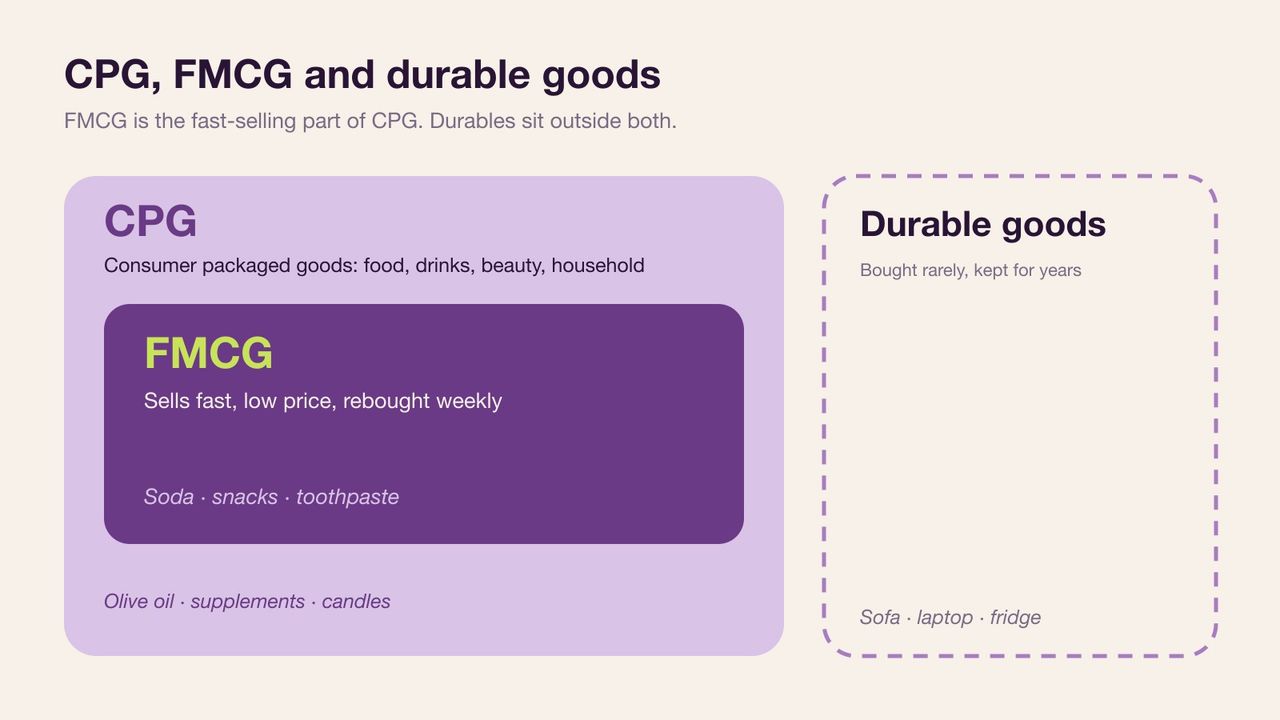
CPG | FMCG | Durable goods | |
|---|---|---|---|
Stands for | Consumer packaged goods | Fast-moving consumer goods | Consumer durables |
Examples | Coffee, shampoo, pet food, makeup | Soda, snacks, toilet paper | Sofa, laptop, fridge |
Lifespan | Days to months | Days to weeks | Years |
Frequent repeat purchase | ✅ Yes | ✅ Yes, very frequent | ❌ No |
Fits subscriptions | ✅ Yes | ✅ Yes | ❌ No, except accessories and refills |
Where the term is used | Mostly United States | Europe, India, Asia | Everywhere |
What is a CPG brand, and how is it different from DTC?
CPG describes what you sell. DTC (direct to consumer) describes how you sell it. A CPG brand can sell through supermarkets, through Amazon, through its own Shopify store, or all three. A DTC CPG brand sells mainly through its own store, which means it owns the customer data, the price and the experience. Most new food, drink and beauty brands now start DTC, then add retail. Read more in our guide to DTC ecommerce trends.
Why CPG ecommerce is different
Low order value, high shipping cost
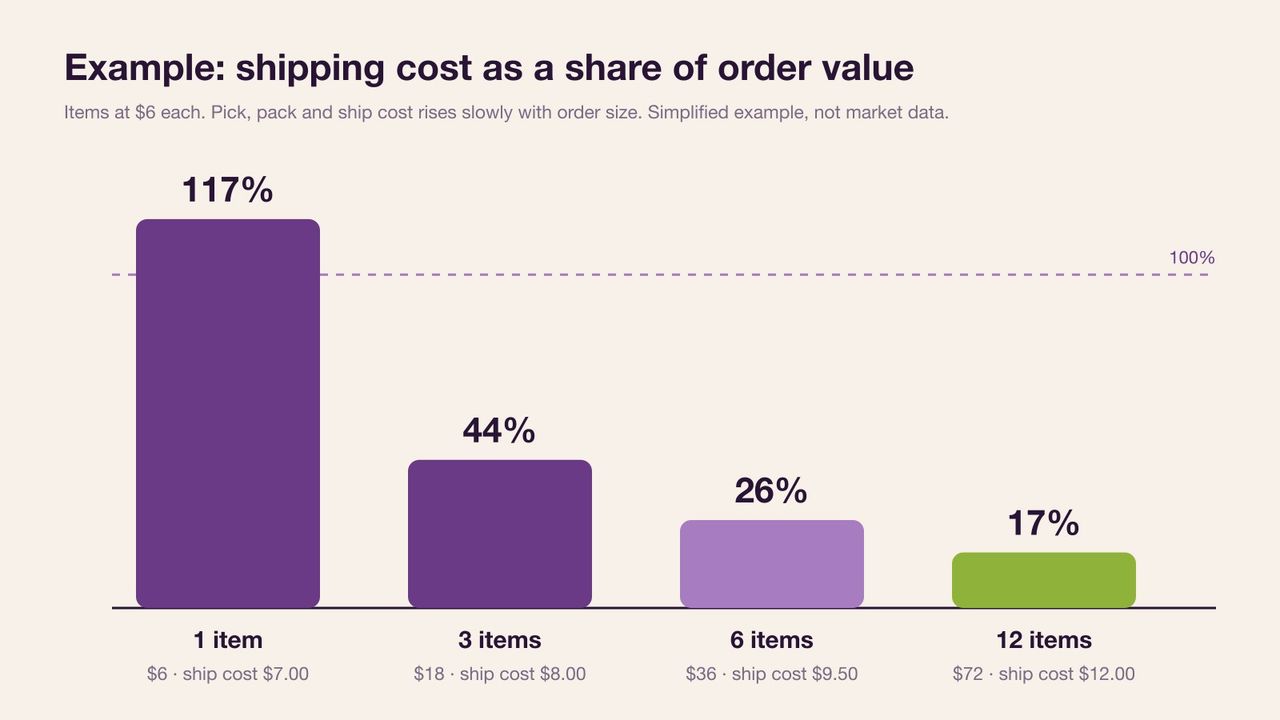
A $6 jar of sauce costs almost as much to pick, pack and ship as a $60 jacket. Single-item orders often lose money once shipping and packaging are paid. CPG stores make their margin back by raising average order value: multipacks, bundles, a free shipping threshold and cart upsells.
Repeat purchase is the business model
The first order of a CPG customer rarely pays back the ad that brought them in. The second, third and tenth orders do. That is why subscriptions, reorder emails and loyalty programs matter more in CPG than in most categories. Food and beverage stores also tend to convert above the ecommerce average; see our Shopify conversion rate benchmarks by industry.
Online and retail at the same time
Shoppers can find the same product in a store down the street. Your website has to give a reason to buy online: exclusive flavors, bundles, a subscription discount, or the full range when retailers only stock bestsellers. Many CPG brands also use their store for wholesale orders from cafés, shops and gyms.
The online share keeps growing
NielsenIQ expects US online grocery sales to reach $452 billion by 2028(opens in a new tab). In India, ecommerce made up about 7% of FMCG sales in Q2 2026(opens in a new tab). Everyday products are moving online more slowly than fashion or electronics, but they are moving.
How to set up a Shopify store for a CPG brand
1. Offer subscribe and save
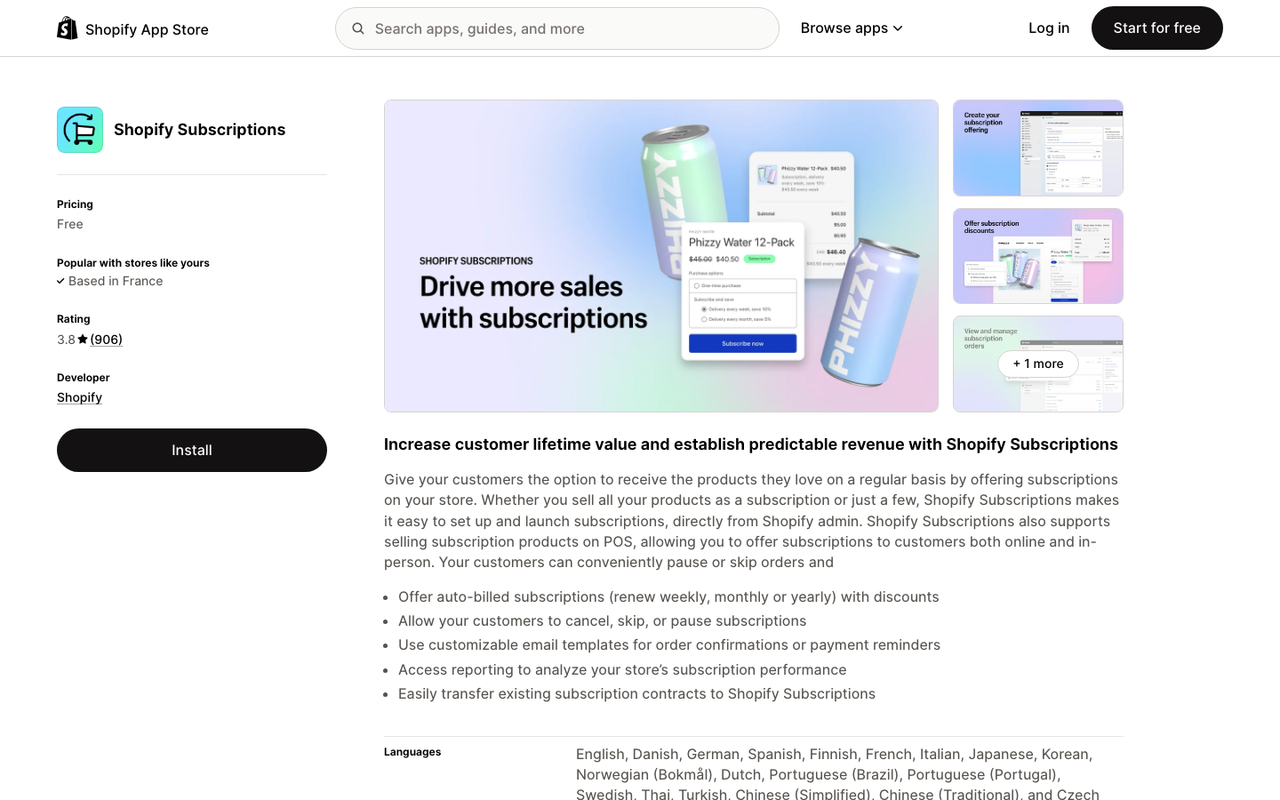
Match delivery frequencies to the rebuy cycle (every 2, 4 or 8 weeks) and give a small discount for subscribing. The free Shopify Subscriptions app(opens in a new tab) covers the basics: weekly, monthly or yearly plans, a subscription discount, and skip, pause or cancel from the customer account. For build-a-box subscriptions, prepaid gifts or trials, apps like Recharge, Loop, Skio or Appstle go further.
2. Sell bundles and multipacks
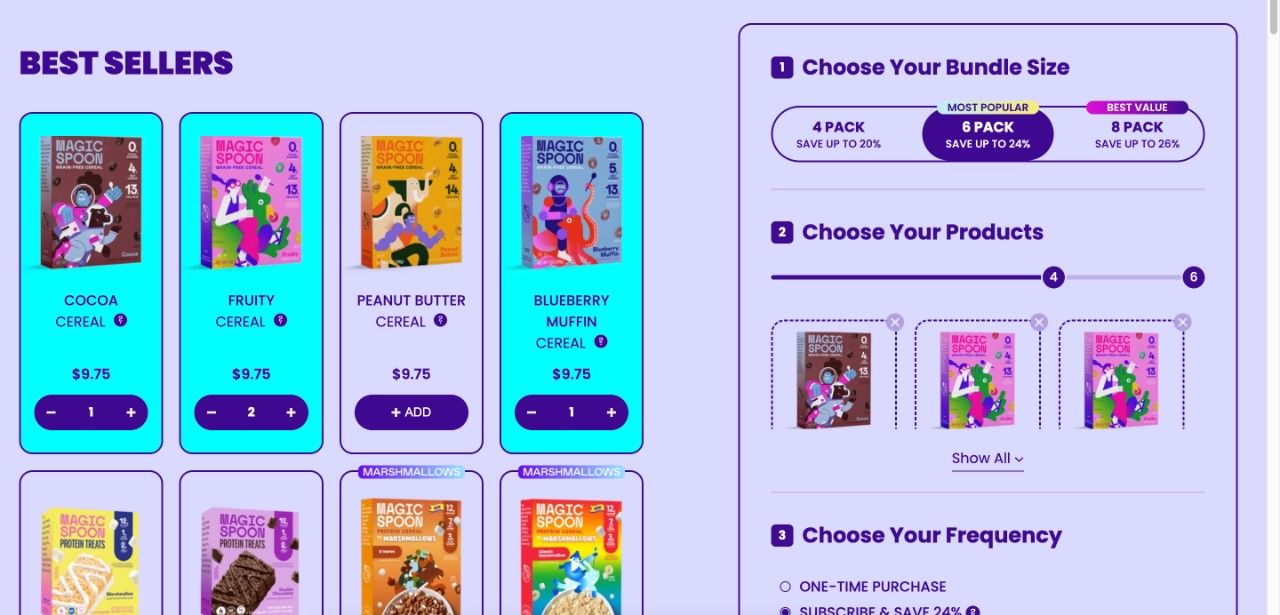
Bundles fix the low order value problem. Use packs of 3, 6 or 12, discovery kits, and quantity tiers ("buy 3, save 10%"). A build-your-own box lets customers pick flavors or scents themselves. Here is how to create mix and match bundles on Shopify.
3. Set a free shipping threshold
Set the threshold a little above your current average order, and show progress in the cart. A free shipping bar pushes shoppers to add one more item instead of leaving with a single jar.
4. Put product facts on the product page
Shoppers cannot turn the package over online. Show ingredients, nutrition facts, allergens, size or volume, and usage in tabs or a table. In Europe, a Nutri-Score label helps food shoppers compare at a glance. Price per unit (per 100 g or per can) helps them compare packs.
5. Add pickup, wholesale and age checks when needed
Local pickup cuts shipping cost for nearby customers. Shopify B2B or a wholesale price list handles orders from shops and cafés. Alcohol and some supplements need an age verification popup.
CPG brands on Shopify
Shopify is a common platform for food, drink and beauty brands. Soda brand Olipop, for example, told Shopify how it developed its products(opens in a new tab) before scaling. For more stores to learn from, browse our food and drink Shopify store examples and our kombucha Shopify store examples.
A Shopify theme built for CPG brands
We develop Pops, a Shopify theme for food, drink and beauty brands. Here is what it includes for the CPG features covered above.
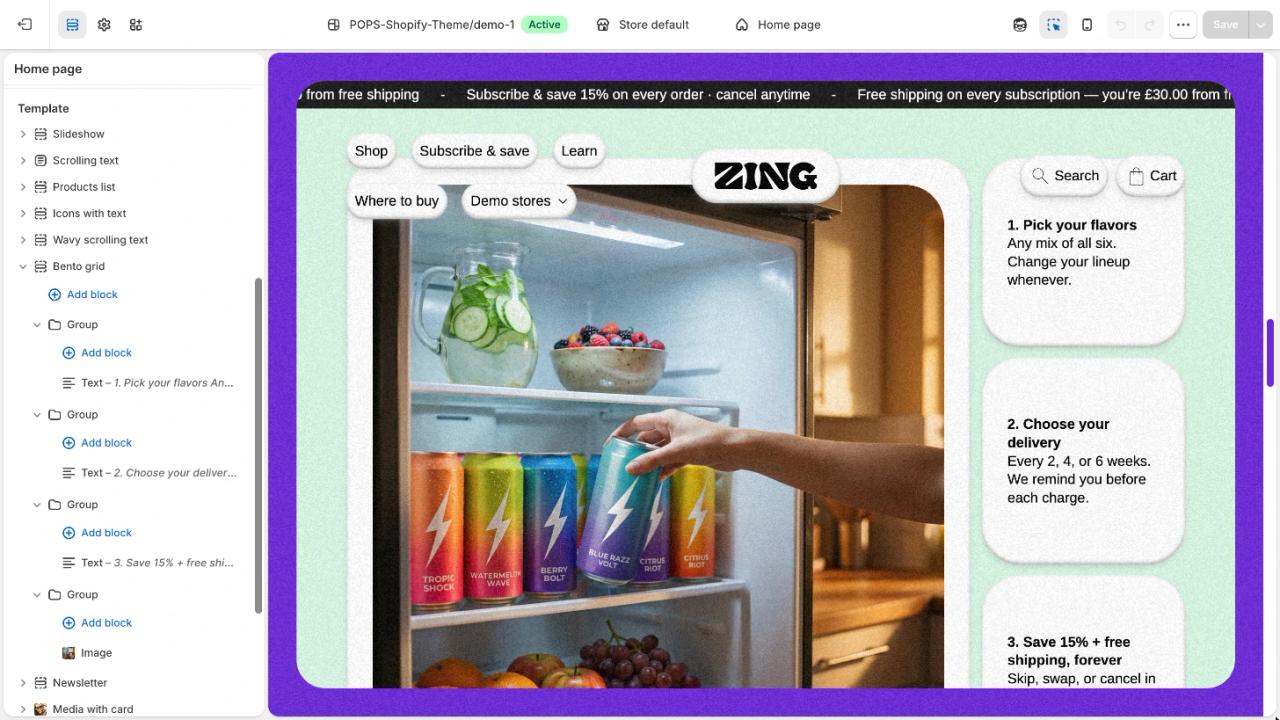
Feature | Pops |
|---|---|
Developer | Trafik Plus |
Subscriptions (selling plans) on the product page | ✅ Yes |
Build-a-box with tiered discounts | ✅ Yes, up to 4 tiers |
Free shipping bar in the cart | ✅ Yes |
Cart upsell slider | ✅ Yes |
Nutri-Score label | ✅ Yes |
Nutrition or ingredients table | ✅ Yes |
Local pickup availability | ✅ Yes |
Age verification popup | ✅ Yes |
Sticky add to cart and quick add | ✅ Yes |
Product ratings (including Trustpilot) | ✅ Yes |
Store locator ("where to buy") | ❌ No, use an app |
FAQ
What does CPG stand for?
CPG stands for consumer packaged goods: packaged products that people use up quickly and buy again, such as food, drinks, cosmetics, household products and pet food.
What is a CPG brand?
A CPG brand makes and sells consumer packaged goods. It can sell in supermarkets, on marketplaces like Amazon, or directly to customers on its own online store.
Is CPG the same as FMCG?
Almost. FMCG (fast-moving consumer goods) is the faster-selling, cheaper part of CPG. CPG is the common term in the US, FMCG in Europe and Asia.
What is CPG ecommerce?
CPG ecommerce is the online sale of consumer packaged goods, through a brand's own store, an online grocer or a marketplace. It depends on repeat orders, subscriptions and bundles because single orders are small.
Is Shopify good for CPG brands?
Yes. Shopify supports subscriptions, bundles, B2B wholesale, local pickup and free shipping rules, and many food, drink and beauty brands run their direct-to-consumer store on it.
What are examples of CPG products?
Coffee, soda, snacks, olive oil, shampoo, skincare, toothpaste, vitamins, detergent, paper towels and pet food are all CPG products.

Keep reading

Digital Dropshipping: What It Really Is, PLR vs MRR, and How to Start on Shopify
Digital dropshipping explained: PLR vs MRR rights, whether it is legit, what to check before buying a pack, and how to sell digital products on Shopify.

How to Remove “Powered by Shopify” From Your Store: 3 Methods (Horizon, Dawn, Pops)
Remove “Powered by Shopify” from your footer in 2 minutes: a checkbox, theme content or Liquid code. Methods checked on Horizon, Dawn and Pops.

Shopify Academy Is Closed: What Happens to Certifications and Where to Learn Shopify Now
Shopify Academy shut down on October 29, 2026. What happens to refunds, badges and Partner tiers, how partners reacted, and where merchants and developers learn Shopify now.