20 Best One Product Shopify Store Examples in 2026

Summarize this article with AI


20 real one product Shopify stores, from Henson Shaving to Tushy: what they sell, the theme they run on, what they do well and what to copy, plus how to build your own one-product store.
A one product Shopify store bets everything on a single hero product. There is no catalog to browse, no mega menu to get lost in, and no "you may also like" carousel doing the heavy lifting. The homepage is the product page, every section exists to answer one question, and the buy button is never more than a thumb away.
That focus is why the format keeps working for DTC brands. A razor, a roll of mouth tape, a cold plunge barrel or a pillow can carry a whole company when the store explains the problem, proves the result and makes the order feel safe. Many of these brands later add variants, refills or a second product, but the store still runs on the one-product playbook.
We checked 20 live one-product (or hero-product) Shopify stores on November 17, 2026. For each one you get what they sell, the theme we found in the store's code, what the store does well and the one idea worth copying. After the examples, we cover how to build your own one-product store: theme, page structure and apps, with a feature comparison of themes that suit the format. Disclosure: we develop the Pops and Cama Shopify themes, which appear in the theme table alongside competitors.
The 20 one-product Shopify stores at a glance
Store | Hero product | Shopify theme | Standout feature |
|---|---|---|---|
Henson Shaving | AL13 safety razor | Concept | "Buy once, use for life" promise |
Hostage Tape | Mouth tape | Concept | 1, 3 or 6 month quantity tiers |
Intake Breathing | Magnetic nasal strip | Impact | Athlete endorsement in the hero |
Pulsetto | Vagus nerve stimulator | Custom | Press logo bar under the hero |
Ozlo | Sleepbuds | Dawn (customized) | Price inside the hero button |
Ice Barrel | Cold plunge barrel | Custom | Product-or-bundle choice cards |
Lomi | Kitchen composter | Custom | Three-step "how it works" |
Ka'Chava | All-in-one shake | Not identified | Long FAQ on the homepage |
Snooz | White noise machine | Custom | 100-night trial |
Feno | Smartbrush | Dawn (customized) | Trust badges next to the price |
Sensate | Relaxation device | Custom | 90-day risk-free trial |
Plufl | Human dog bed | Pipeline | Money-back guarantee banner |
Pillow Cube | Side sleeper pillow | Boost | Volume claim above the headline |
Ryze | Mushroom coffee | Dawn | Bundle discount in the hero |
Squatty Potty | Toilet stool | Sleek | 30-second product finder quiz |
AeroPress | Coffee maker | Focal | Review count in the top bar |
Tediber | Mattress | Dawn | Trial, delivery and payment terms up front |
Myotape | Mouth tape | Dawn | Celebrity and expert press section |
Loop Earplugs | Earplugs | Custom | "What brings you here?" need selector |
Tushy | Bidet attachment | Custom | Savings claim and install time as benefits |
"Dawn (customized)" means the store started from Shopify's free Dawn theme and was heavily reworked. Prices and promotions were seen on November 17, 2026 from a European connection, so some show euros or Black Friday offers.
1. Henson Shaving
Henson Shaving(opens in a new tab) sells one thing: the AL13, an all-metal safety razor machined to aerospace tolerances in Canada. The hero shows the razor on its stand with one line, "Buy once, use for life", and a single "Get Henson" button.
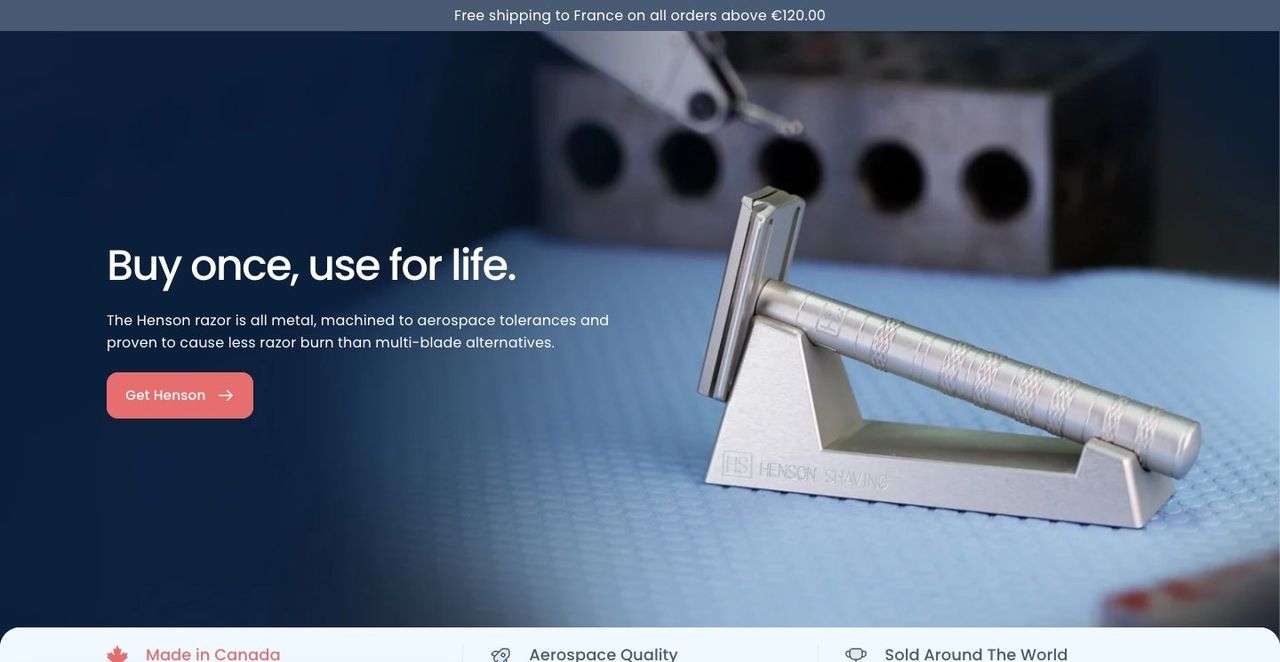
Right under the hero, three short proof points do the trust work: Made in Canada, Aerospace Quality, and Sold Around The World with over 940,000 razors sold. The store then pushes a "Bundle + Save" section, which is how a one-product brand raises order value without a second product: blades, a stand, shave cream and a leather cover are sold as add-ons.
The product page is just as tight. Blade options and accessories sit as checkboxes above the add to cart button, so a $125 razor becomes a bigger order in one click.
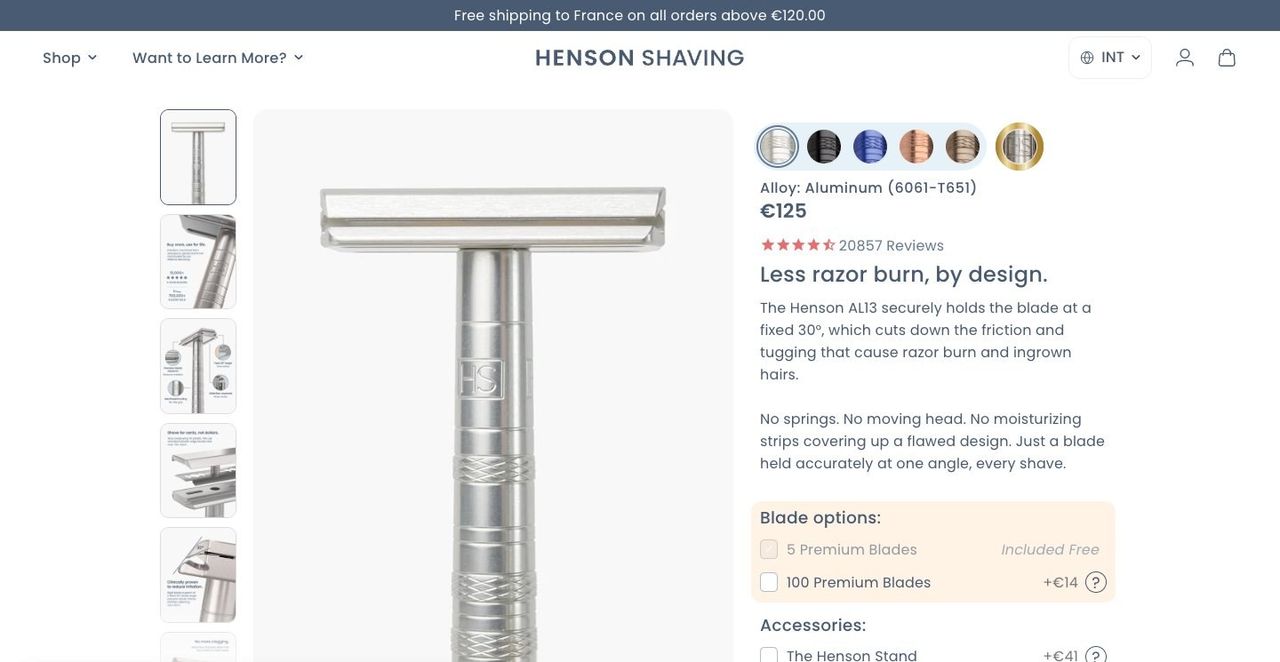
Takeaway: sell the add-ons on the product page as checkboxes, not in a separate upsell step.
2. Hostage Tape
Hostage Tape(opens in a new tab) sells mouth tape for better sleep, and its homepage reads like a direct-response ad: "Stop snoring. Start sleeping. Stay married." Below the hero, a strip of press logos (GQ, Us Weekly, The Sun, Grazia) and a counter of 150,367 better sleepers show demand before the product even appears.
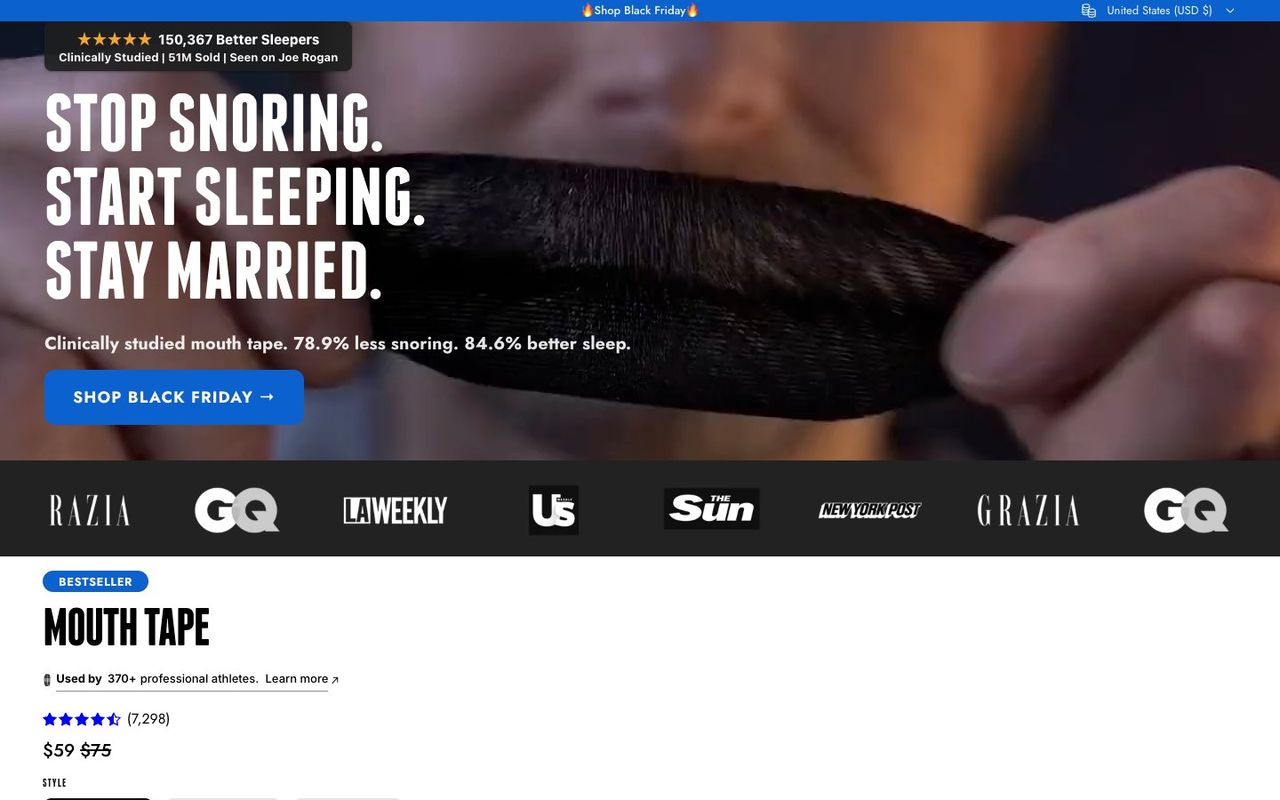
The product page is one of the best examples of quantity breaks we found. Instead of a quantity selector, the buyer picks 1 month ($25), 3 months ($59, "Most popular", 21% off) or 6 months ($99, "Best value", 34% off). A one-time or subscribe-and-save toggle sits right below, followed by a checklist of claims such as "Clinically studied: 78.9% less snoring".
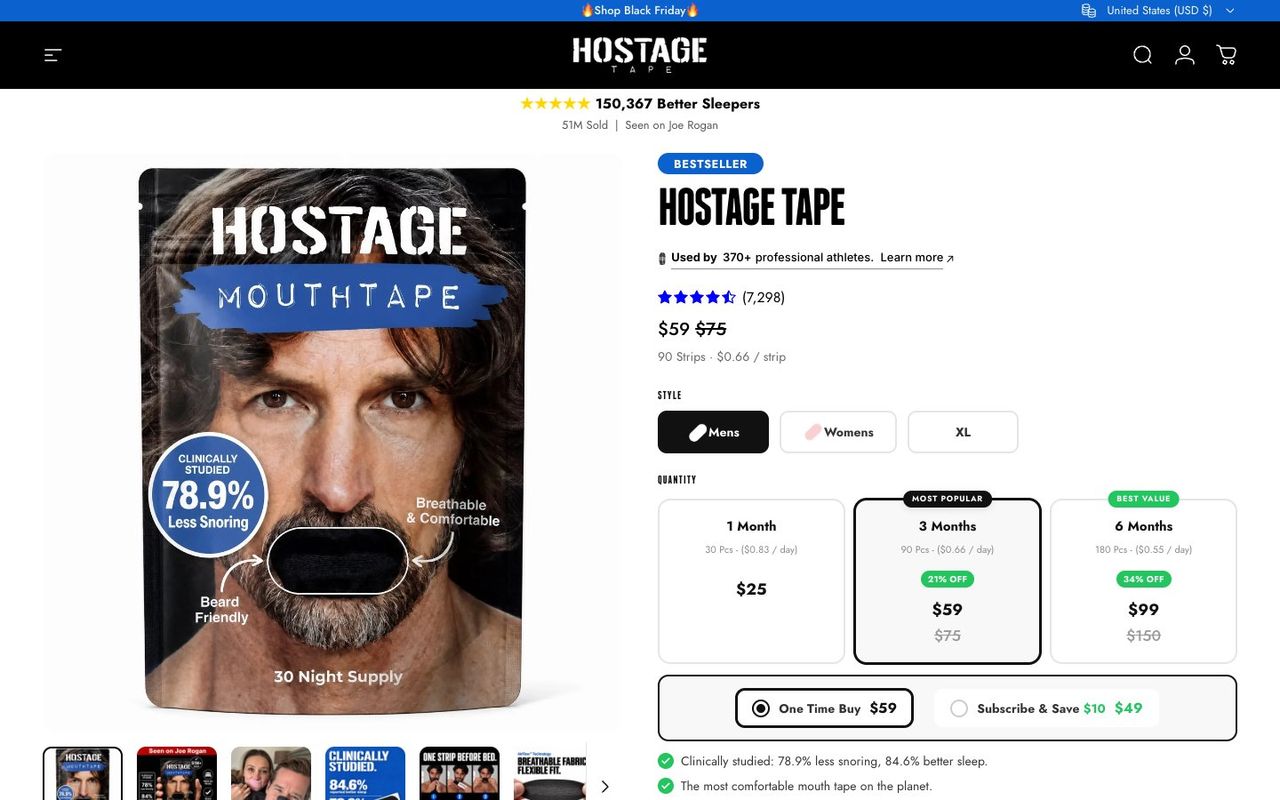
Takeaway: frame quantity as duration ("3 months") so the bigger pack feels like the normal choice, not an upsell.
3. Intake Breathing
Intake Breathing(opens in a new tab) sells a magnetic nasal breathing system. The hero is a black-and-white portrait of an MLB pitcher with his signature, next to "Rise to your potential with life changing breathing" and a "Try Now. Risk Free" button.
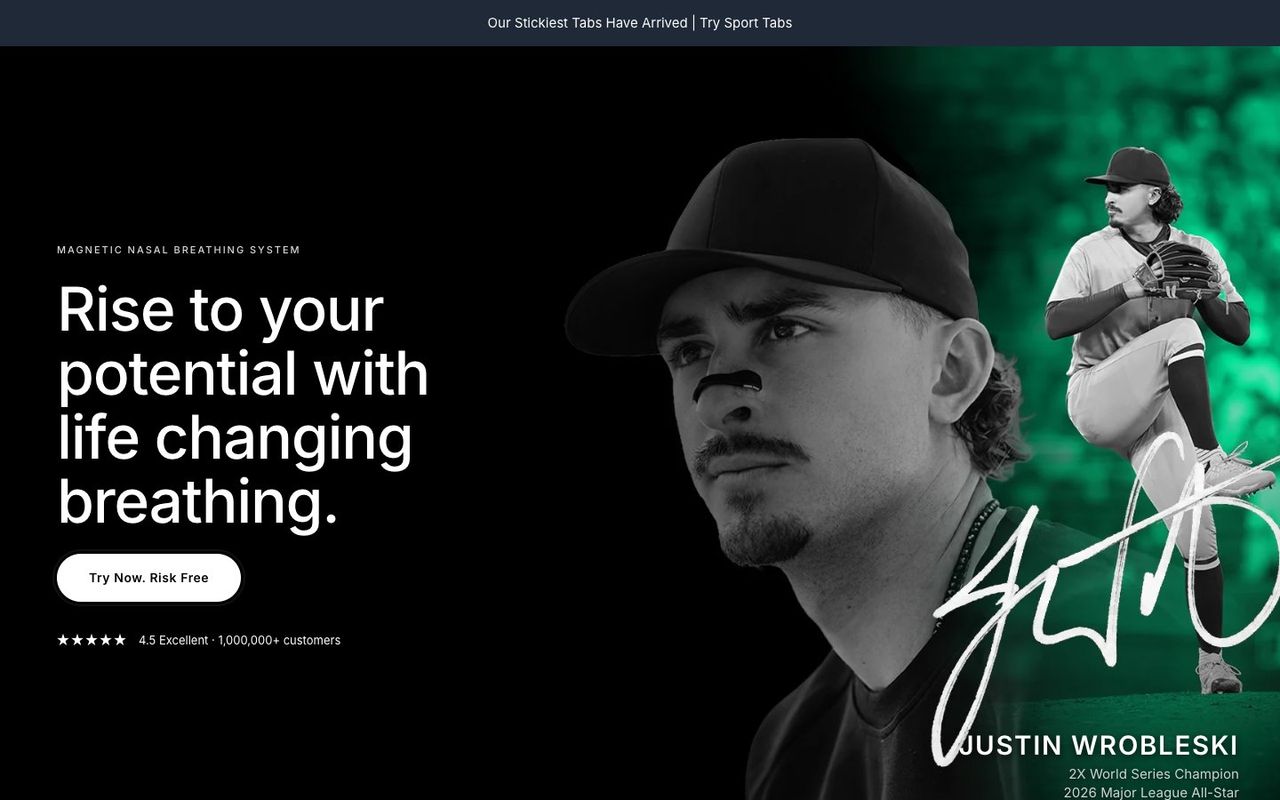
Under the button, a rating line ("4.5 Excellent, 1,000,000+ customers") gives the social proof in one glance. The store also opens a short quiz asking what brings the visitor to Intake, which routes snorers, athletes and people with a blocked nose toward the right message. The store runs on the Impact theme.
Takeaway: if your product serves several needs, ask the visitor which one is theirs instead of listing them all.
4. Pulsetto
Pulsetto(opens in a new tab) sells a neck-worn vagus nerve stimulator for stress and sleep. The headline is three short promises, "Reduce stress. Sleep soundly. Wear calmness.", with two buttons: one to buy, one for HSA/FSA payment through Truemed.
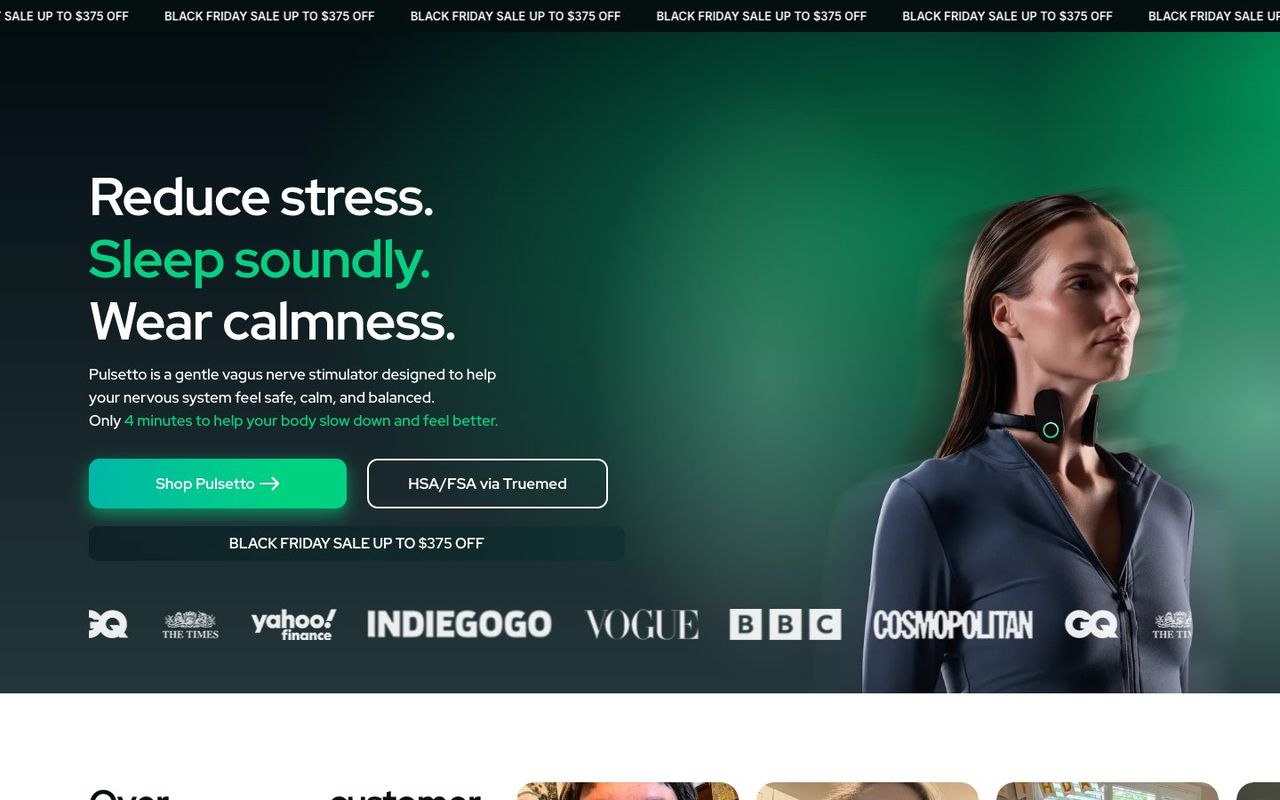
A row of press logos (Vogue, BBC, Cosmopolitan, GQ, Yahoo Finance) sits directly under the hero, then a counter of over 400,000 customer purchases. Further down, the page explains the science in plain language ("Your neck has a secret off switch for stress") and shows the app's stress resilience score, which turns a hardware purchase into a routine.
Takeaway: for a product people do not understand yet, explain the mechanism in one metaphor before you show the spec sheet.
5. Ozlo Sleep
Ozlo(opens in a new tab) sells Sleepbuds, "the world's smallest earbuds designed just for sleep". The hero is a close-up of the charging case with the price inside the button: "Get Today for $279".
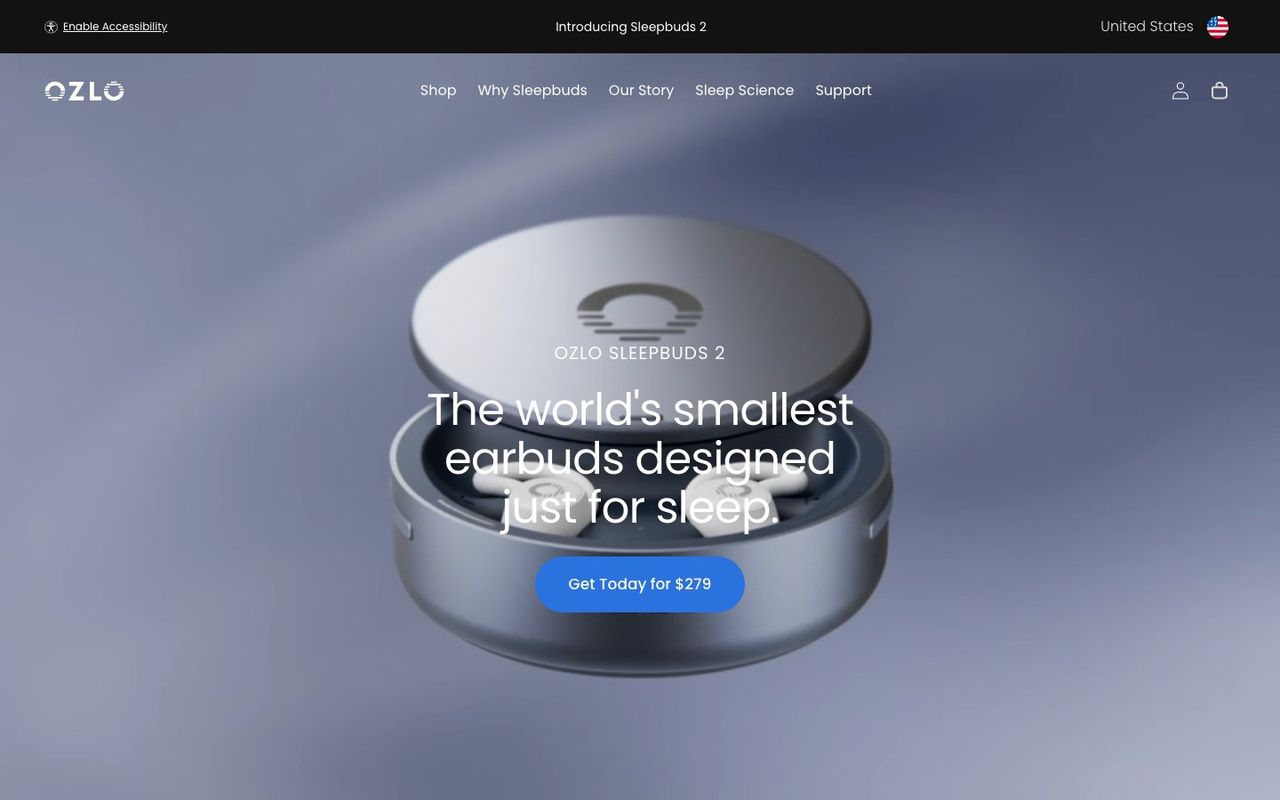
The page then answers the obvious objection (why not noise-cancelling earbuds?) with a side-by-side of noise masking and active noise cancellation, before moving to comfort and the sleep app. Putting the price in the first button is a confident move: visitors who would leave at checkout over a $279 price leave early instead, and the rest arrive at the cart already sold.
Takeaway: handle your biggest objection with a direct comparison, high on the page.
6. Ice Barrel
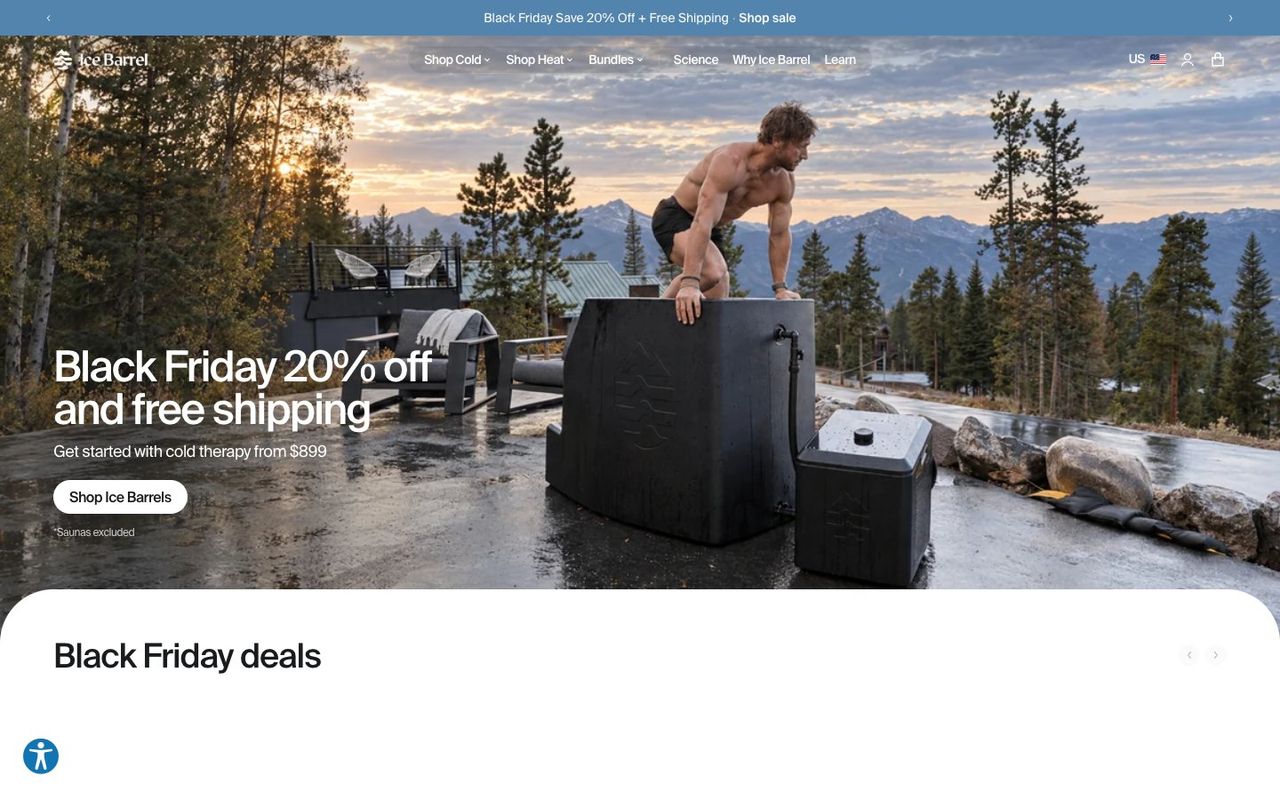
Ice Barrel(opens in a new tab) sells an upright cold plunge barrel. The homepage hero shows a real setup in the mountains with a Black Friday offer, then lists the Ice Barrel 300, 500, the chiller and a bundle.
The product page is the part to study. Two large cards let the buyer pick "Ice Barrel only" or "Ice Barrel + Chiller", the price updates inside the add to bag button, and trust markers (HSA/FSA eligible, financing per month, made in the USA, limited lifetime warranty) sit under it.
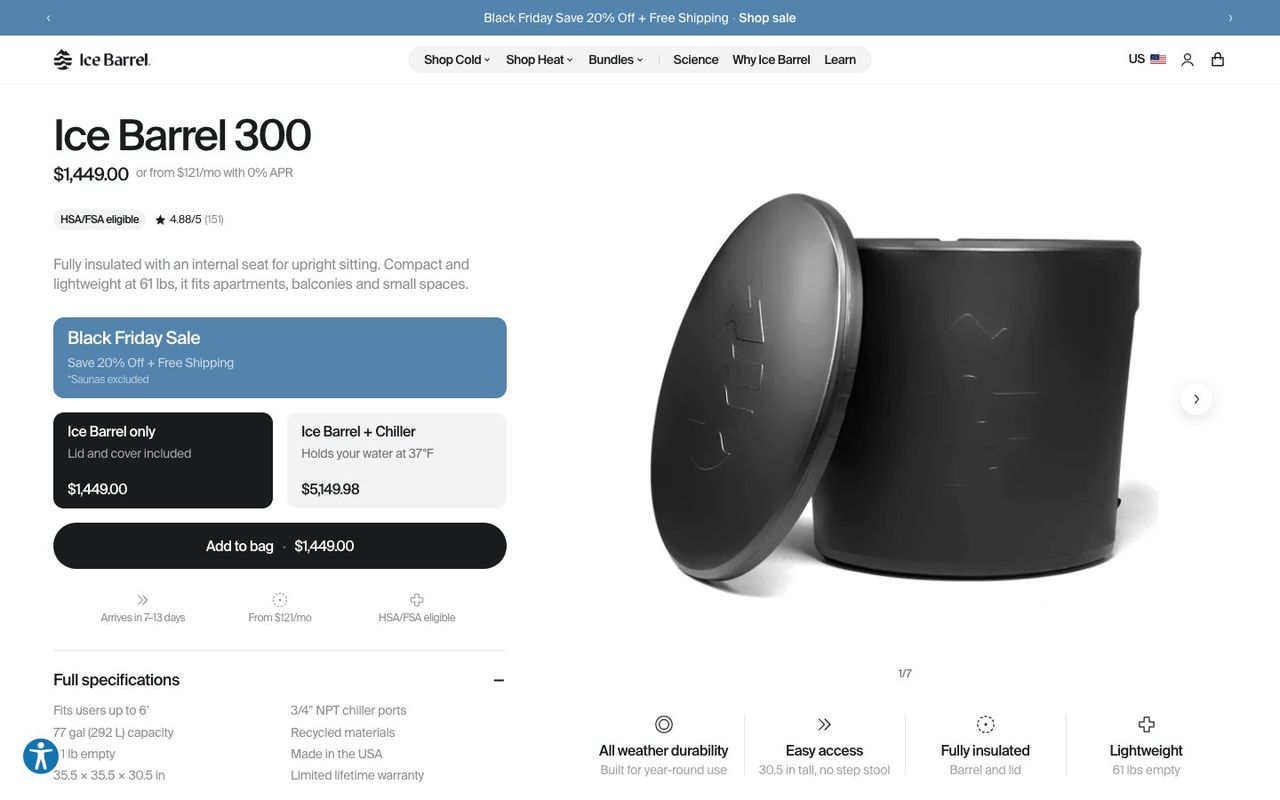
Takeaway: show the bundle as a choice card next to the product alone, so the bigger order is one tap away.
7. Lomi
Lomi(opens in a new tab) sells a countertop food waste composter. The homepage leads with a seasonal hero ("'Tis the season for no mess & no stress") and a Black Friday price of $299 in the announcement bar.
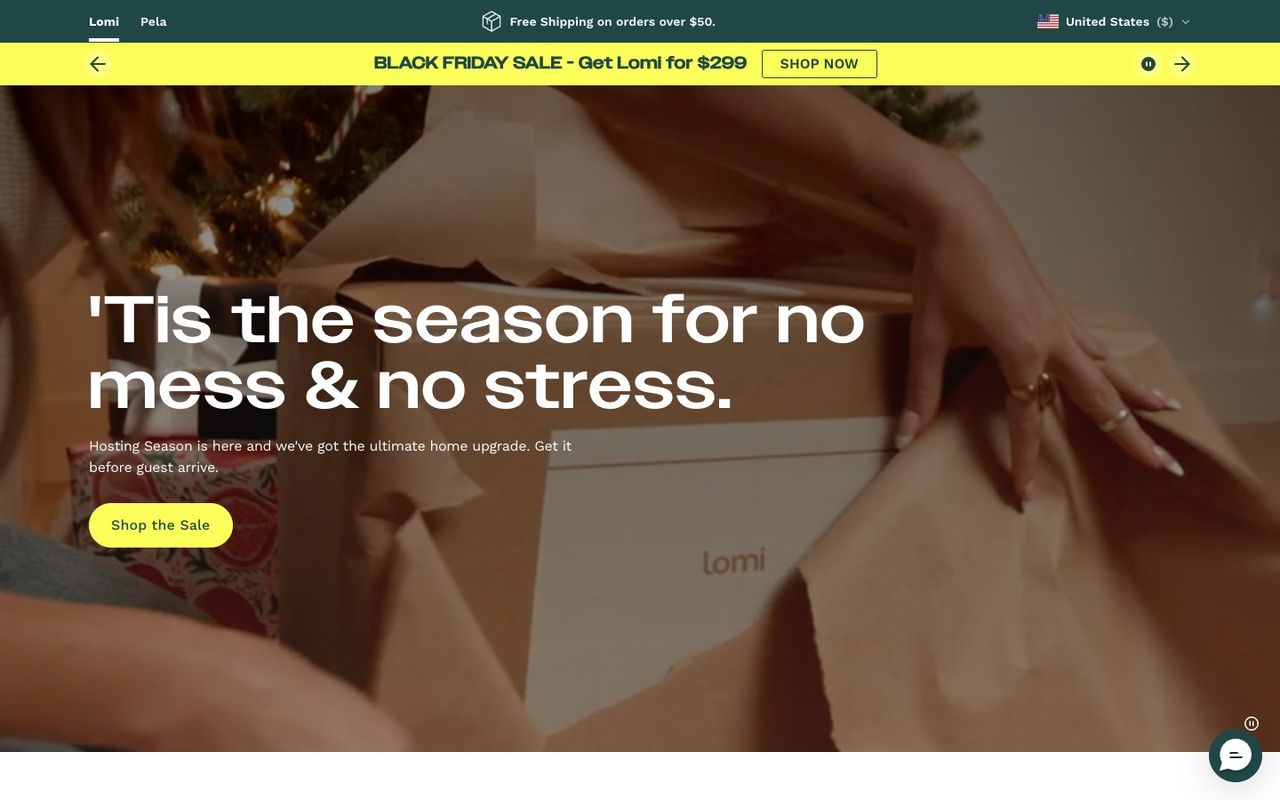
The best part is the three-step explanation: "Fill & Forget", "Press & Walk Away", "Enjoy Your Fresh Kitchen". Then benefits are written as pains removed ("Stops Embarrassing Odors", "Keep Pests Away"), followed by "More than 215,000 happy households" and short review quotes.
Takeaway: write benefits as problems that disappear, in the customer's words.
8. Ka'Chava
Ka'Chava(opens in a new tab) sells one all-in-one meal shake in several flavors. The hero says "Your Daily All-In-One Shake" with a single "Try Ka'Chava" button and a review count above the headline.
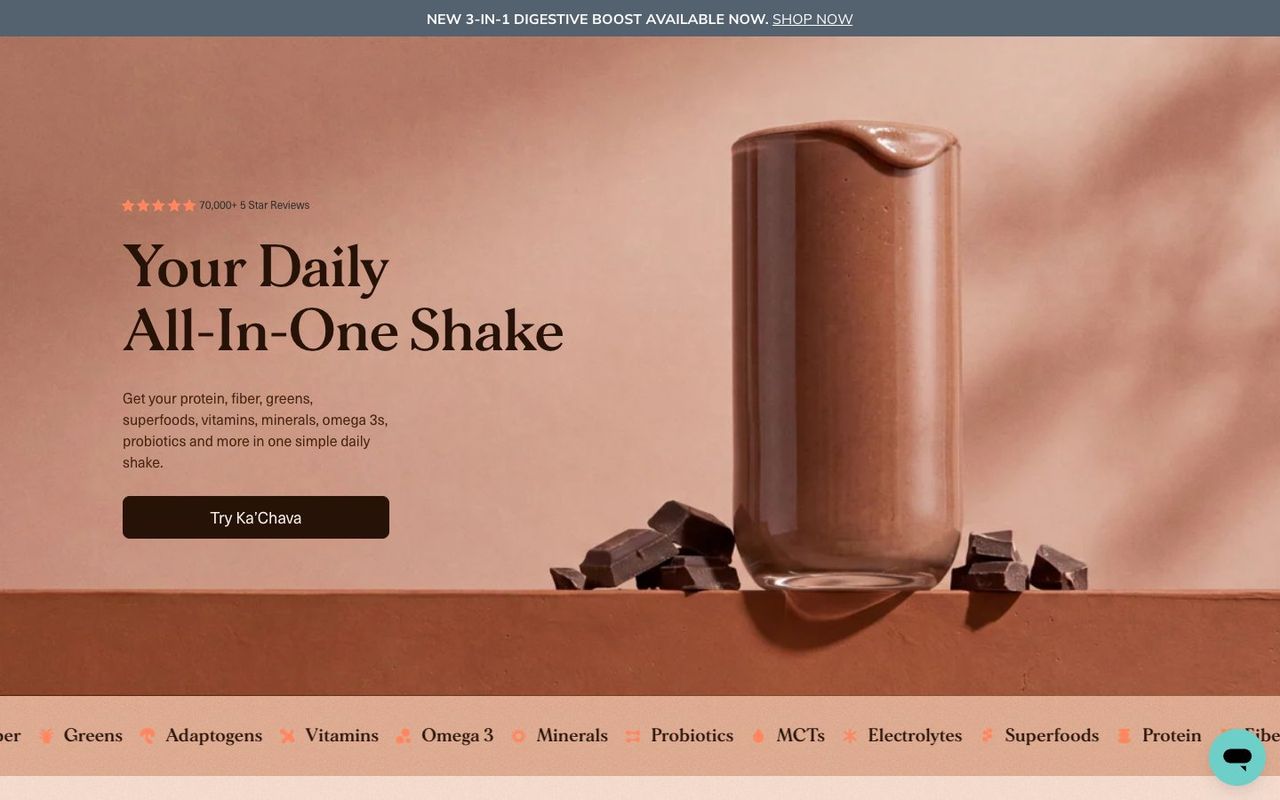
Under the hero, a scrolling ticker lists what is inside (greens, adaptogens, vitamins, omega-3, probiotics). The homepage then compares Ka'Chava with other shakes, offers a free five-flavor variety pack to lower the risk of picking the wrong flavor, and ends with a long FAQ: what is it, what is in it, who is it for, how does it taste.
Takeaway: if choice is the blocker (here, flavor), remove it with a sampler.
9. Snooz
Snooz(opens in a new tab) started with one product, a white noise machine with a real fan inside, and still builds its store around it. The hero is a calm bedroom shot with "The simplest way to upgrade your sleep" and "Real-fan white noise. Sleep you can count on."
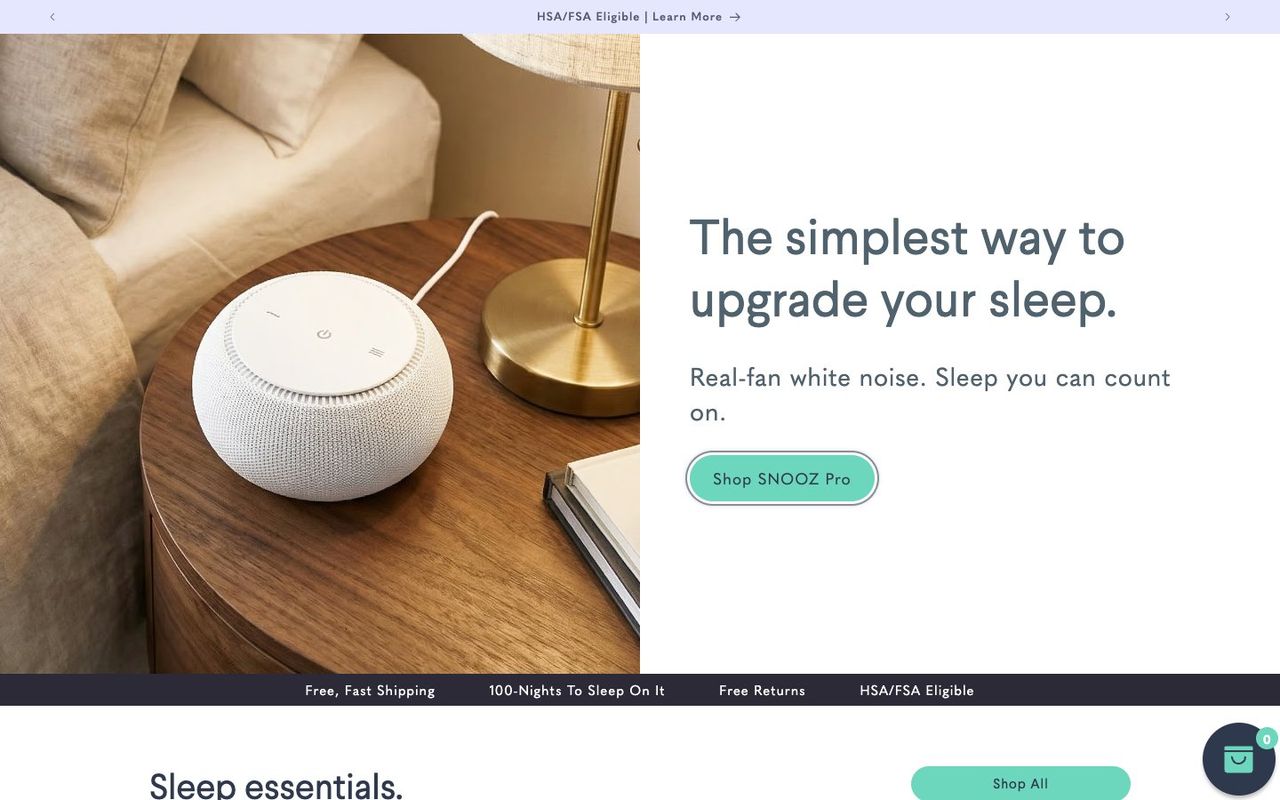
A trust bar under the hero lists free shipping, a 100-night trial, free returns and HSA/FSA eligibility. Further down, "Get the best sleep you've ever had. Guaranteed." repeats the guarantee, and "Join 500,000+ Sound Sleepers" closes with social proof.
Takeaway: if you offer a long trial, put it in the first screen, not the footer.
10. Feno
Feno(opens in a new tab) sells a U-shaped smartbrush that cleans all teeth in 20 seconds. The hero headline, "20-Second Brush", rotates through health benefits (heart, diabetes, brain), with the Founder's Edition price and a "Shop now" button.
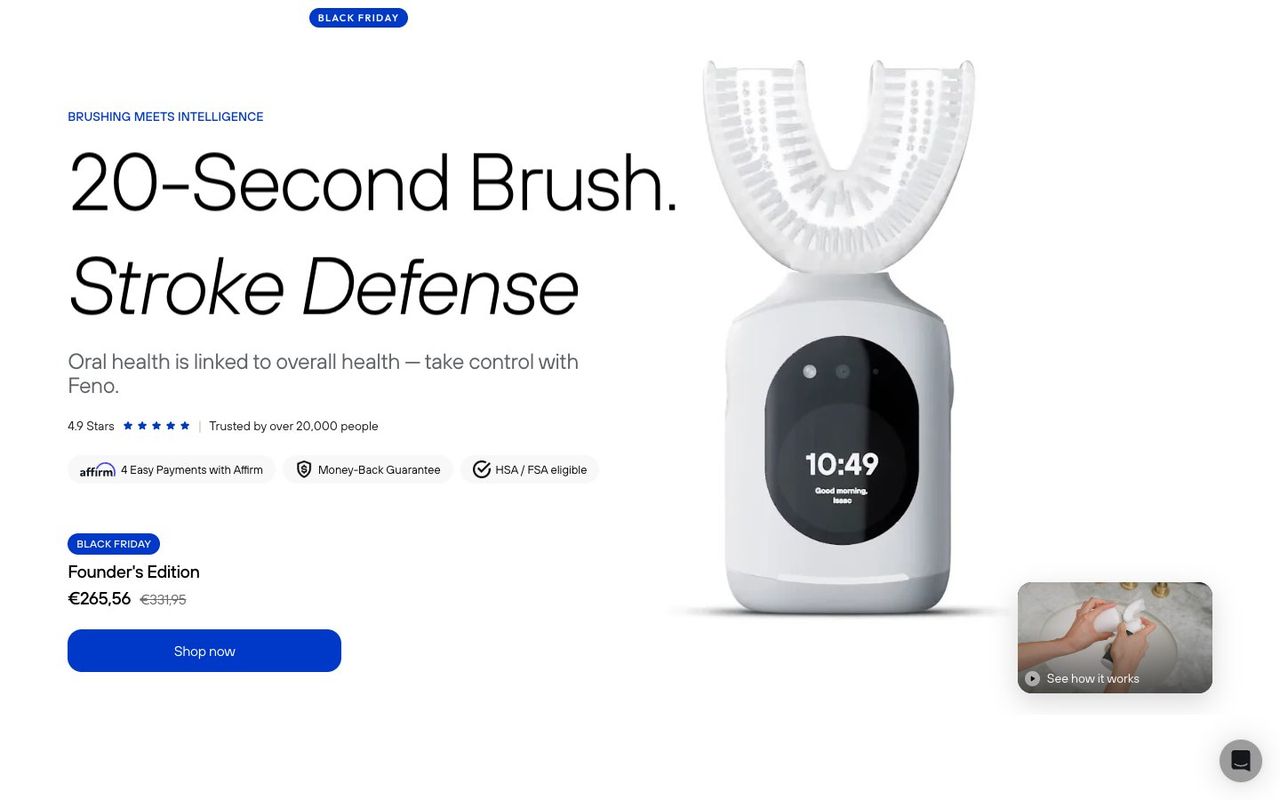
The trust row is the lesson here: a 4.9 rating from over 20,000 people, Affirm payments, a money-back guarantee and HSA/FSA eligibility sit right above the price. Further down, a before/after comparison with a classic electric toothbrush shows plaque removal.
Takeaway: for a new product category, stack every risk reducer (financing, guarantee, ratings) next to the price.
11. Sensate
Sensate(opens in a new tab) sells a pebble-shaped device that uses infrasonic sound to calm the nervous system. The hero puts a TIME Best Inventions badge in the corner and a full offer card in the hero: the Sensate 2 Plus Pack, the price, the saving and a "Shop the sale" button.
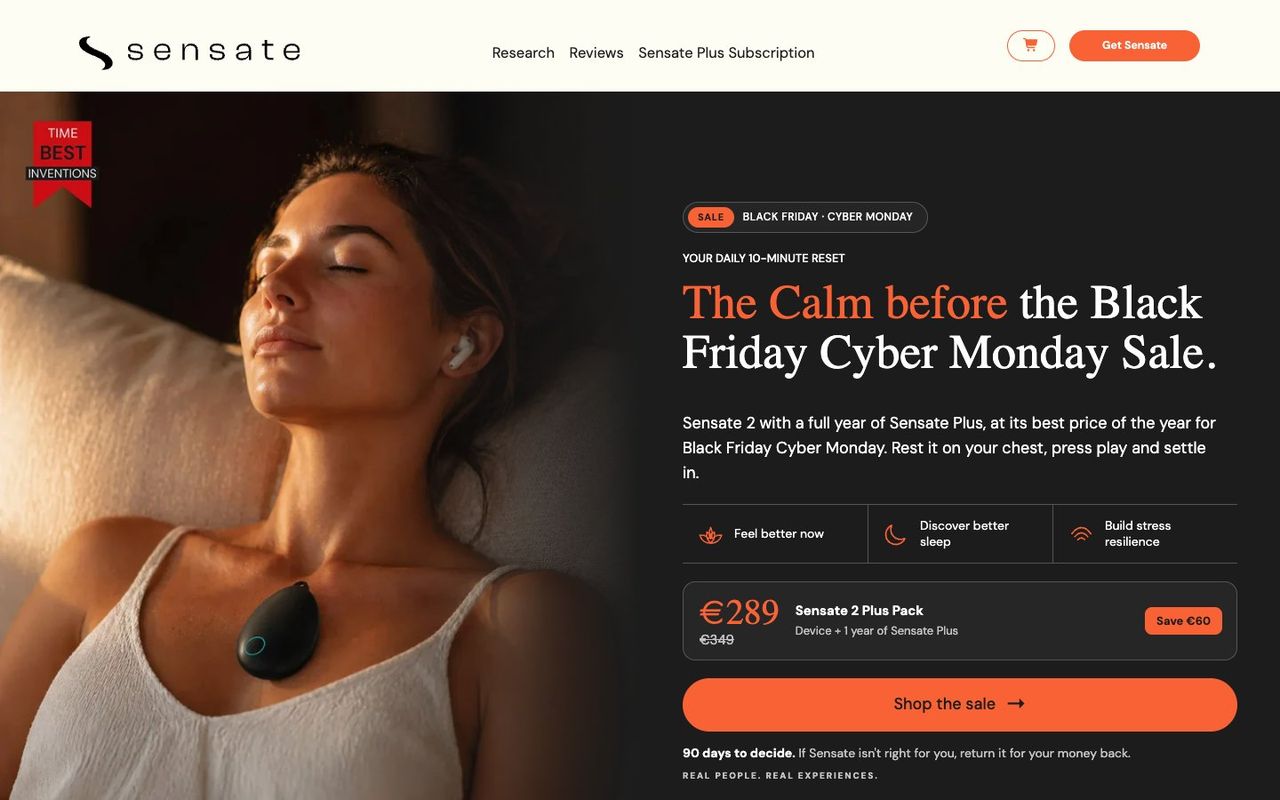
Below the button, "90 days to decide" removes risk, and the page later backs it with numbers ("55 extra minutes" of sleep, "48% decrease" in stress) and short customer stories.
Takeaway: put the full offer (what is in the box, price, saving, guarantee) in the hero when the product needs explanation.
12. Plufl
Plufl(opens in a new tab) sells the "human dog bed", a giant bean-bag-style bed for adults. The store runs on the Pipeline theme and uses a bold Black Friday hero with a "30 Night Money Back Guarantee" line above it.
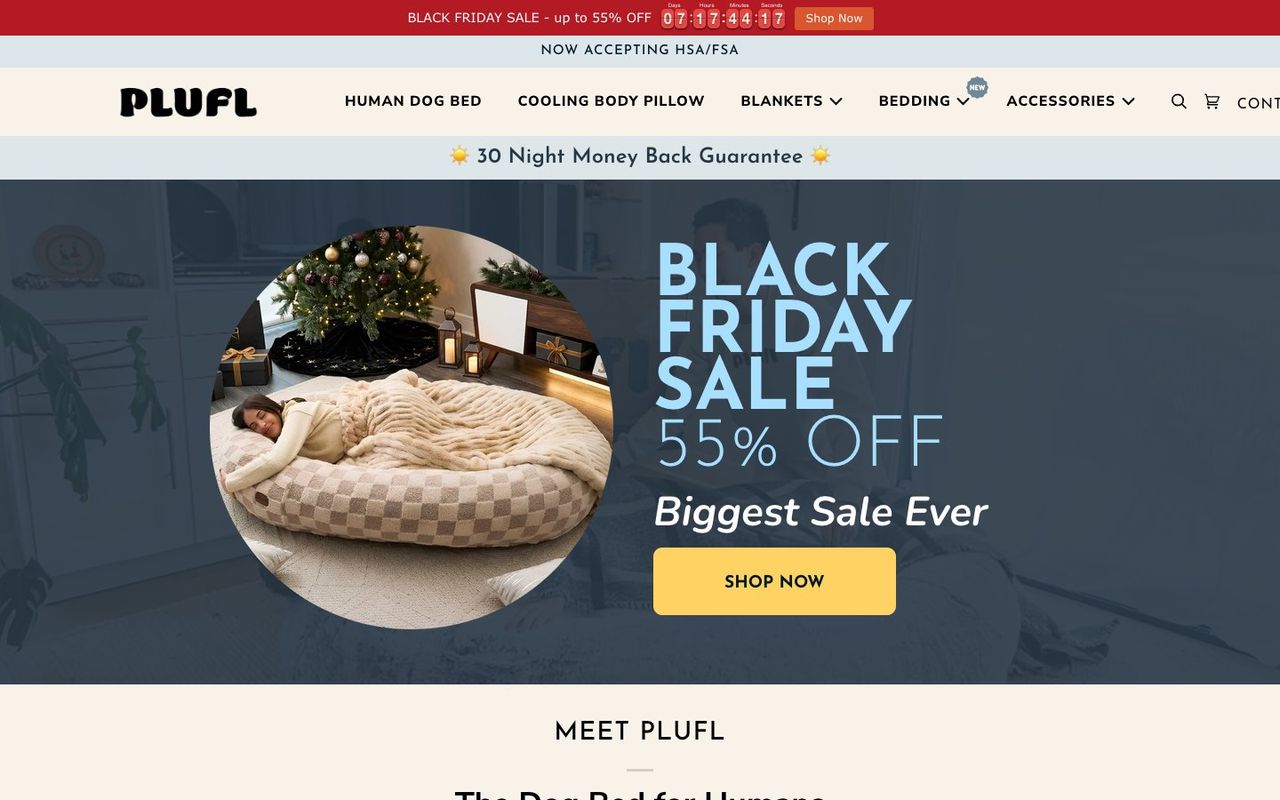
Plufl leans on its Shark Tank appearance and an "As Seen In" section, then lists benefits as short uppercase labels: nap wherever, machine washable, be tucked in, ergonomic support. The tone is playful, which suits a product that sounds like a joke until you see people sleeping in it.
Takeaway: if your product sounds odd, lead with proof (TV, press) before features.
13. Pillow Cube
Pillow Cube(opens in a new tab) built a brand on one shape: a square pillow for side sleepers. The hero stacks a star rating and "Over 1.5 Million Pillows Sold" above a big "Pitch Black Friday" headline, next to a grid of customer photos.
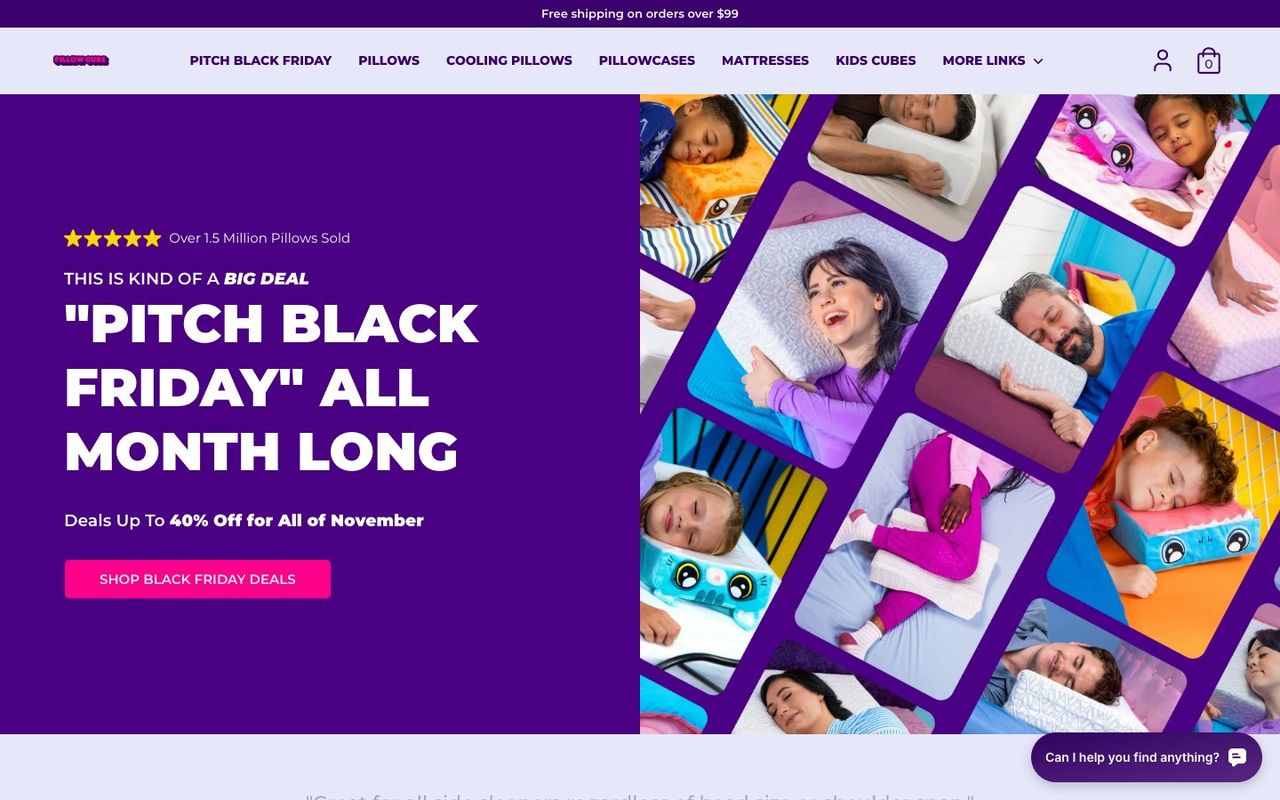
The variants (Side Cube, Ice Cube, Side Cube Riser) are presented as versions of the same product, and a "Sleep on your side and back?" prompt sends combination sleepers to the right one. The store runs on the Boost theme.
Takeaway: a volume claim ("1.5 million sold") above the headline does more than any adjective.
14. Ryze
Ryze(opens in a new tab) sells mushroom coffee. The hero puts the bundle offer in the headline area ("54% Off Bundles + Gifts worth $40"), with 222,449 reviews and a 30-day money-back guarantee right under the button.
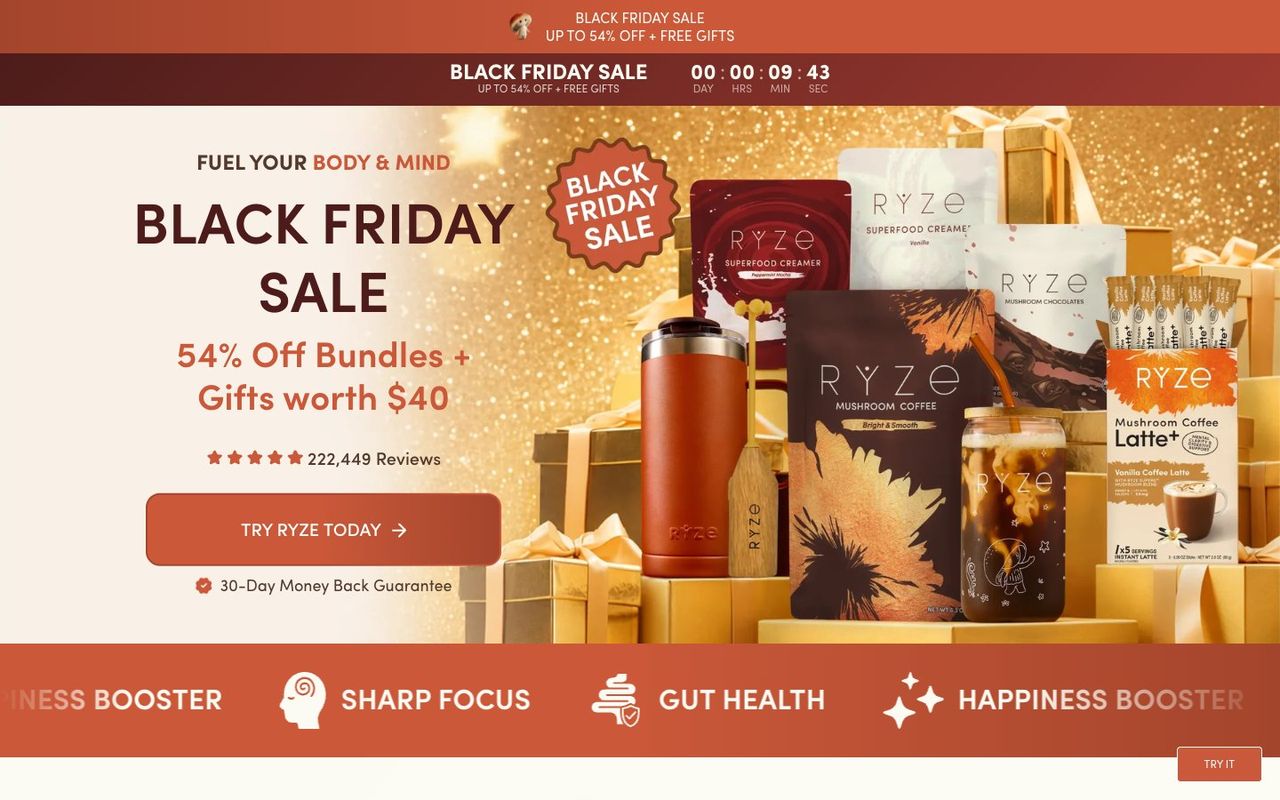
A countdown timer in the announcement bar adds urgency, and a benefit strip below lists outcomes (sharp focus, gut health). Each mushroom in the blend gets its own short card. Ryze runs on Dawn, Shopify's free theme, which proves the theme matters less than the offer and the order of sections.
Takeaway: if your margins allow it, make the bundle the default offer, not the single unit.
15. Squatty Potty
Squatty Potty(opens in a new tab) is one of the classic one-product stories: a toilet stool that became a household name. The store now sells several heights and finishes, so the homepage leads with a "Stool finder, 30-second quiz" banner.
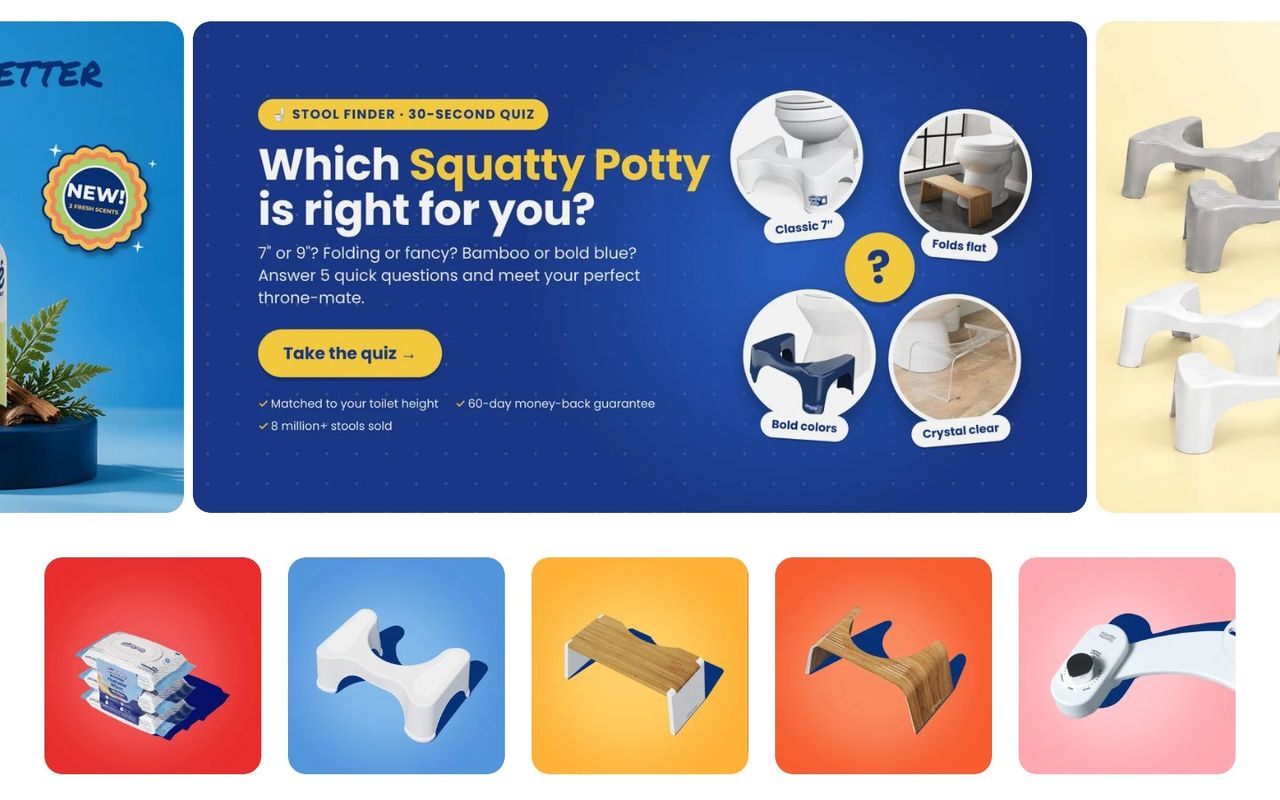
The quiz banner repeats the proof points (matched to your toilet height, 60-day money-back guarantee, 8 million+ stools sold). Elsewhere, a "2 is always better than 1" two-pack nudges buyers toward a second stool for another bathroom. The store runs on Sleek.
Takeaway: once a hero product has variants, a quiz keeps the one-product simplicity.
16. AeroPress
AeroPress(opens in a new tab) sells a coffee maker that has stayed almost the same for years. The top bar shows "75,000+ Five Star Reviews | 70 Countries" on every page.
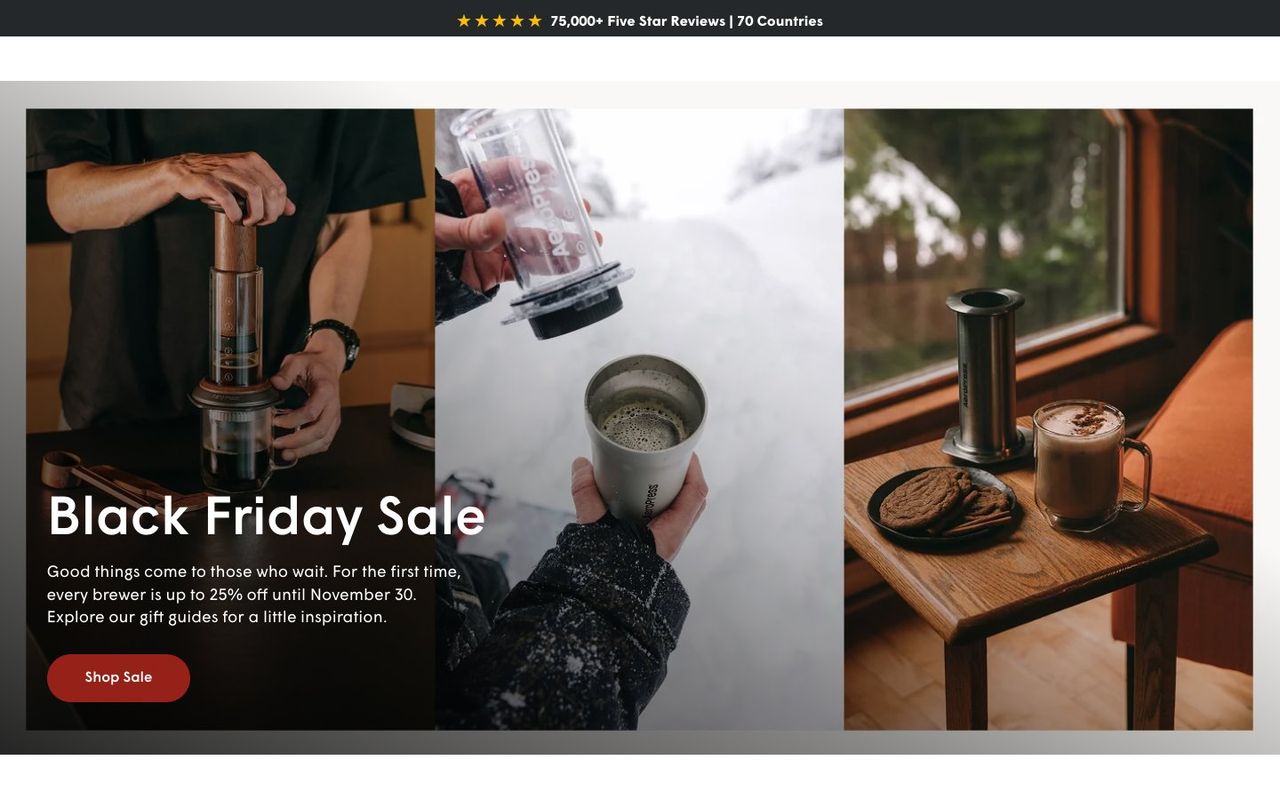
The hero uses three lifestyle photos (camping, travel, home) to show where the product fits, and the menu adds recipes, a world championship and the inventor's story. That content turns a $40-ish gadget into a hobby, which keeps people coming back for filters and accessories. The store runs on Focal.
Takeaway: build content around your product's use (recipes, rituals) to sell the refills.
17. Tediber
Tediber(opens in a new tab) is a French bedding brand that launched with a single mattress and kept it at the center of its store. The hero shows the "Pack lit 5 étoiles" with a Black Month discount, and the Trustpilot score sits in the top bar.
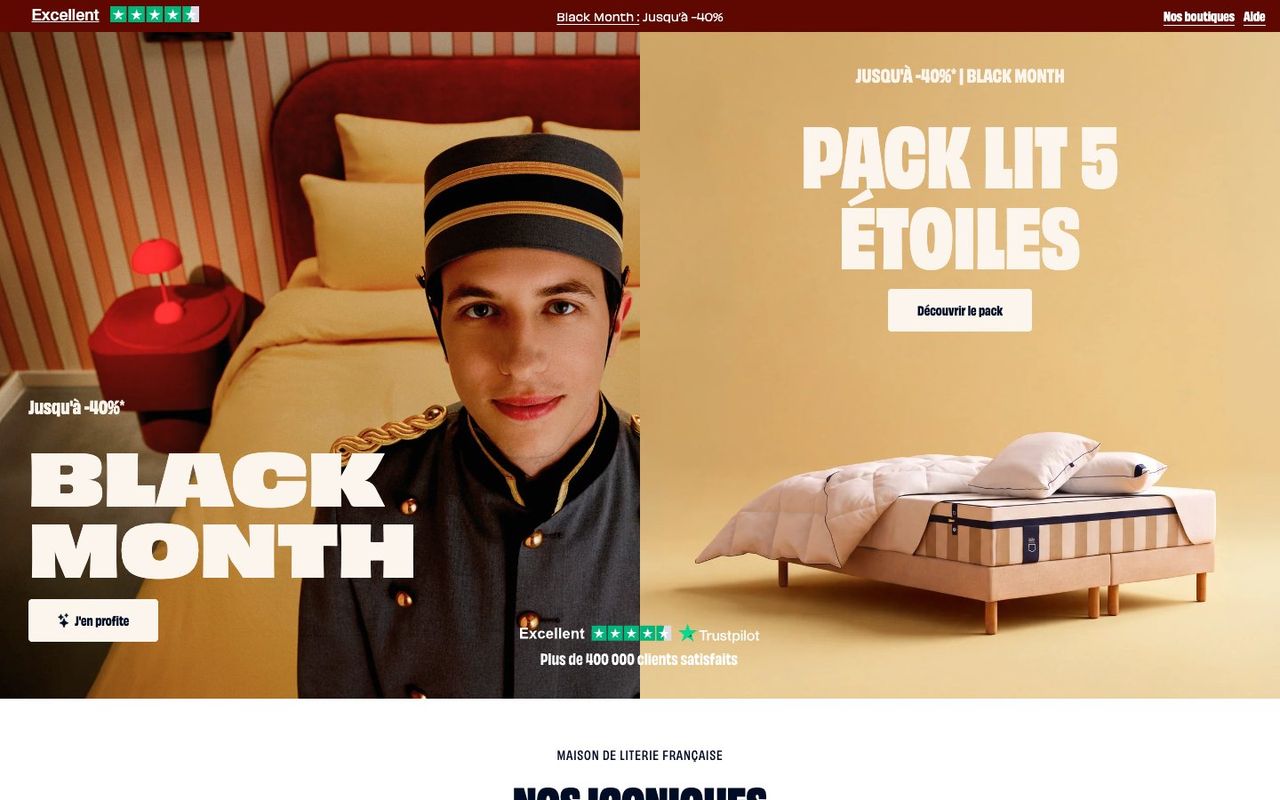
Under the hero, the store lists its commitments in capital letters: 100 nights trial, delivery in 48 hours, 95% satisfied customers, and payment in 3 to 12 instalments. The store runs on Dawn.
Takeaway: for a big-ticket product, state trial, delivery and payment terms before the buyer has to look for them.
18. Myotape
Myotape(opens in a new tab) sells mouth tape that surrounds the lips instead of covering them. The headline, "Close your mouth. Transform your sleep.", sits next to a clear product shot, with three ticked claims and "35 million sleeps and counting" under it.
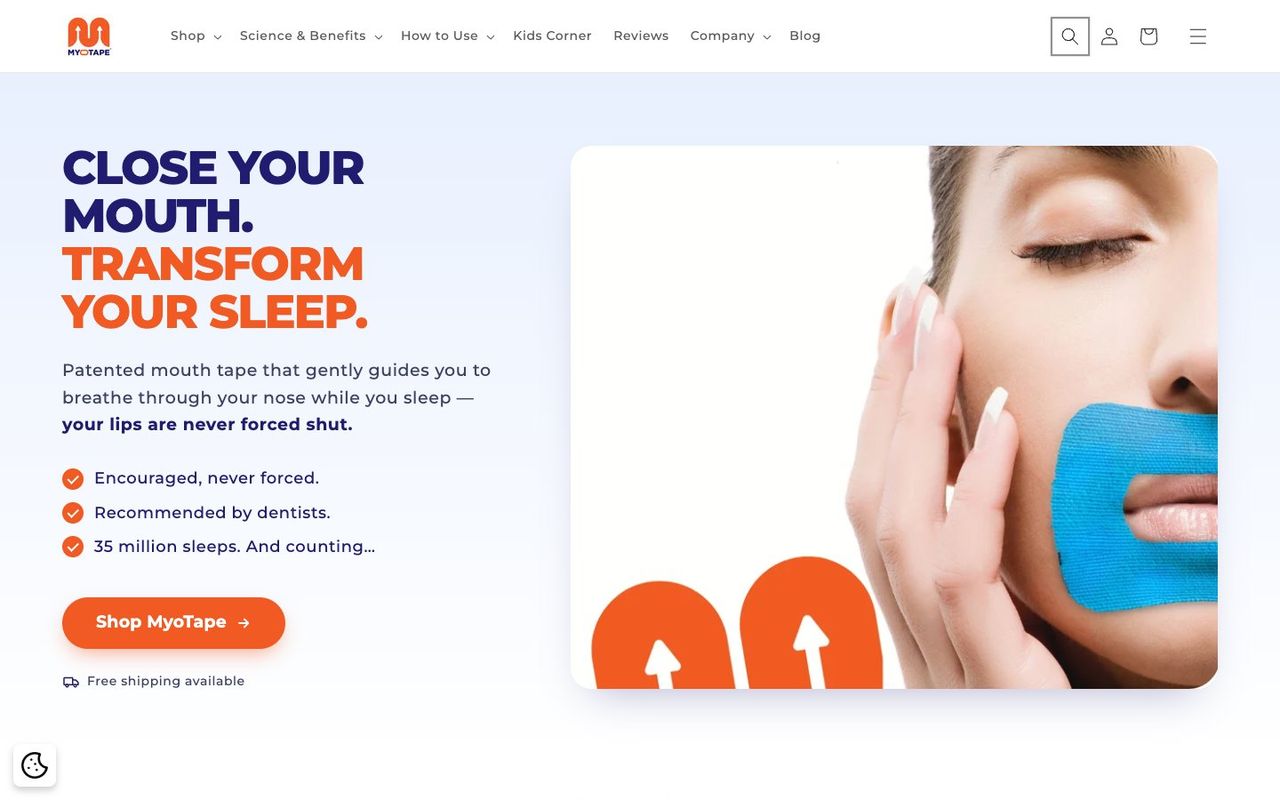
Further down, a press section quotes well-known voices on mouth taping and a "Myotape vs other mouth tapes" comparison shows the difference with competitors like Hostage Tape. The product line splits by user (sensitive skin, adults, beards, kids), which keeps one product while answering "is it for me?".
Takeaway: split variants by who the buyer is, not by technical specs.
19. Loop Earplugs
Loop Earplugs(opens in a new tab) is a Belgian brand that turned one object, a ring-shaped reusable earplug, into a global hit. The homepage hero plays a video of the Loop Eclipse with three words, "Sleep through anything", and the ring shape stays the visual signature of every product.
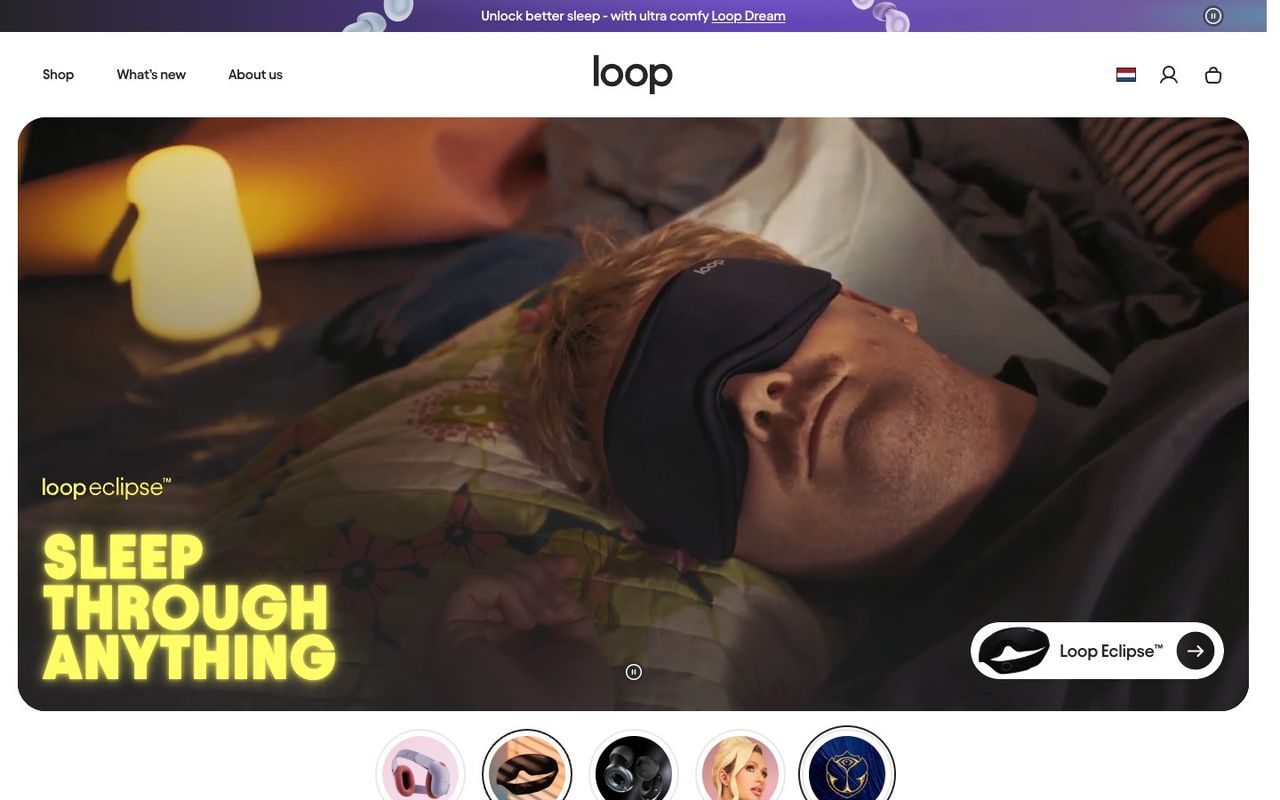
The section to study sits right under the hero: "What brings you here?" lets visitors pick Sleep, Sensitivity, Events, Focus or Kids, and each need shows only the two or three matching earplugs, with a "Help me choose" link for the undecided. Proof comes as numbers, not adjectives: 14 million+ "Loopers", 30,000+ hours of testing and 6,000+ acoustic measurements. The store runs on a custom theme named "Loop".
Takeaway: when one product becomes a range, sort it by the buyer's situation (sleep, concerts, focus) so each visitor still sees one obvious choice.
20. Tushy
Tushy(opens in a new tab) made its name with one product, a bidet attachment that clips onto an existing toilet. The TUSHY Classic 4.0 is still flagged as the best seller, and the hero leads with a volume claim, "Over 3 Million Butts Love TUSHY", plus an early Black Friday offer.
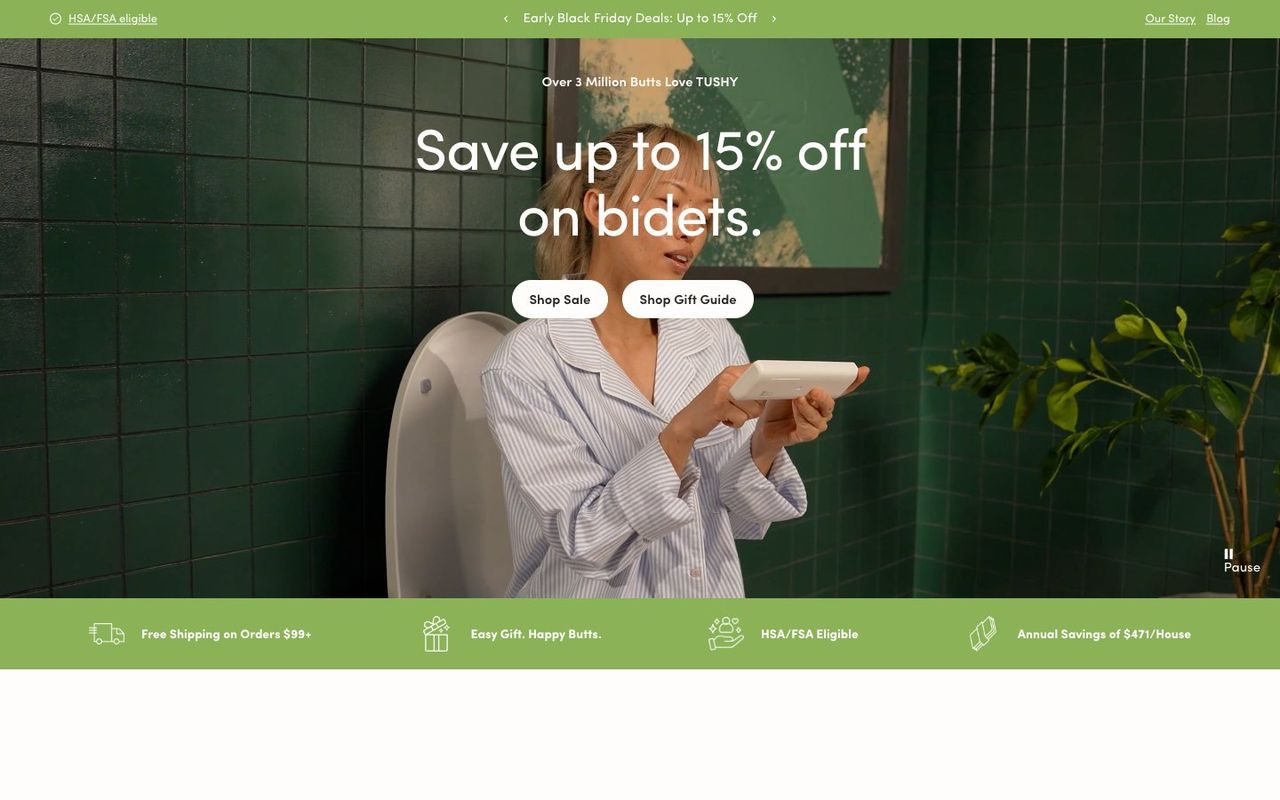
Tushy sells a product many people find awkward, so the page answers each doubt with a short benefit card: "Water cleans 2x better than paper", "The upgrade that pays you back" (an annual saving of $471 per household on paper), and "Installs in under 10 minutes". The tone is cheeky, the claims are concrete, and a "Bidet Match Quiz" plus a toilet compatibility quiz handle the "will it fit my toilet?" question. The store runs on a custom theme named "Tushy".
Takeaway: turn your price into a saving ("pays you back") and your setup into a time ("under 10 minutes").
What the best one-product stores have in common
Put the 20 stores side by side and the same page structure shows up again and again. It is close to a long sales letter, rebuilt with Shopify sections.
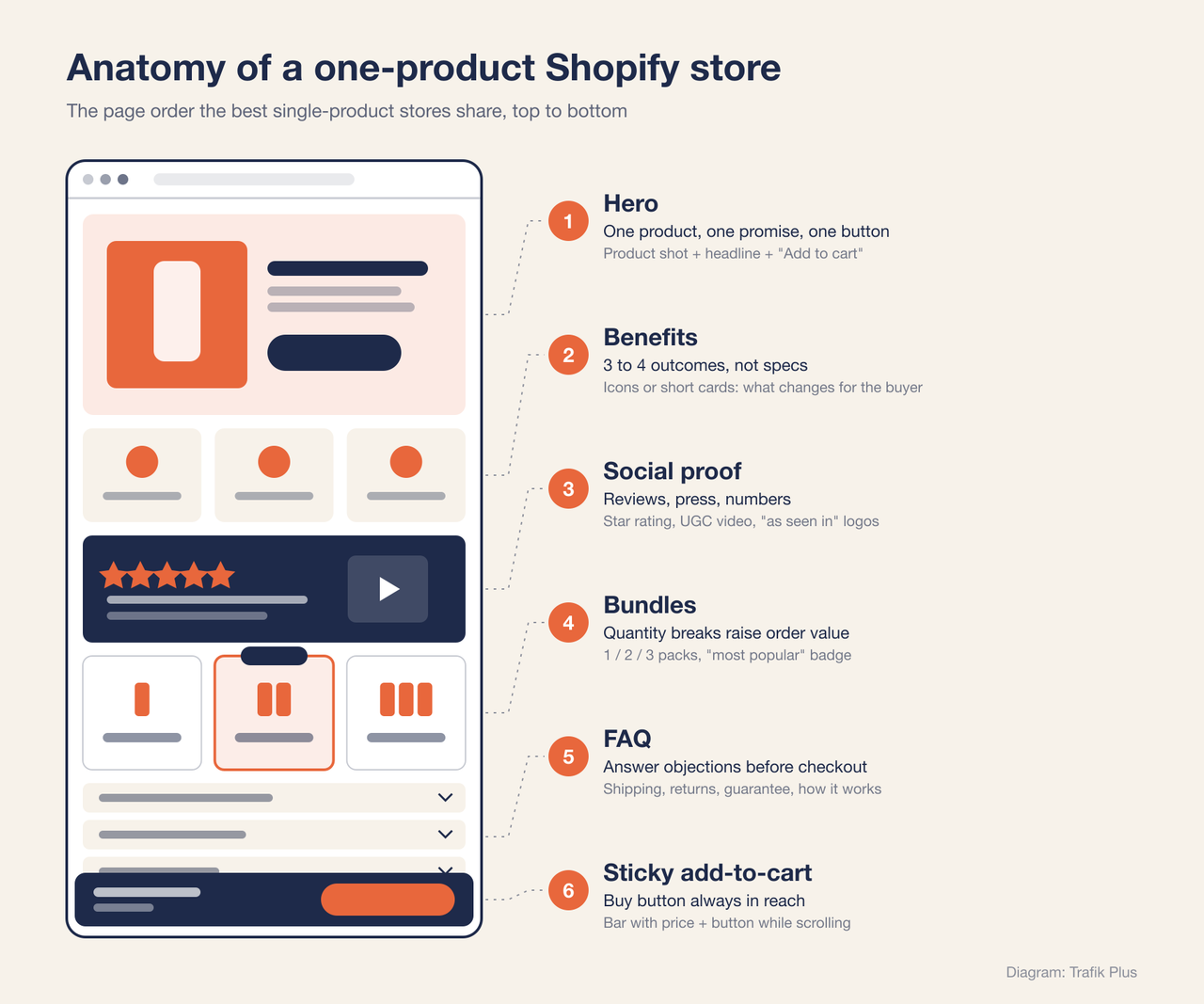
- A hero with one product and one button. Henson, Ozlo and Ka'Chava each show one product, one promise and one call to action.
- Proof right under the hero. Press logos (Hostage Tape, Pulsetto), a volume claim (Pillow Cube, Henson, Tushy) or a review count (AeroPress, Ryze).
- Benefits written as outcomes. Lomi and Plufl list what changes in the buyer's life, not what the product contains.
- Bundles and quantity breaks. Hostage Tape, Ice Barrel, Ryze and Henson all push a bigger first order, which matters when you have nothing else to sell.
- A guarantee in plain sight. Snooz (100 nights), Sensate (90 days), Plufl (30 nights) and Squatty Potty (60 days) put the trial on the first screen.
- A FAQ that handles objections. Ka'Chava answers taste, ingredients and dosage before the visitor has to ask.
- A sticky add-to-cart bar. Once the visitor scrolls past the hero, a bar with the price and button keeps the purchase one tap away.
How to build your own one-product Shopify store
1. Choose a theme built for one product
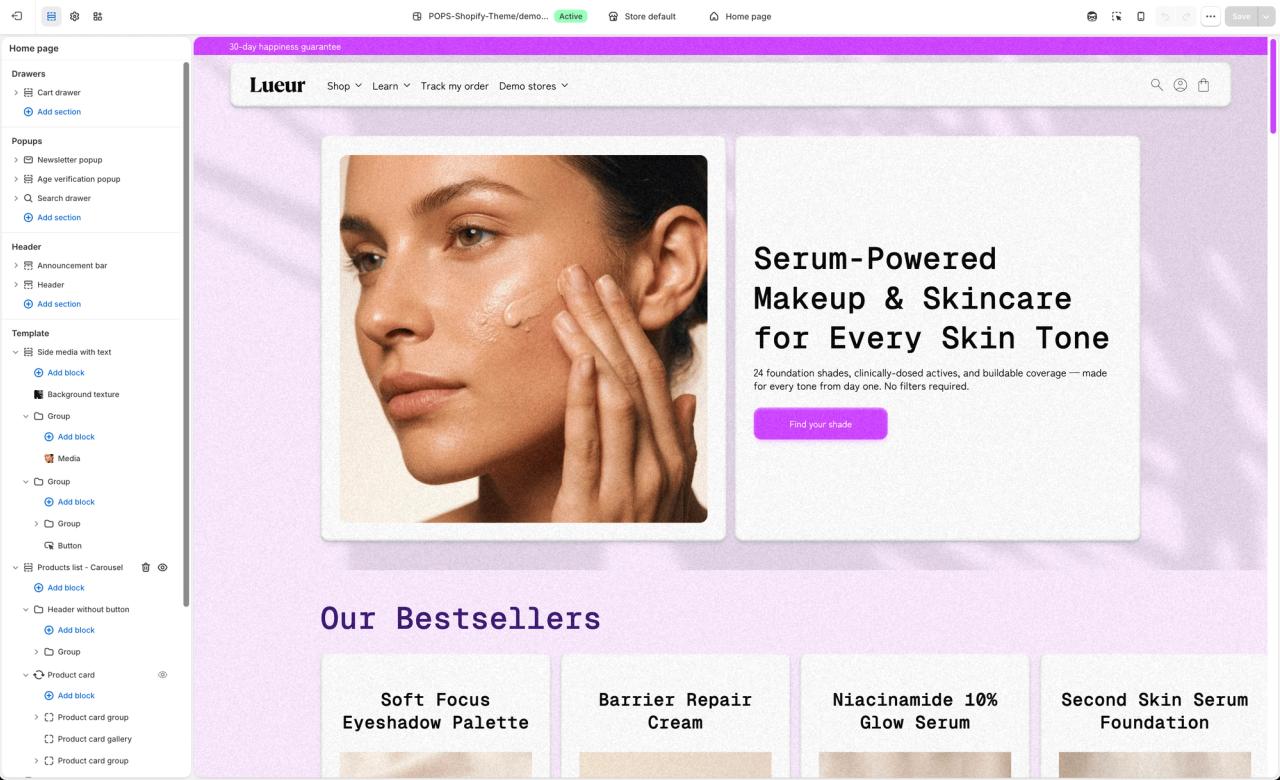
Any Shopify theme can sell one product, but some save you weeks of setup. Look for a sticky add-to-cart bar, quantity pricing or bundles, a FAQ or accordion block, a before/after slider and room for video. We compared seven themes in detail in Best Shopify Themes for a Single Product Store. Here is the short version, with feature lists taken from the Shopify Theme Store(opens in a new tab) on November 17, 2026 and, for Pops, from its code.
Theme | Developer | Price | Sticky add-to-cart | Quantity pricing / bundles | Countdown timer | Before/after slider | FAQ |
|---|---|---|---|---|---|---|---|
Pops | Trafik Plus | Available soon | ✅ Yes | ✅ Yes (build-a-box with 3 discount tiers) | ✅ Yes | ✅ Yes | ✅ Yes |
Trafik Plus | $240 | ✅ Yes | ❌ No (via the Snap Bundles app) | ✅ Yes | ✅ Yes | ✅ Yes | |
Slash Themes | $300 | ✅ Yes | ✅ Yes | ✅ Yes | ✅ Yes | ✅ Yes | |
FoxEcom | $350 | ✅ Yes | ✅ Yes | ✅ Yes | ✅ Yes | ✅ Yes | |
NETHYPE | $390 | ✅ Yes | ✅ Yes (built-in bundles) | ✅ Yes | ✅ Yes | ✅ Yes | |
DigiFist | $420 | ✅ Yes | ✅ Yes | ✅ Yes | ✅ Yes | ✅ Yes | |
Shopify | Free | ✅ Yes | ✅ Yes (volume pricing table, B2B catalogs only) | ❌ No | ✅ Yes | ✅ Yes |
"Not listed" means the feature does not appear in the theme's Theme Store feature list; it may still be possible with an app or custom code. Pops also includes a subscription (selling plan) picker, a Trustpilot rating block and a cart upsell slider. It is not on the Theme Store yet.
Remember that 5 of the 20 stores (Ozlo, Feno, Ryze, Tediber, Myotape) are built on Dawn, Shopify's free theme, and several others on a custom build. The theme gives you the blocks; the conversion comes from the offer, the proof and the order of sections. For a wider view, see our picks of the highest-converting Shopify themes.
2. Structure the page like a sales letter
Use the homepage as the product page, or send all traffic straight to the product page. Then stack the sections in the order shown in the diagram above:
- Hero: product shot, one-sentence promise, price or offer, one button.
- Proof bar: press logos, review count or units sold.
- Problem and mechanism: what is wrong today and how the product fixes it, in one metaphor (Pulsetto's "off switch for stress").
- Benefits: three or four outcomes with icons.
- Comparison: your product against the usual alternative (Ozlo, Myotape, Feno).
- Offer: bundles or quantity tiers with a "most popular" badge (Hostage Tape).
- Reviews and UGC: customer photos and short videos.
- Guarantee: the trial length in a large font.
- FAQ: shipping, returns, how it works, who it is for.
Keep the menu short (Shop, How it works, Reviews, FAQ) and remove anything that leads away from the product.
3. Add the right apps, and only those
A one-product store needs fewer apps than a catalog store, but a few make a clear difference:
- Reviews: a reviews app with photo and video reviews, since social proof does most of the selling.
- Bundles and quantity breaks: if your theme has no tiers built in, a bundle app gives you 1/2/3-pack pricing. Our guide to bundles in ecommerce explains which type to choose.
- Subscriptions: for consumables (mouth tape, coffee, shakes), a subscription app adds subscribe-and-save to the product form.
- Post-purchase upsell: one relevant add-on after checkout (refills, a case, a second unit).
- Quiz: only if you have variants, as Squatty Potty, Intake and Tushy do.
Every app adds scripts, so check your page speed after each install. On a one-product store, a slow hero costs more than a missing feature.
FAQ
What is a one product Shopify store?
A one product Shopify store is an online store built around a single hero product. The homepage works as a long product page, with one main call to action, instead of a catalog with categories. Many brands add variants, refills or accessories over time but keep the same single-product structure.
Are one product stores still profitable?
Yes, when the product solves a clear problem and the store raises order value. The stores in this list use bundles, quantity tiers, subscriptions and add-ons (Hostage Tape, Ryze, Henson) so that one product can still produce a healthy average order value.
What is the best Shopify theme for a one product store?
Pick a theme with a sticky add-to-cart bar, quantity pricing or bundles, a FAQ block and a before/after or comparison section. Mono, Sleek, Wonder and Release list all of these on the Shopify Theme Store; we also develop Pops and Cama for this kind of store. Free themes like Dawn and Horizon work too, as Ryze and Tediber show, but need more apps.
Can I use a free theme for a one product store?
Yes. Five stores in this list (Ozlo, Feno, Ryze, Tediber and Myotape) are built on Dawn, Shopify's free theme. You will usually add a bundle app and a sticky add-to-cart app, so compare that monthly cost with the one-time price of a paid theme.
How do I find out which theme a Shopify store uses?
Open the store, view the page source and search for "Shopify.theme". The schema_name value gives the theme's name, such as Sleek or Impact. If the name does not match a Theme Store theme, the store uses a custom or renamed theme.
Should a one product store use the homepage or the product page as the landing page?
Both can work. Henson, Ozlo and Ka'Chava turn the homepage into a long sales page with a button to the product page, while ads often link straight to the product page. Whatever you choose, keep the same order: hero, proof, benefits, offer, reviews, guarantee and FAQ.
Keep reading

16 Best Kombucha Shopify Store Examples (Desktop + Mobile)
16 real kombucha brands on Shopify, from Kyo and Health-Ade to GT's and Remedy: home pages, product pages, pack pickers and subscriptions on desktop and mobile, with the theme each store uses.

SEO vs PPC: Organic vs Paid Search on a Fixed Budget
SEO vs PPC for a Shopify store with a fixed budget: cost per click vs cost per page, click share data, when to move spend, and a worked $3,000 budget split.

How to Increase ROAS From Your Store, Not Your Ad Account
ROAS = conversion rate × AOV ÷ CPC. Here is how to raise the store side of that formula, landing pages, bundles, checkout, email and LTV, with worked numbers.