
15 Best Beauty Shopify Store Examples (Desktop + Mobile)

Summarize this article with AI


15 of the best beauty Shopify store examples, with desktop and mobile screenshots of mega menus, shade finders, sets, subscriptions and cart drawers.
We went through 15 real beauty Shopify stores, from makeup and skincare to haircare, and looked at what each one does well: the home page, the navigation, shade finders, sets and kits, the cart and the learning content. Each store comes with how it is built on Shopify, and at the end there is a table of the features they share and how to build them yourself.
Disclosure: we develop the Pops and Cama Shopify themes, which we mention at the end as two ways to get these features: Cama for a small budget, Pops for a bigger one.
The 15 beauty Shopify stores at a glance
Store | Country | Category | Shopify build | Standout feature |
Gisou | Netherlands | Haircare, lip care | Custom theme | Mega menu that lists named sets and duos |
Rare Beauty | US | Makeup, fragrance | Custom theme | Shade Finder in the main menu and on the home page |
Fenty Beauty | US | Makeup, skincare, body | Custom theme | Shortcuts for sets, minis, refills and FSA/HSA products |
Tower 28 | US | Makeup, sensitive-skin skincare | Custom theme | Skincare menu by concern (eczema, rosacea, acne) |
Merit | US | Minimalist makeup | Custom theme | Free gift with the first order and a shade matching quiz |
Dieux | US | Skincare, eye masks | Custom theme | Free sample picker in the cart drawer |
Saie | US | Clean makeup | Custom theme | Shade Finder plus a Makeup Class in the menu |
Kosas | US | Makeup that acts like skincare | Custom theme | Shade quiz in the menu, 38 shades and a subscription on one product |
Jones Road | US | "No-makeup" makeup, skincare | Custom theme | Kits menu and a tiered discount bar |
Rhode | US | Skincare, lip and cheek | Custom theme | One-campaign home page with early-access login |
Topicals | US | Skincare for flare-ups | Headless (Hydrogen) | Playful storytelling and dedicated subscription and rewards pages |
Glossier | US | Skincare, makeup, fragrance | Custom theme | Fragrance-first menu and a tiered "Buy more + save" bag |
Milk Makeup | US | Makeup, skincare | Custom theme | Shade finders on product pages and a free shipping plus samples bar |
OUAI | US | Haircare, body, fragrance | Custom theme | Jumbo, Refill and Travel sizes plus Shop by Scent in the menu |
Westman Atelier | US | Luxury clean makeup | Custom theme | Shade picker inside the cart upsell and a free video concierge |
Builds were identified from each store's public theme metadata on November 23, 2026. "Custom theme" means the store does not run a theme from the Shopify Theme Store. Topicals is headless: it uses Shopify's Hydrogen framework instead of a theme.
1. Gisou (Netherlands)
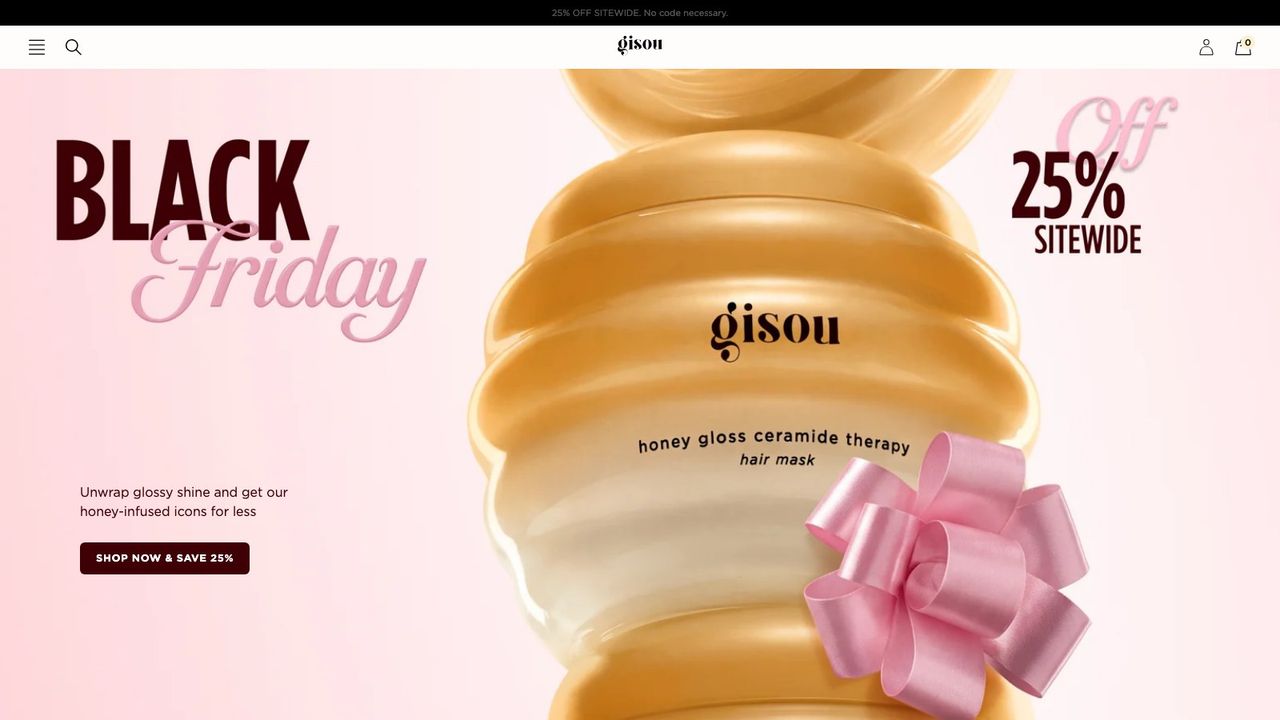
Gisou(opens in a new tab) sells honey-infused haircare, lip care and skincare, and the whole store is built around one story: the Mirsalehi Bee Garden and six generations of beekeeping. The home page leads with a product promise ("Unwrap stronger, glossier hair") and the honey story comes right after it, so the brand feels like a world and not just a catalogue.
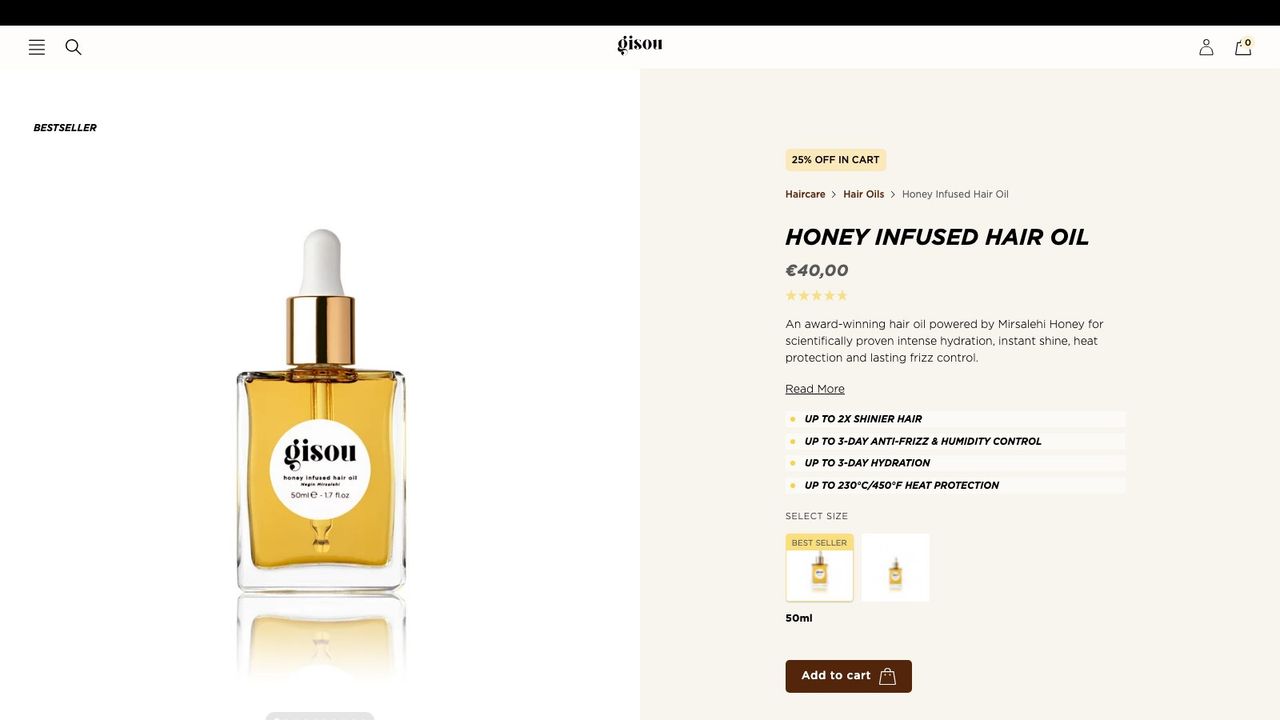
The navigation does the selling. The mega menu does not only list categories: it names real products and sets, such as the Honey Gloss Hair Wash Duo, the Shower To Shine Kit and the Honey Glow Haircare Trio, next to dedicated entries for gift sets and bundles, web exclusives and a Hair Hub. A visitor can reach a bundle in one click from any page.
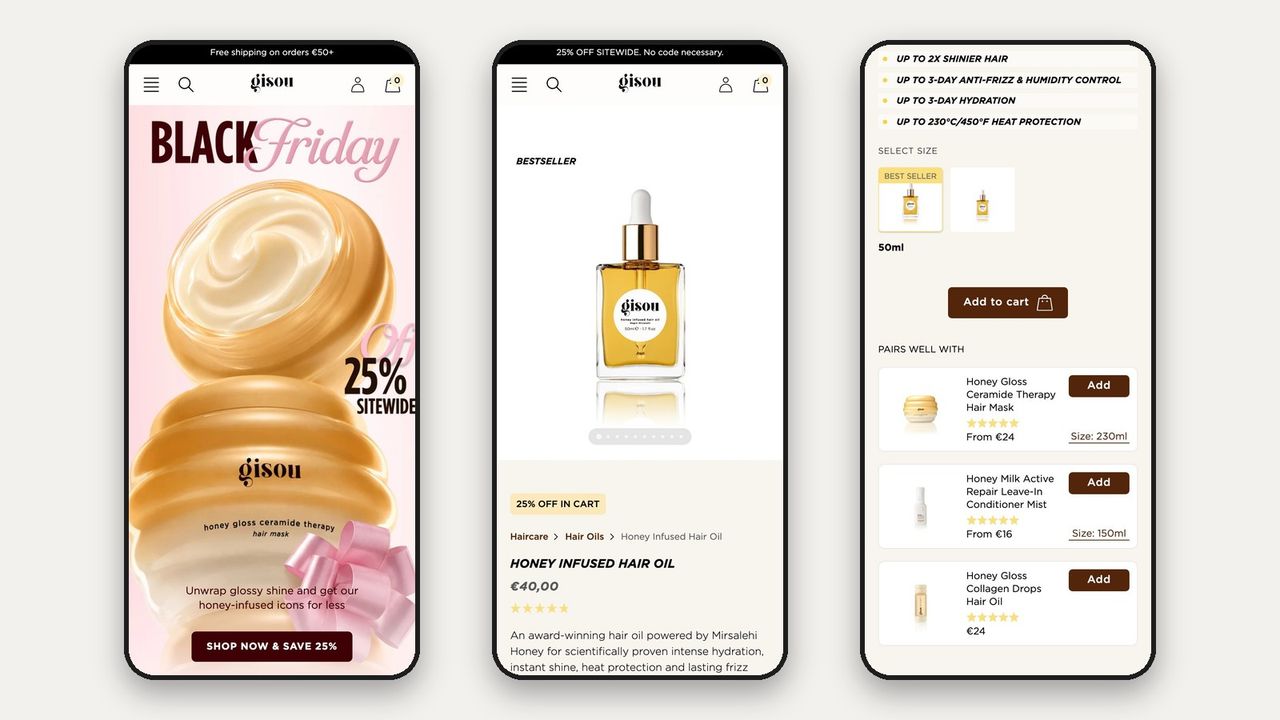
What to borrow: put your best sets and duos by name in the mega menu, so your highest-value products are one click away.
2. Rare Beauty (US)
Rare Beauty(opens in a new tab) has one of the clearest main menus of the list: New, Bestsellers, Fragrance, Face, Eye, Lip, Body, Tools, Online Only, then a Shade Finder and Rare Impact. The shade finder sits at the same level as the product categories, because for foundation and concealer the shade is the first thing a new customer needs to solve.
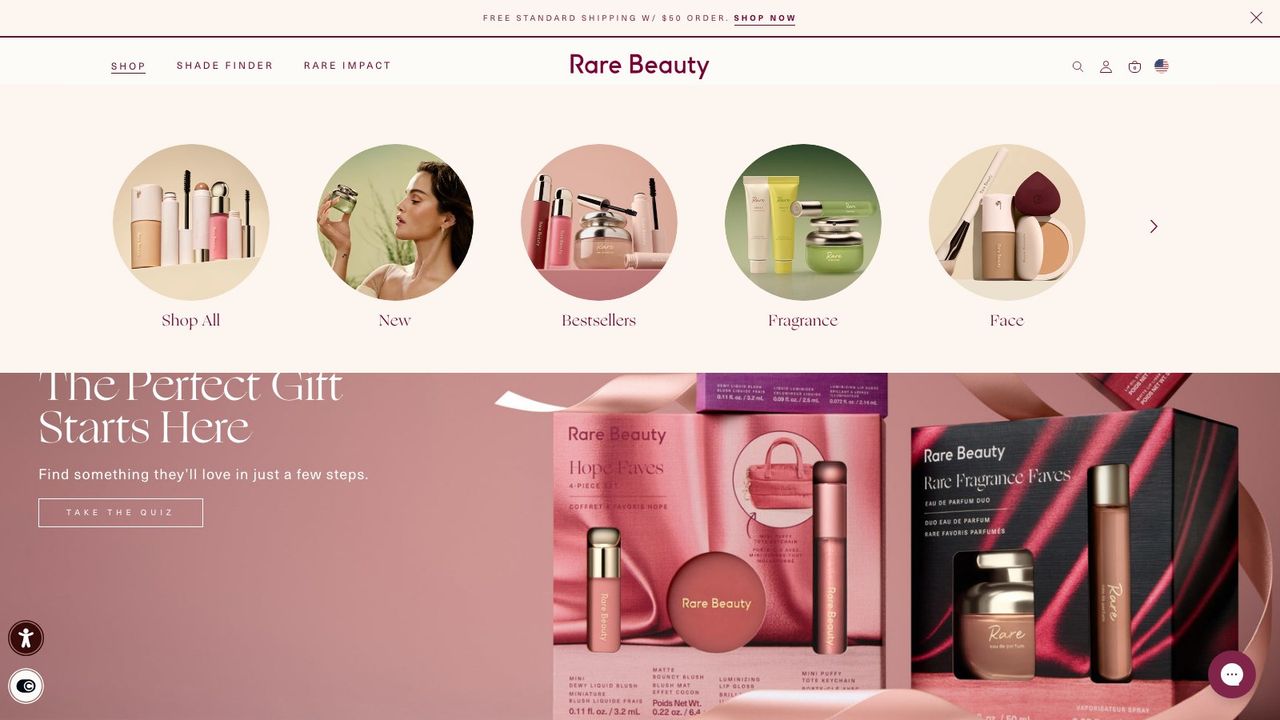
The home page repeats the same logic in blocks. "Try These Best Sellers" gives a fast start, a foundation shade finder block comes next, and the mission (mental health, through Rare Impact) gets its own block lower down, along with a blog section and sets. Product first, cause second, content third.
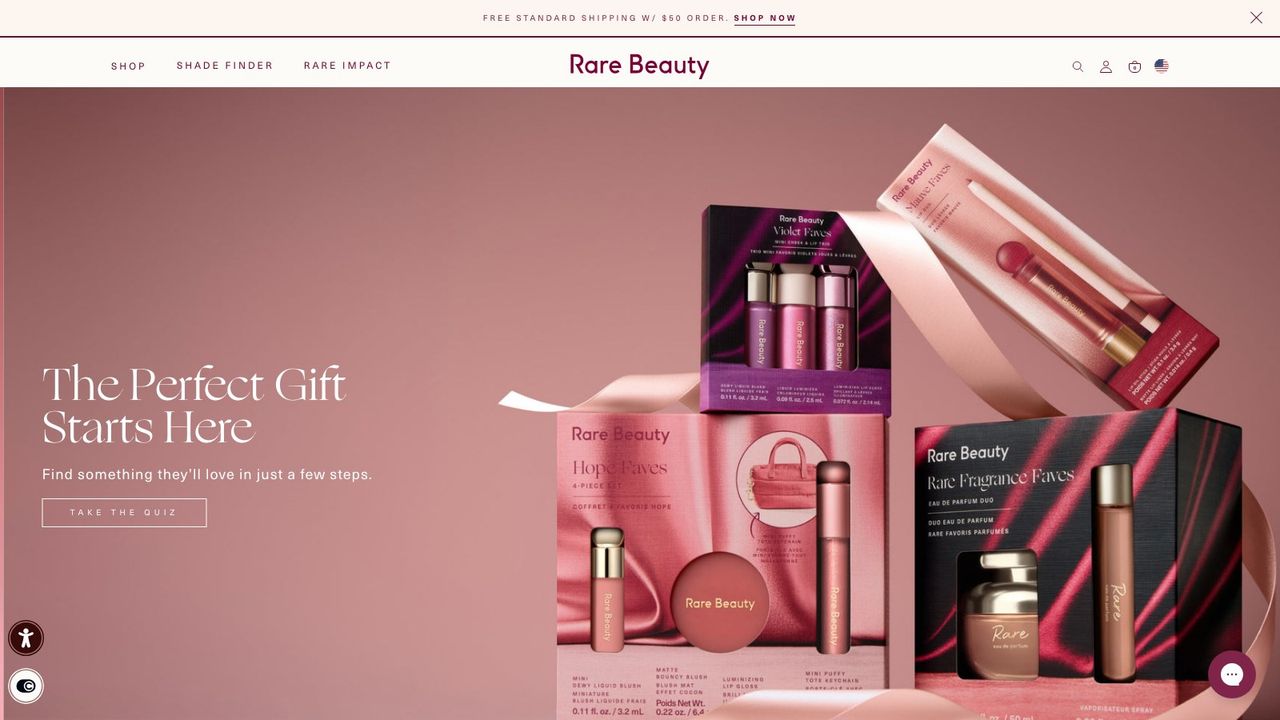
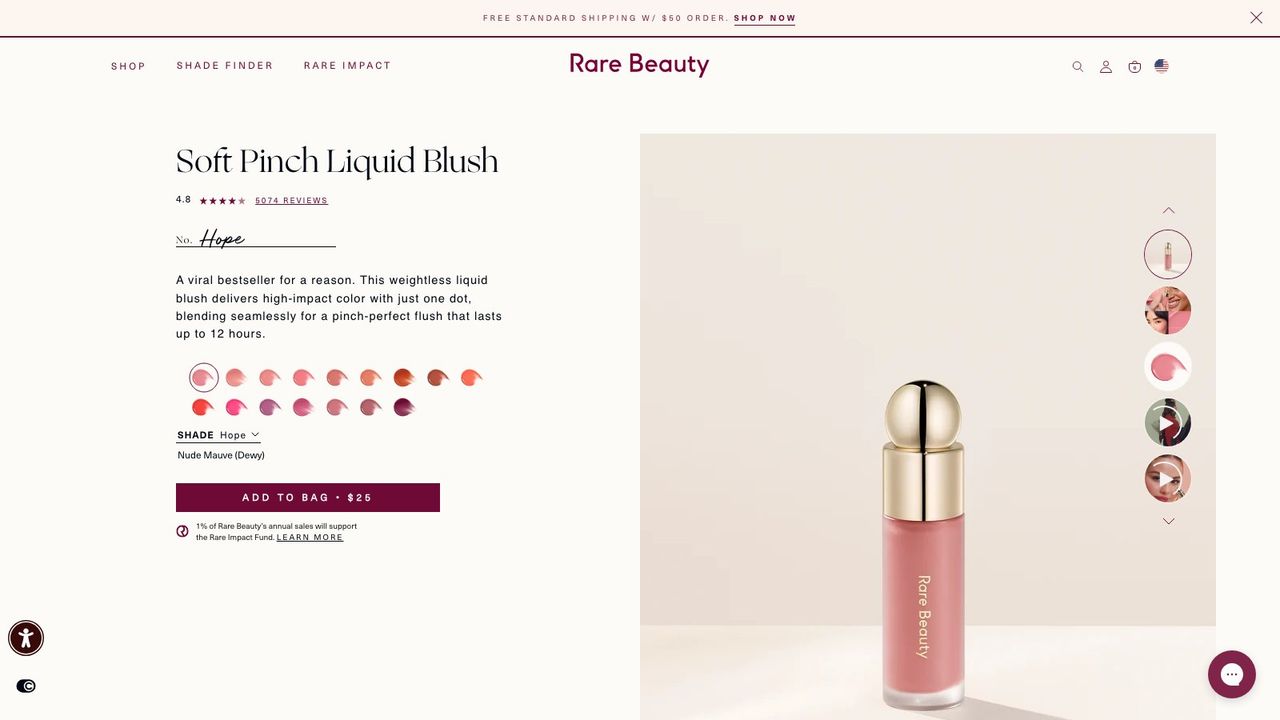
What to borrow: link your shade finder in the main menu and again on the home page, not only on the product page.
3. Fenty Beauty (US)
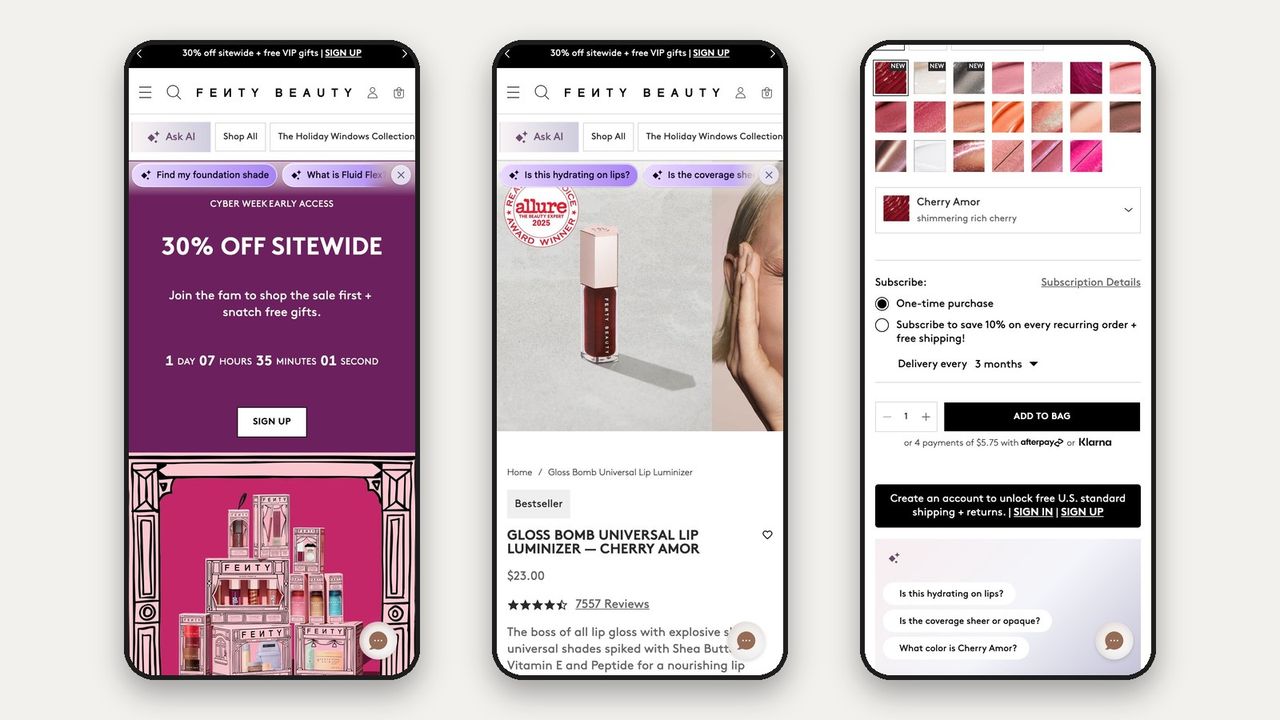
Fenty Beauty(opens in a new tab) has a large catalogue across makeup, skincare and body, so its mega menu is built as a set of shortcuts: Save with Sets, Minis, Exclusives, Award Winners, Rihanna's favourites, and a Refillables entry. There is even a link for FSA and HSA eligible products, which is a smart detail for skincare shoppers in the US.
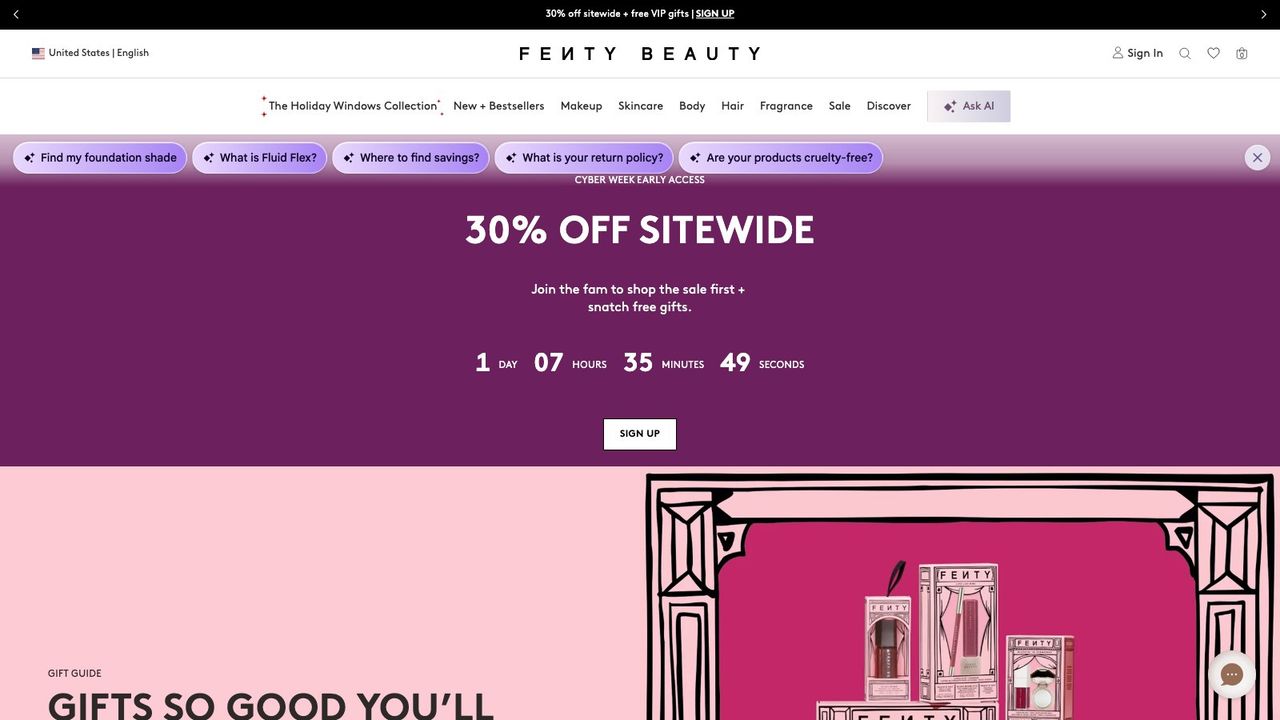
Behind the scenes the store loads code files named after a bundle builder and a gift with purchase, which fits what the menu pushes: sets, minis and free gifts. Fenty is also a good reminder that a big brand does not need a generic layout. The theme is custom and the menu is shaped by how people actually shop the range.
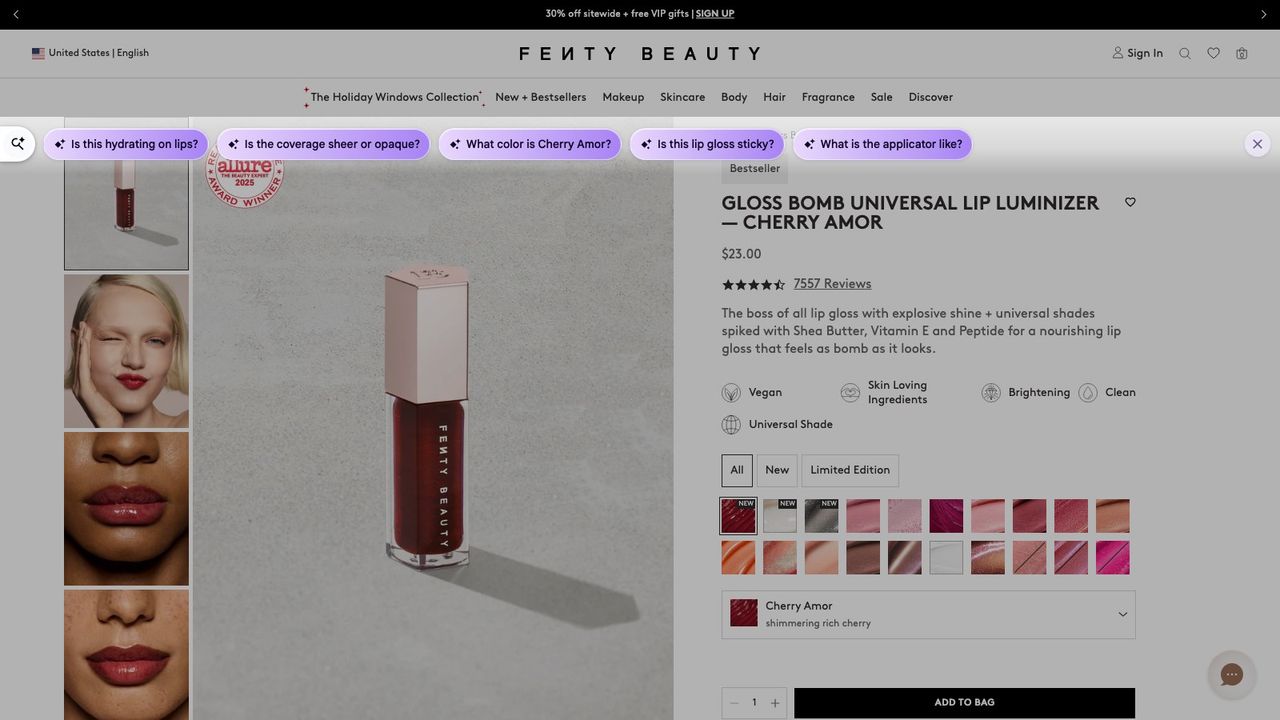
What to borrow: add shortcut entries such as sets, minis and best sellers, so people can browse by how they want to buy, not only by product type.
4. Tower 28 (US)
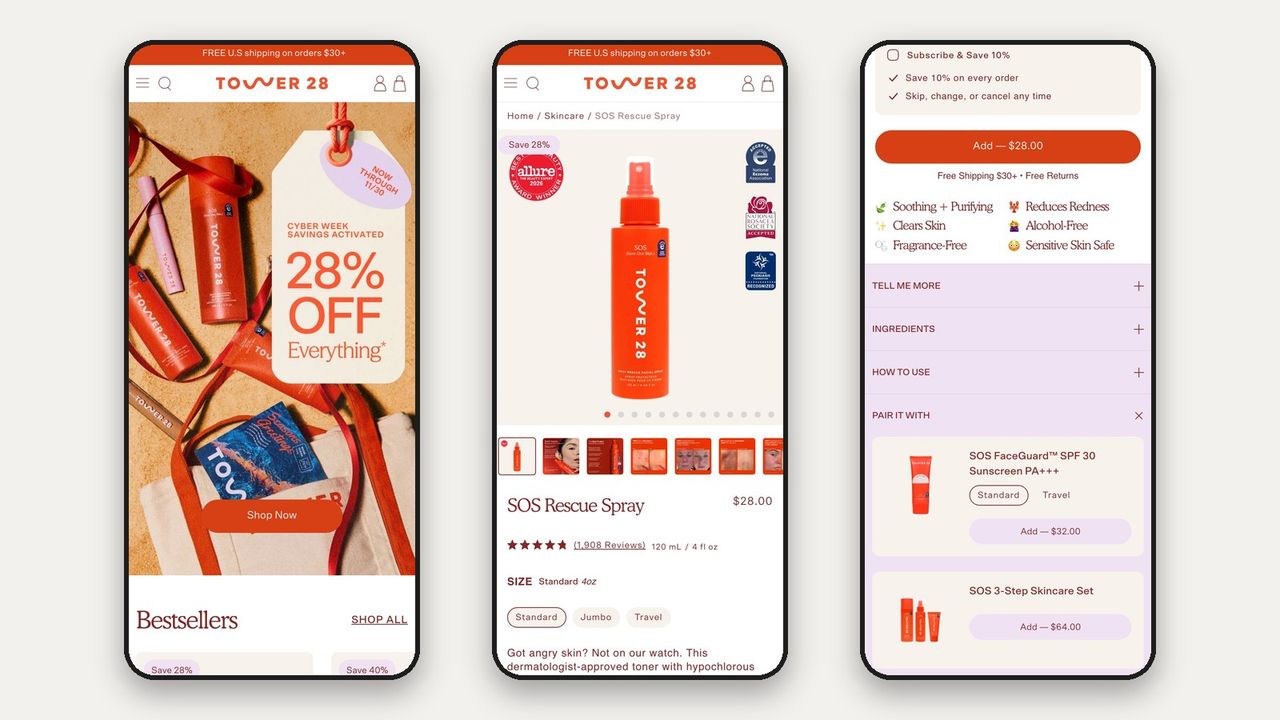
Tower 28(opens in a new tab) is made for sensitive skin, and the navigation says so. The skincare menu is organised by concern: Acne, Eczema, Redness and Rosacea, Sensitivity, Dryness, Oily and Dehydrated. Makeup is organised the way people build a look: Complexion, Lip, Cheek, Eye and SPF.
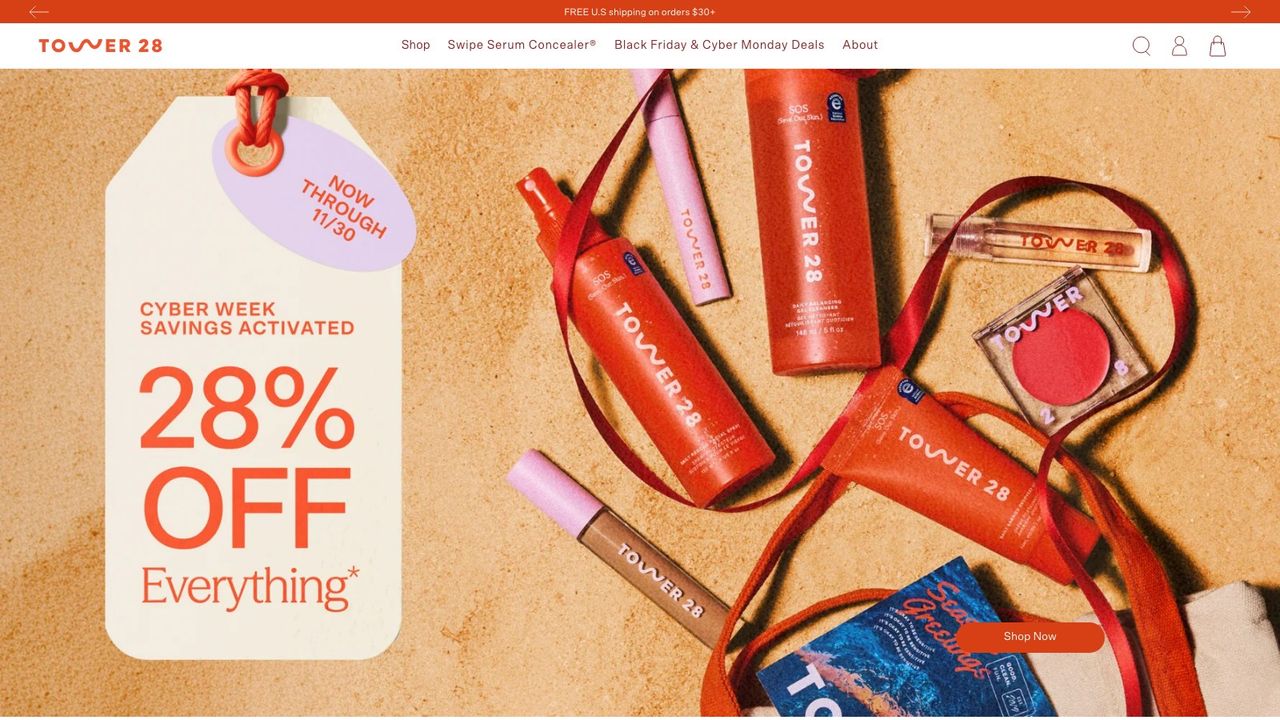
During the holidays the store adds gifting entries (Our Best Gifts, Stocking Stuffers, Gifts Under $25), a collaboration with Jell-O and a Merch Shop. It is a good example of a menu that changes with the season while the core structure stays the same.
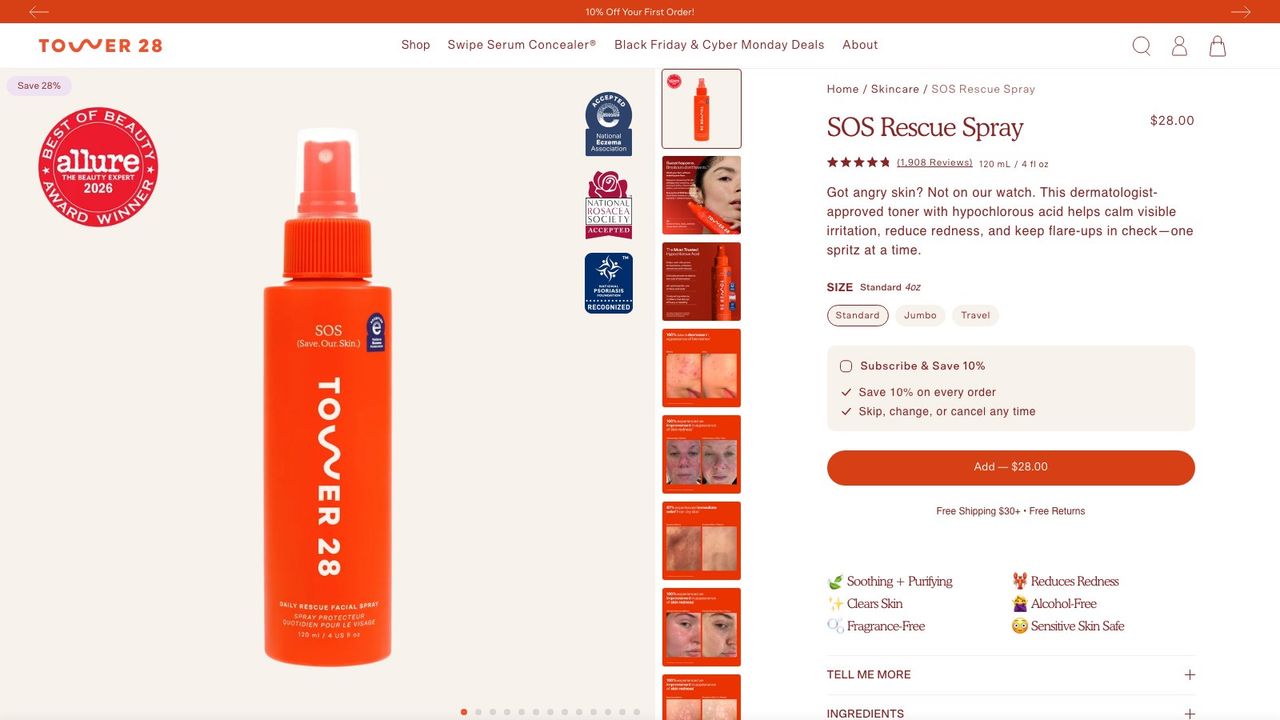
What to borrow: if your customers shop by skin problem, name the concern in the menu ("Redness", "Dryness") instead of the product type.
5. Merit (US)
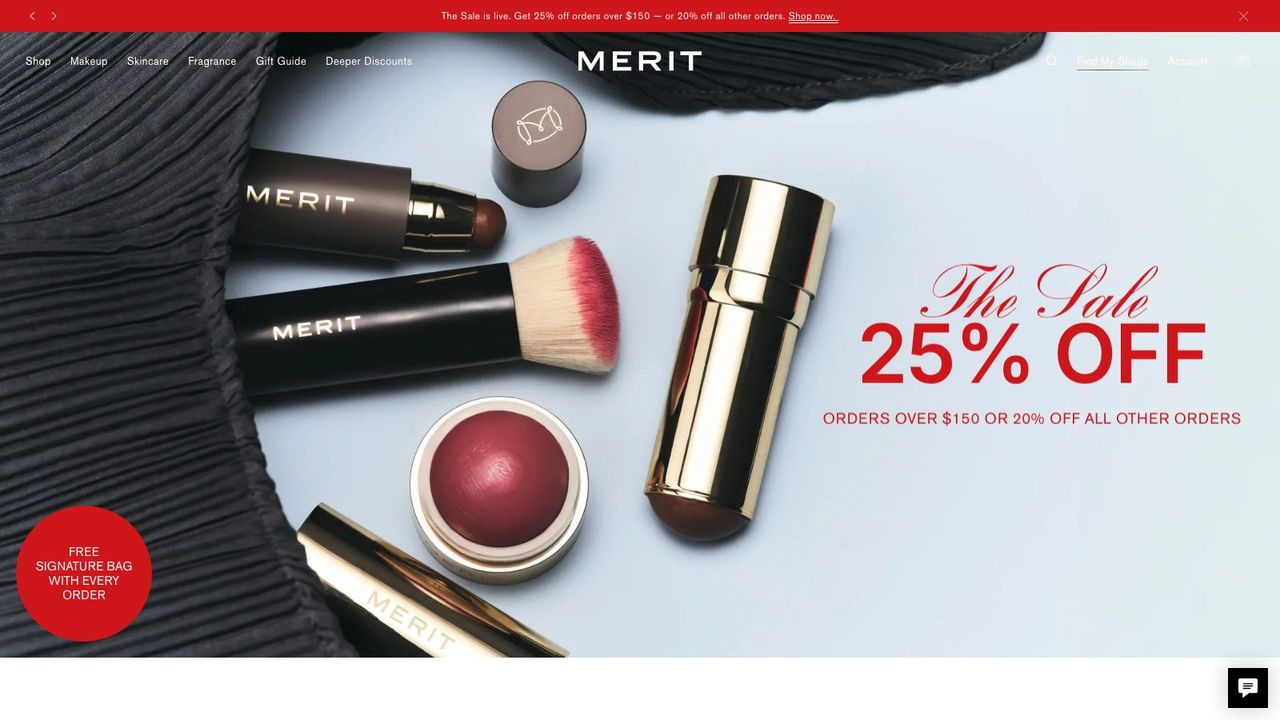
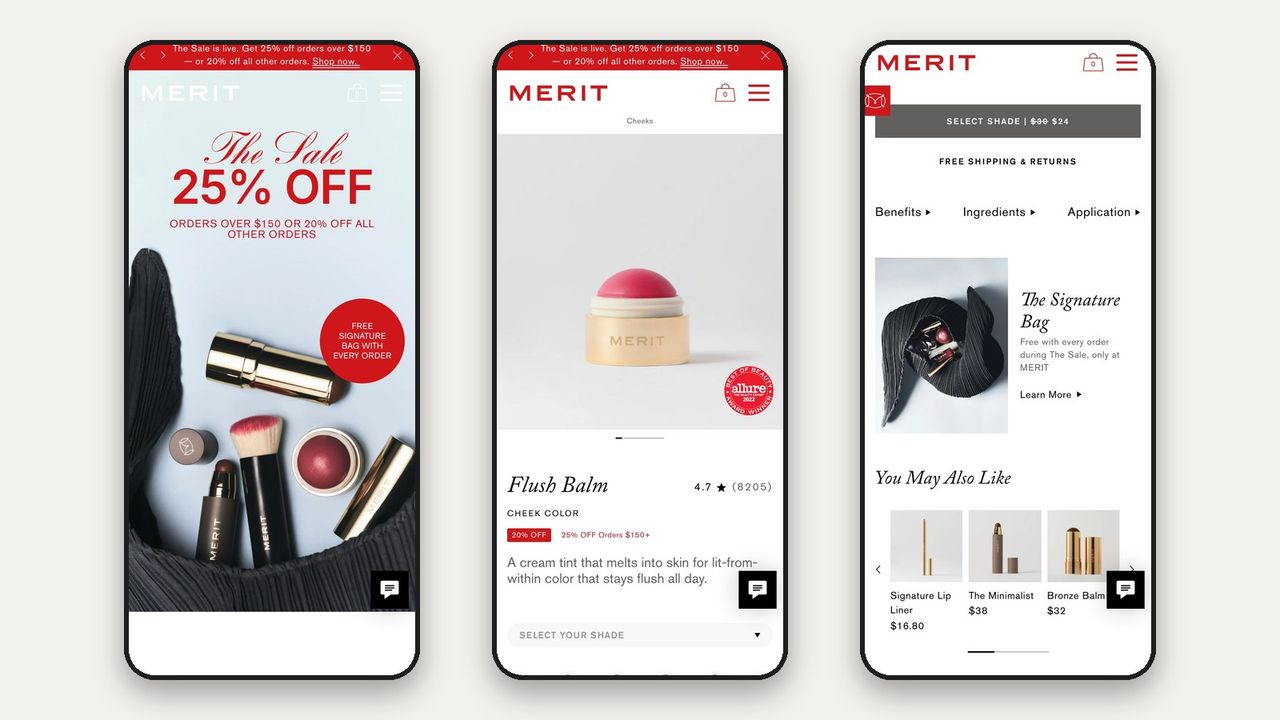
Merit(opens in a new tab) sells a short, minimalist makeup range, and the store matches it: few products, a lot of space, and offers that are easy to understand. The hero promotes the Signature Bag, free with a first order, next to a holiday gift edit. The menu keeps it simple with Best-sellers, Sets, Get the Look and a rewards page.
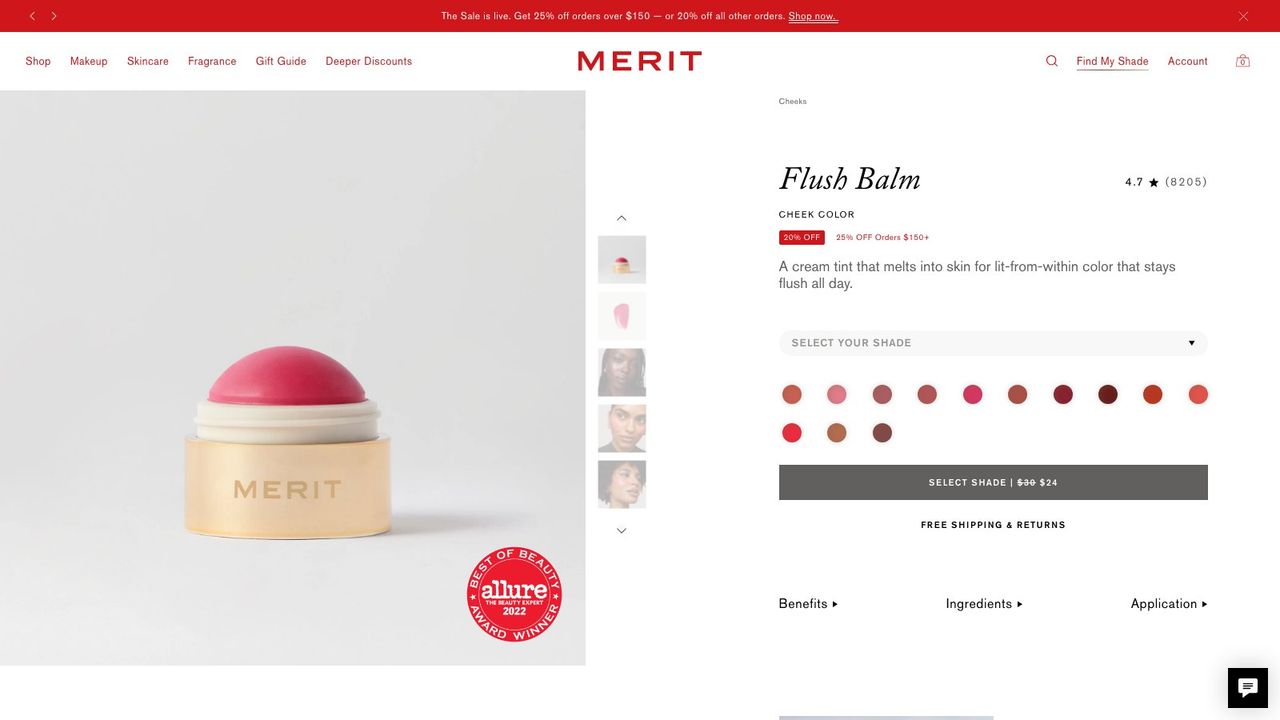
The shade matching quiz has its own page ("Shade Matching, Made Simple") and is linked from the navigation. A short range with many shades is exactly where a quiz pays off: the Flush Balm, for example, comes in 13 shade variants, and a first-time buyer should not have to guess.
What to borrow: a free gift on the first order is a clear, low-effort offer, and it is easy to show in the hero section.
6. Dieux (US)
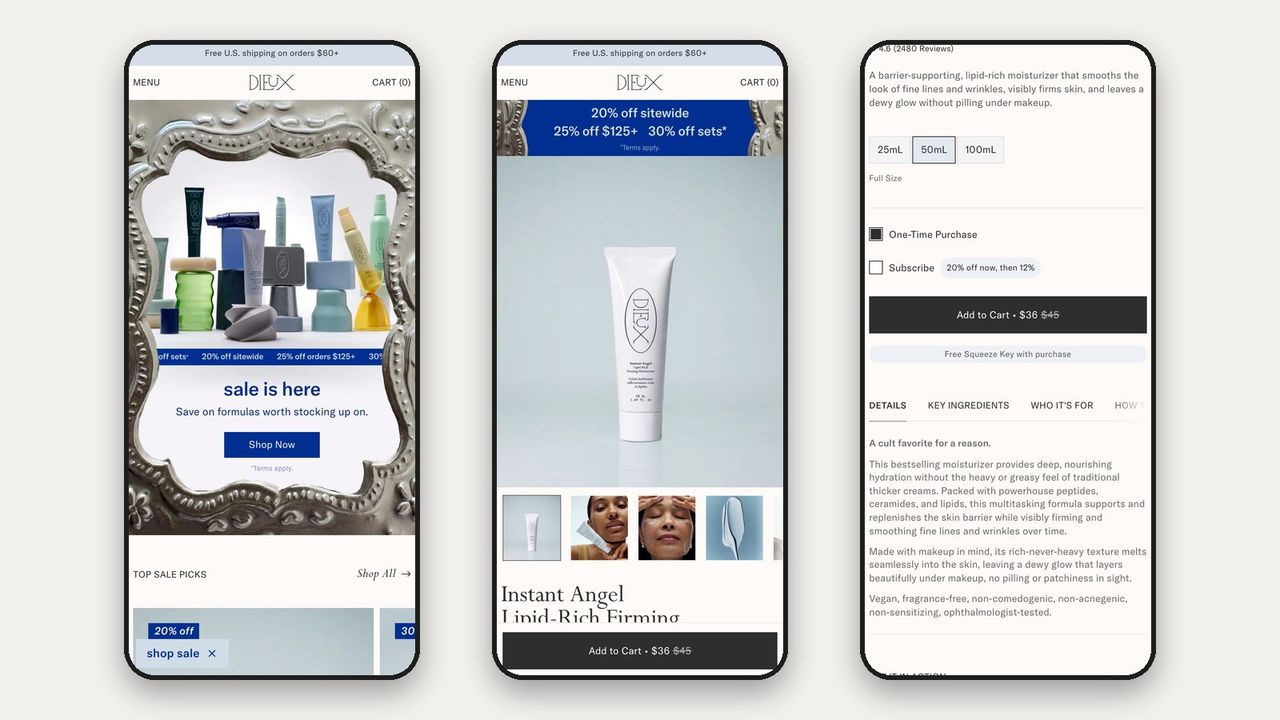
Dieux(opens in a new tab) started with eye masks and now sells a full skincare range. The shop menu is organised by concern (Fine Lines and Wrinkles, Dullness and Dark Spots, Redness and Sensitivity, Dryness and Dehydration, Dark Circles and Puffiness, Pores and Blemishes), and a Learn menu groups the blog, the FAQ and a Sunscreen Decoder.
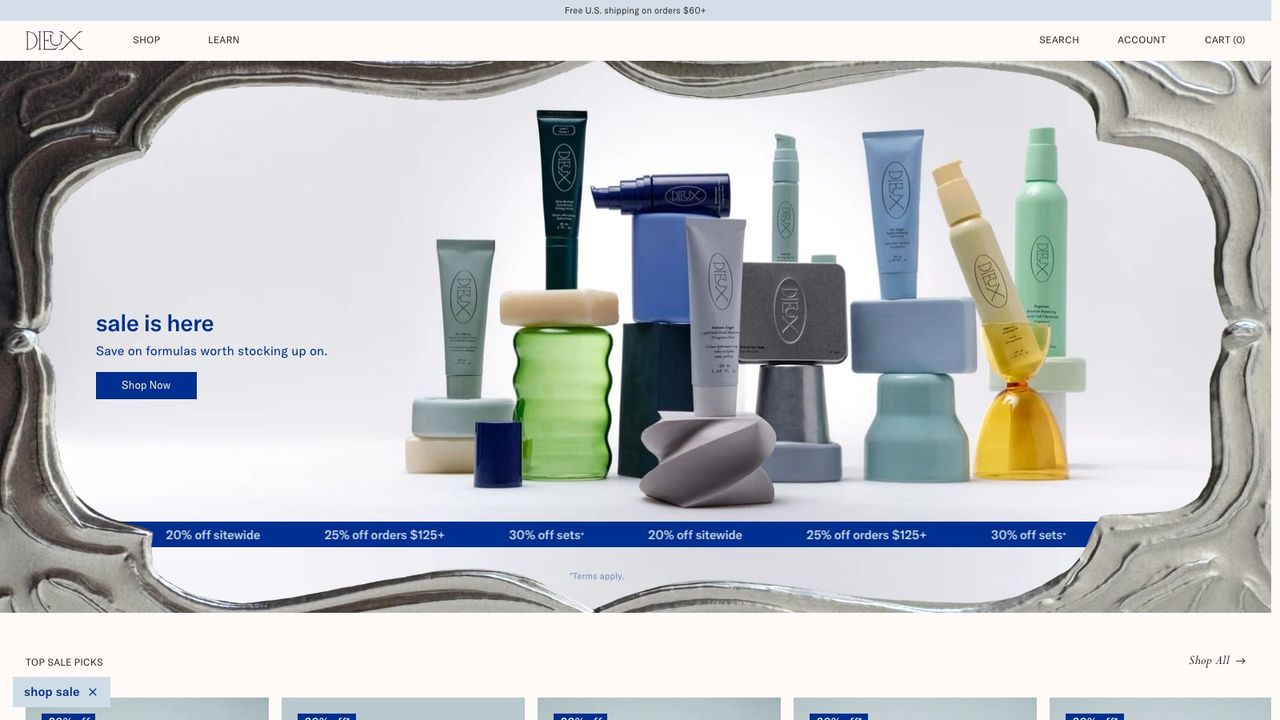
The cart drawer is the best part. It asks the customer to choose 4 free samples (with a counter, "0 of 4 selected") and shows a "Frequently Bought With" block. Samples are a strong tool in skincare because they lower the risk of trying a new product, and here they are part of the checkout flow, not a separate page.
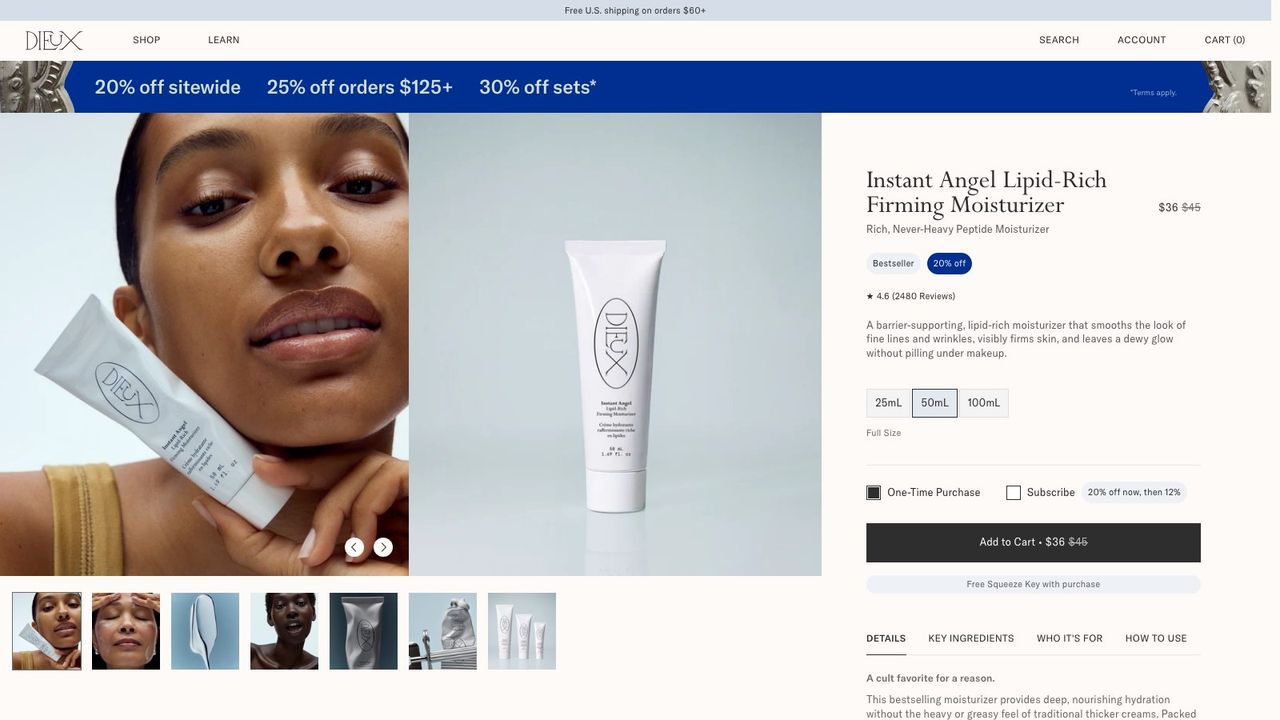
What to borrow: a free sample picker in the cart drawer, with a visible counter, to raise the order value without a discount code.
7. Saie (US)
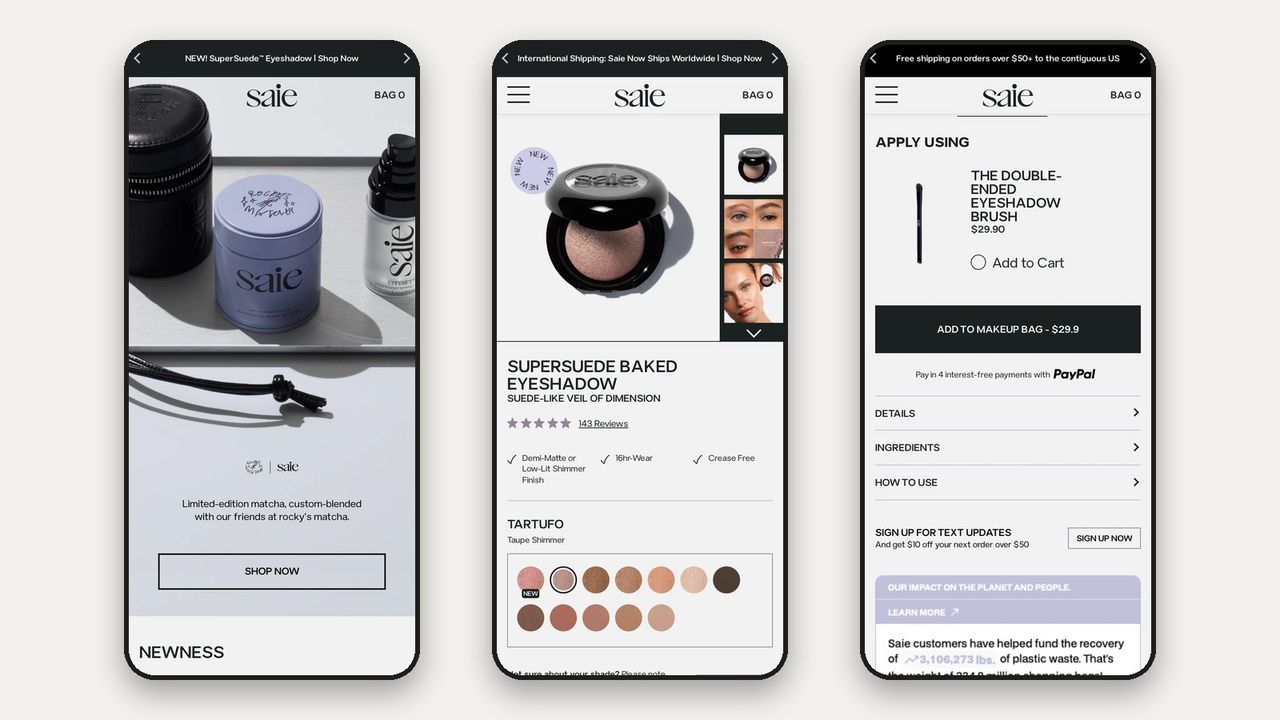
Saie(opens in a new tab) sells clean makeup and teaches while it does it. The main menu mixes shopping entries (New, Best Sellers, The Vanity Case, Travel Size, Sets) with a Shade Finder, a Rewards page and The Makeup Class, a learning hub. Under About, the standards, recycling programme and impact report are one click away.
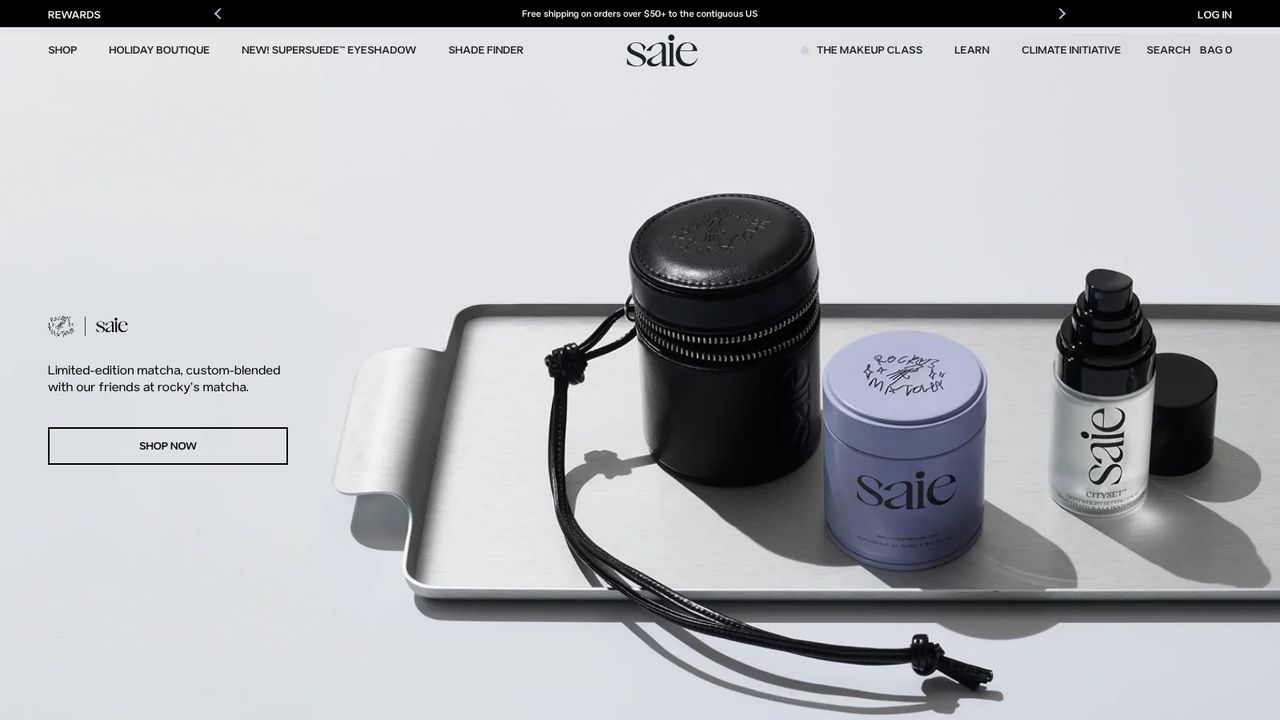
The store also loads a video app, which fits a brand where application matters: seeing a product used often answers the question before the customer asks it. The result is a store that sells and explains at the same level.
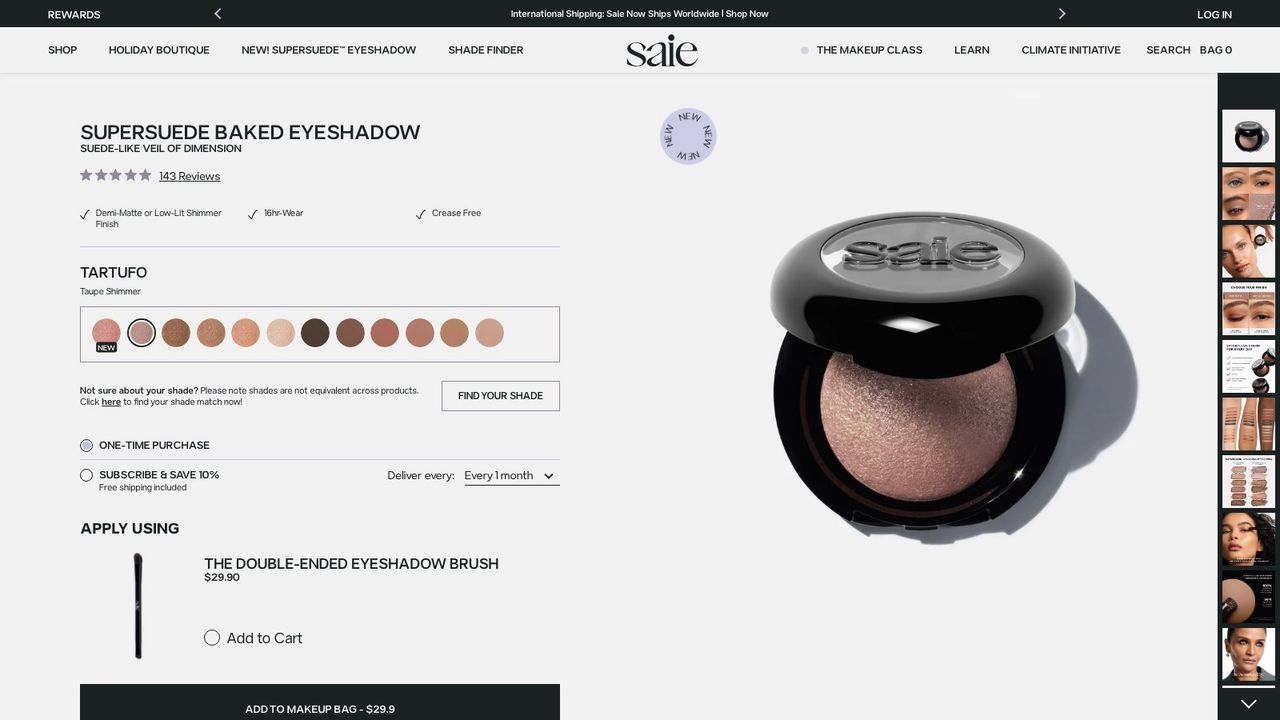
What to borrow: put a learning hub in the main menu next to the shop entries, so tutorials and routines get as much space as the products.
8. Kosas (US)
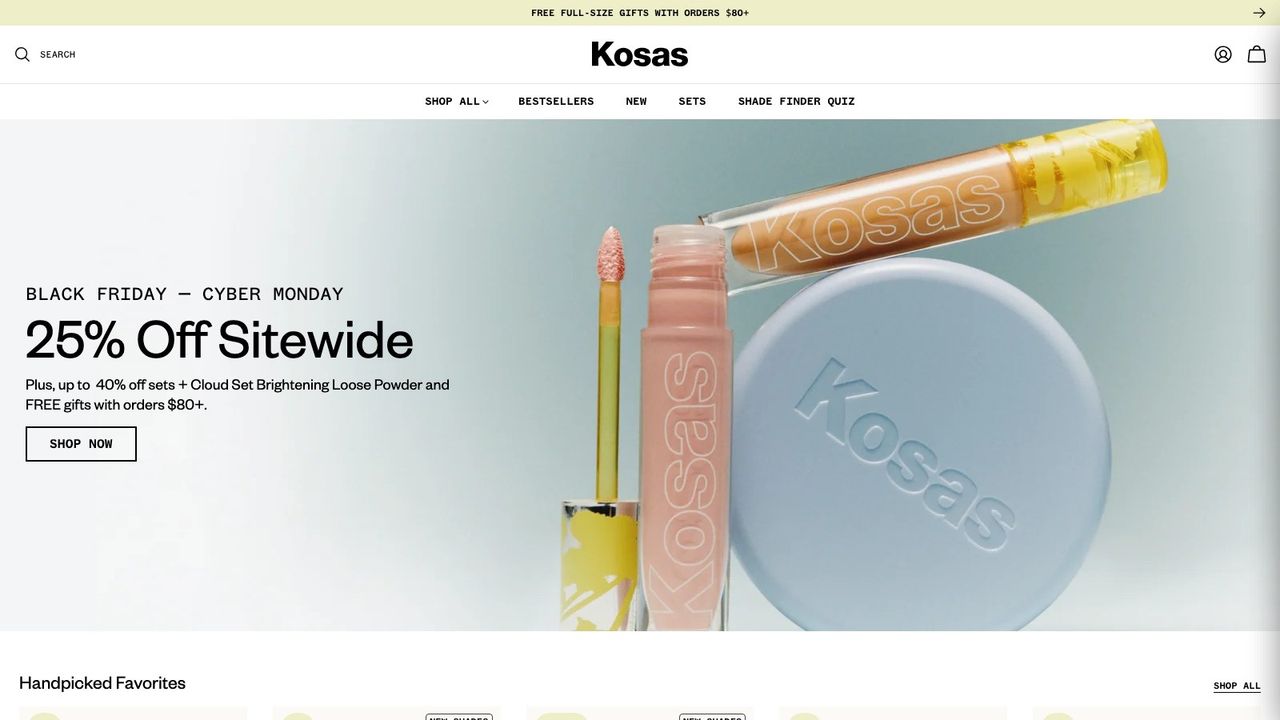
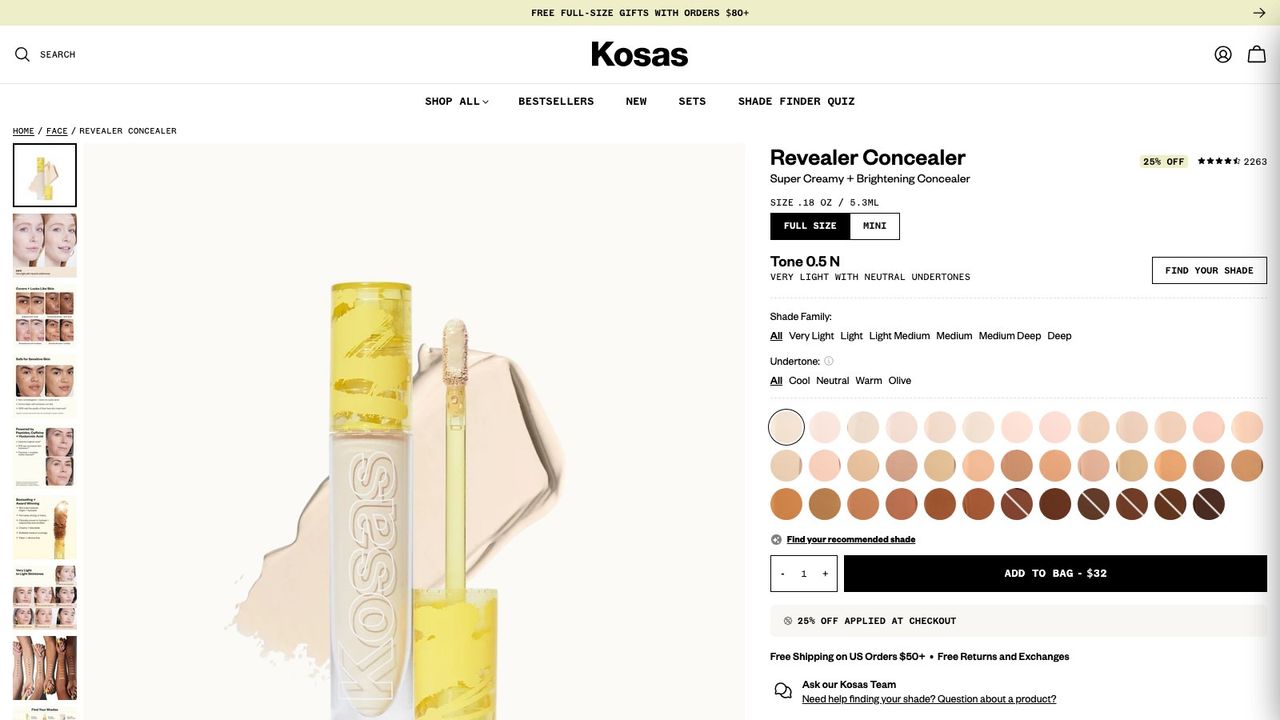
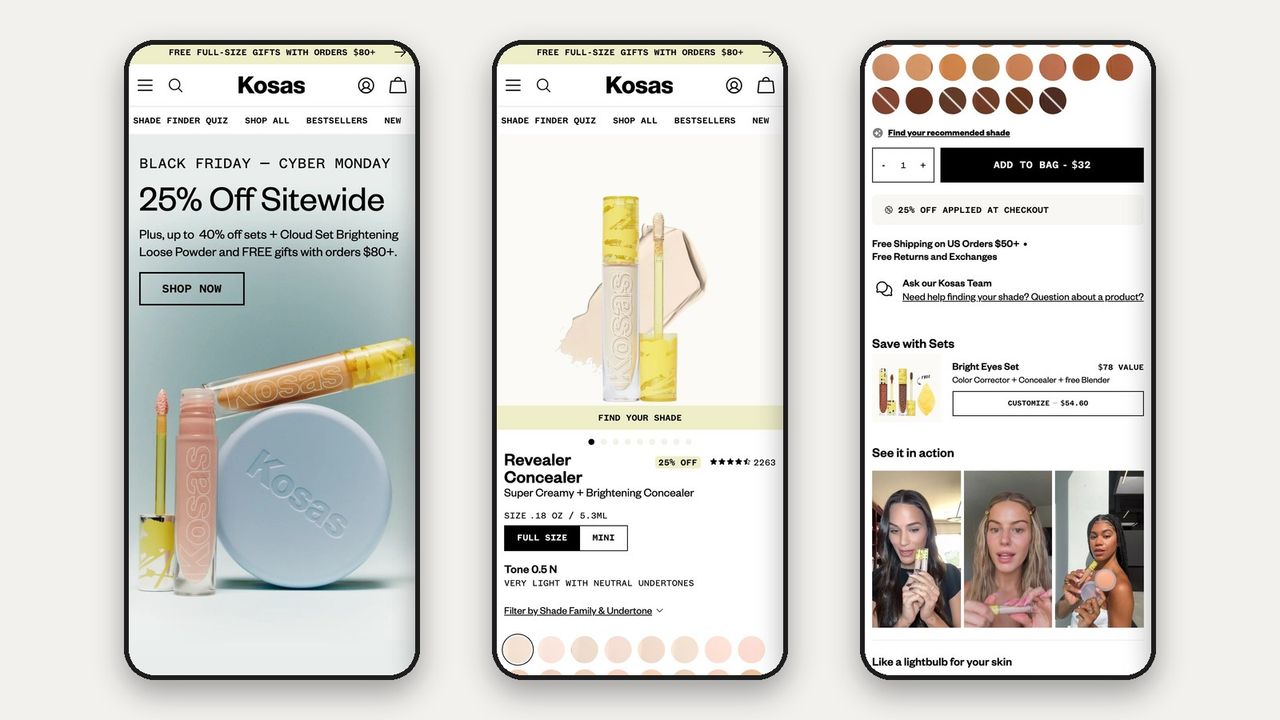
Kosas(opens in a new tab) positions its makeup as skincare ("100% Makeup. 100% Skincare.") and the store backs that up with a Shade Finder Quiz as a top-level menu entry. With 38 shades on a single concealer, the quiz is not a bonus: it is how a first-time buyer gets to the right product.
The product pages show the depth of the range. The Revealer Concealer has 38 shade variants, and the same product offers a subscription as a selling plan, so repeat buyers can have it delivered on a schedule. Few beauty stores in this list do that, even though makeup and skincare staples are bought again and again.
What to borrow: offer a subscription on the products people reorder, and keep the shade finder one click from every page.
9. Jones Road (US)
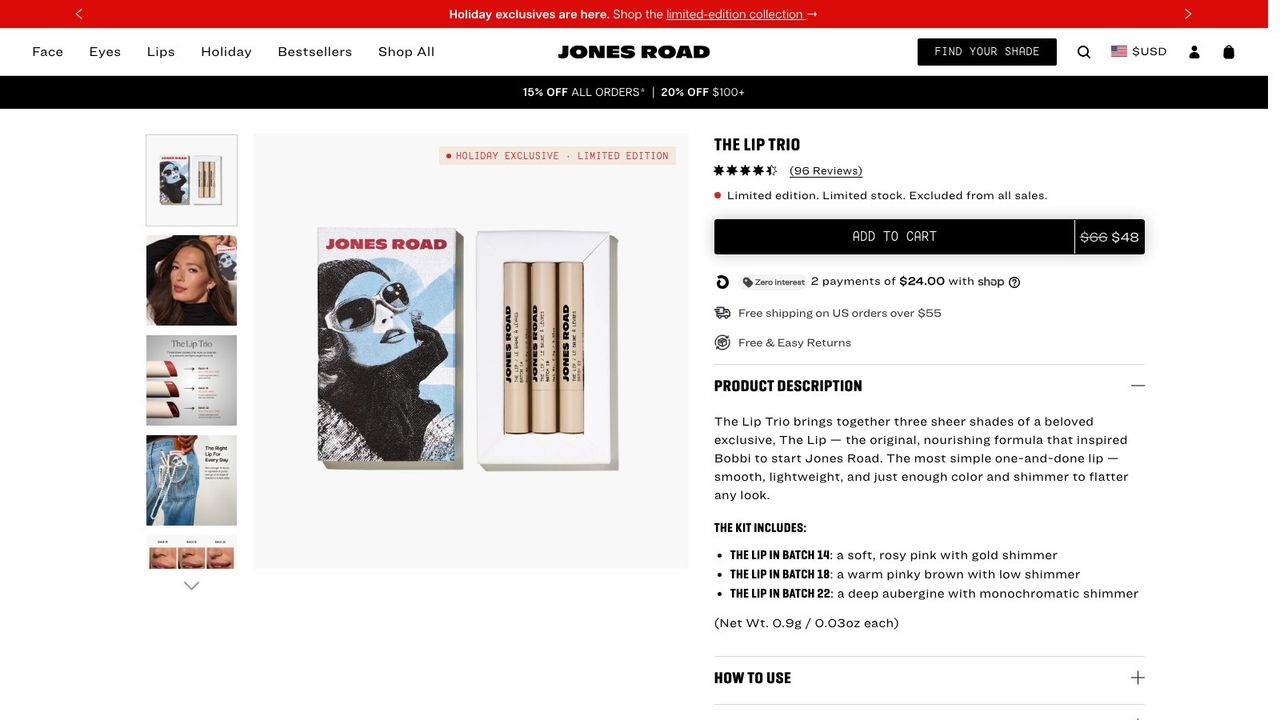
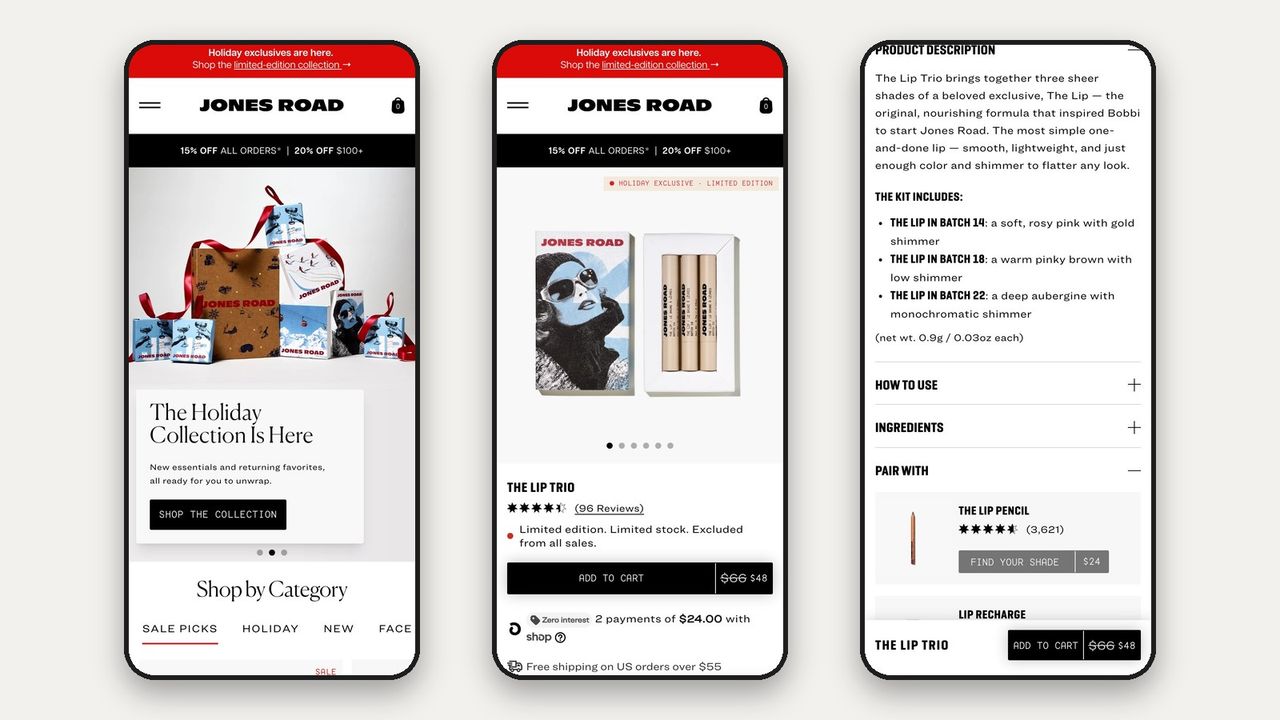
Jones Road(opens in a new tab) is one of the best-looking stores in this list. Headlines are written in lowercase, in an editorial voice, and the layout stays calm even with a lot of products. The top bar shows a tiered discount ("15% OFF ALL ORDERS" stepping up to 20%), so the offer is visible on every page without a pop-up.
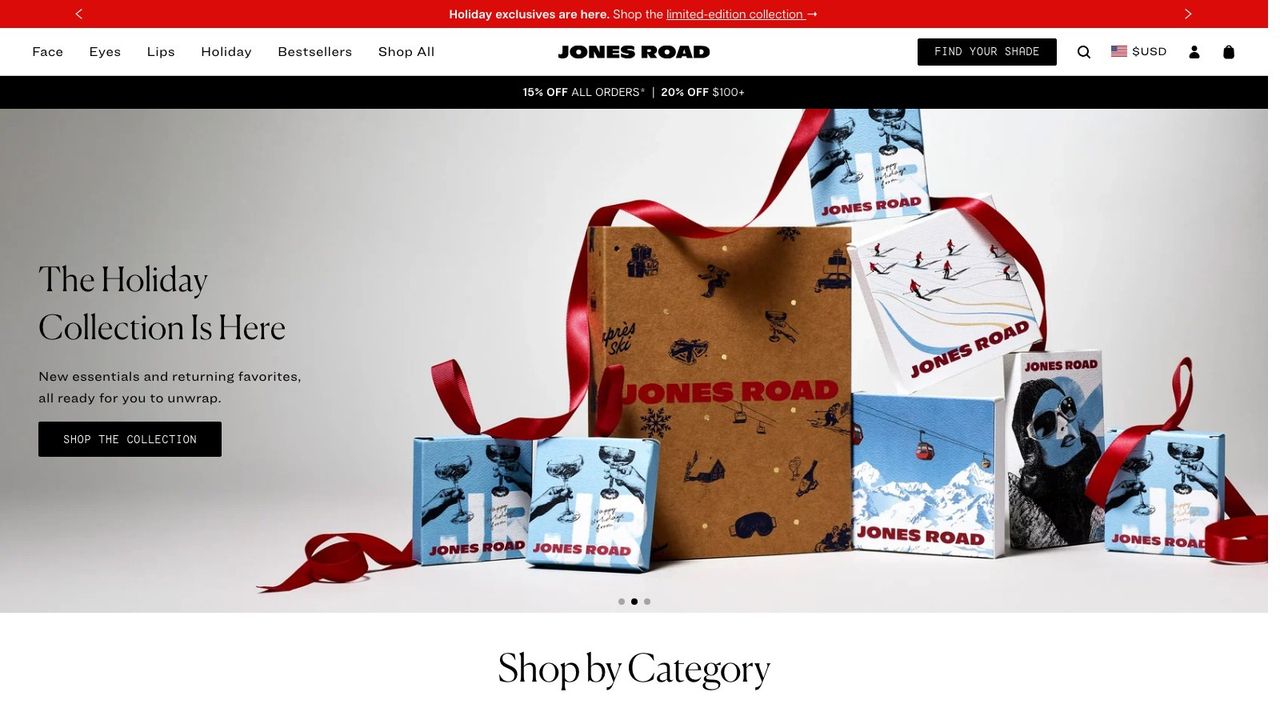
The menu starts with Bestsellers, New and Find Your Shade, then the shop by area (Face, Lips, Eyes, Skin, Body). A Kits entry lists named bundles: Travel Kit, 101 Set, Complexion Set, Nail Polish Kit and Bobbi Kit. The cart styles also include cross-sells and samples, so the offer continues into checkout.
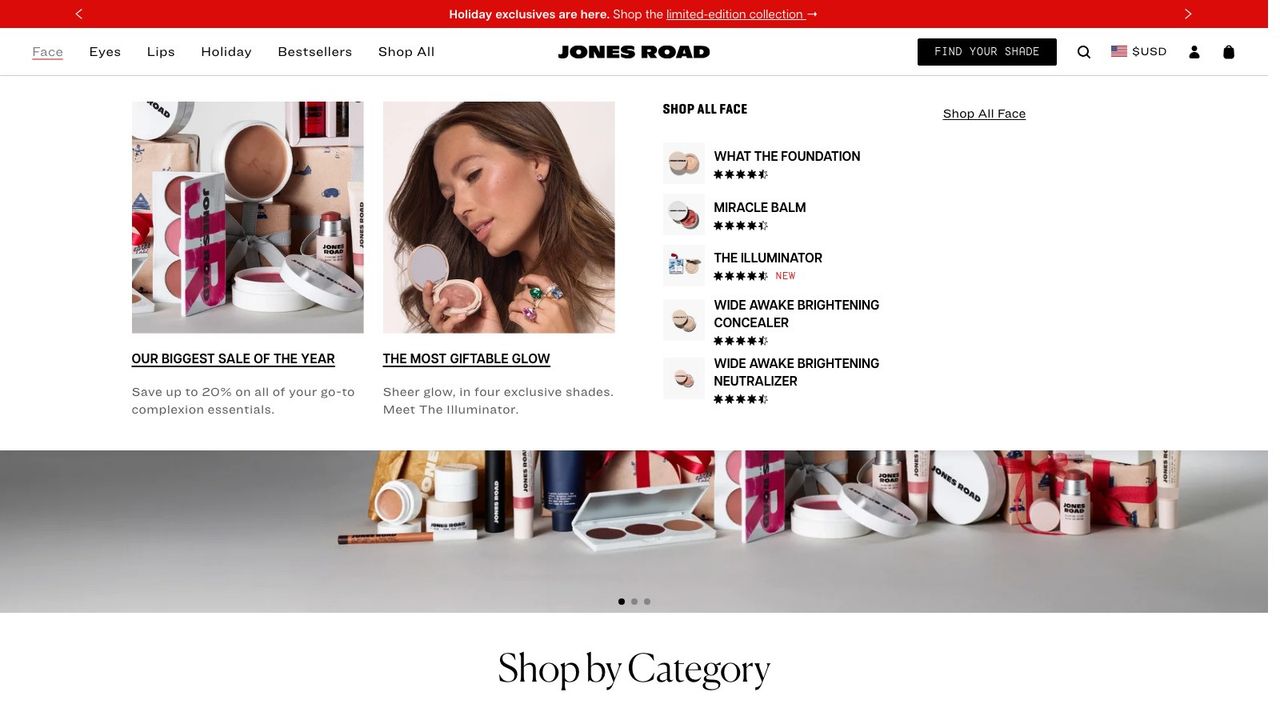
What to borrow: a tiered discount in the top bar, and a Kits menu that names each kit with what it is for (travel, complexion, nails).
10. Rhode (US)
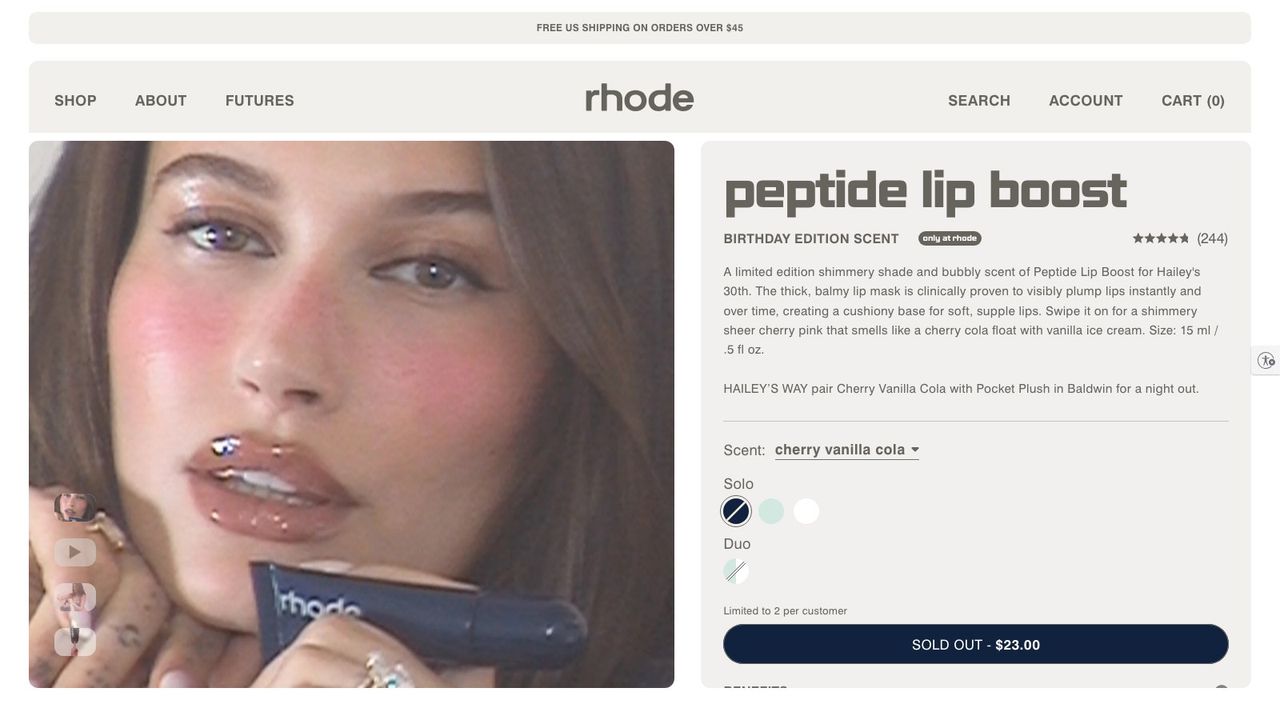
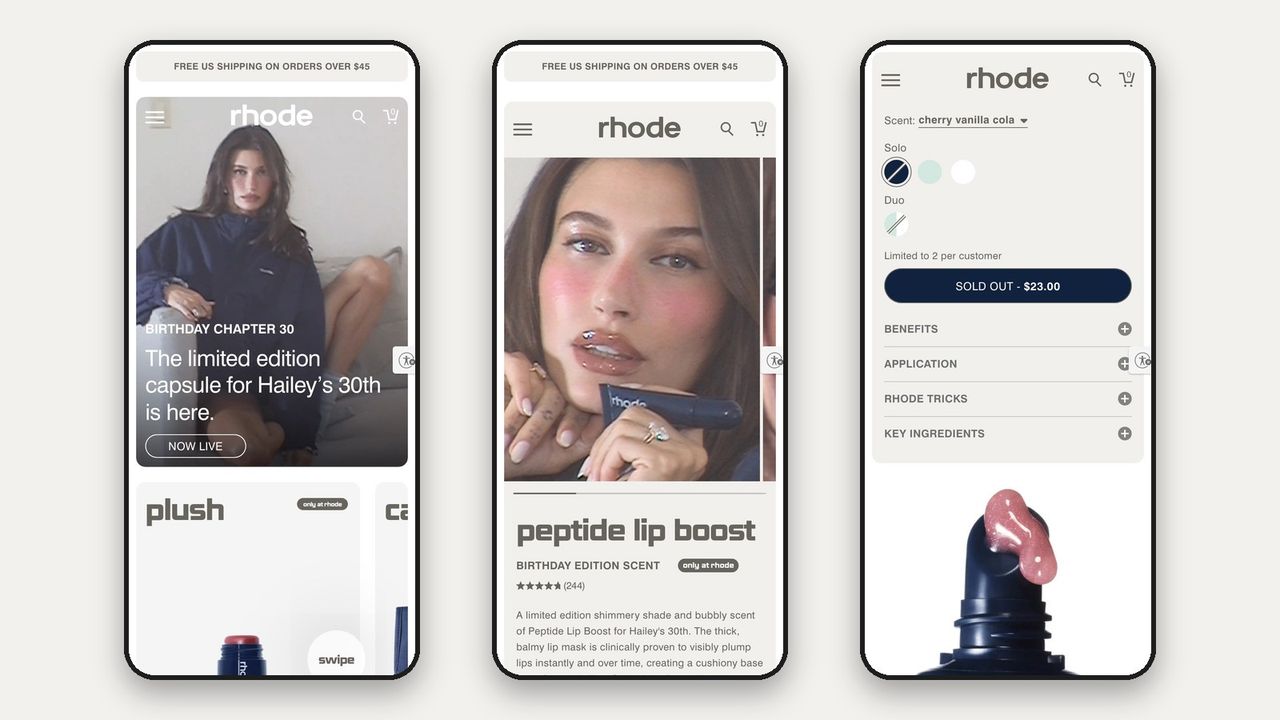
Rhode(opens in a new tab) keeps the navigation to three words: Shop, About and Futures. Inside Shop, the choices are short too: Featured, Skin, Lip and Cheek, Sets, On The Go and Award Winners. There is very little to read before getting to a product.
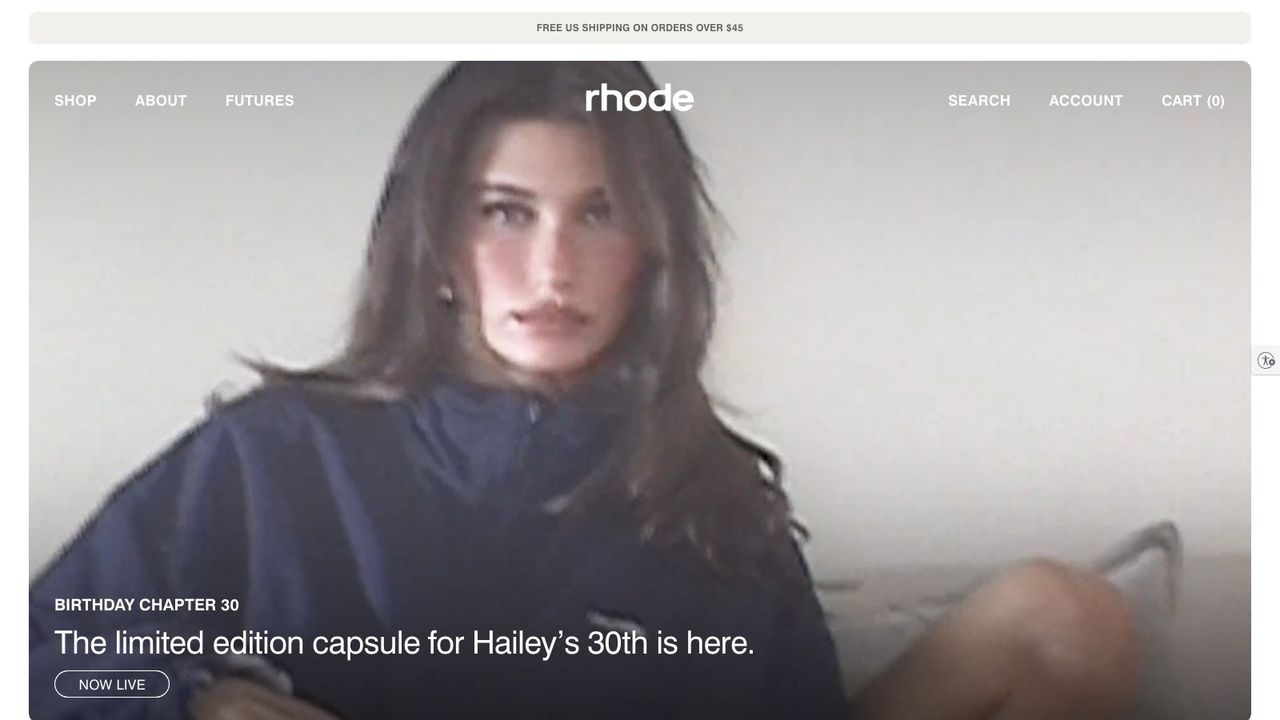
The home page works like a campaign page. When we looked, it was built around one launch (a "Birthday Chapter 30" capsule) with an early-access login, and merchandise such as a pocket plush and a phone case sat next to the skincare. Extra pages for Futures, Impact, a vlog, events and store locations show that the brand sells a world, not only products.
What to borrow: keep the main menu to a few words and let the home page change with each launch.
11. Topicals (US)
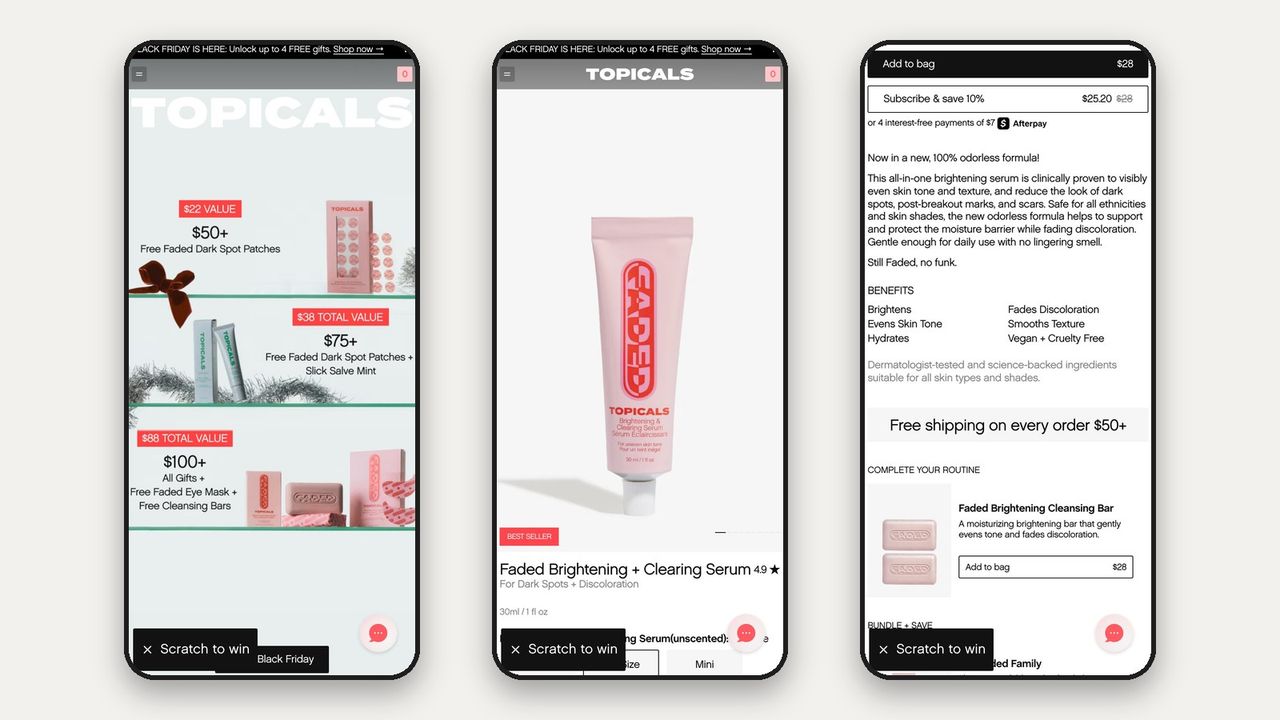
Topicals(opens in a new tab) makes skincare for flare-ups, and the tone is playful on purpose: "You make skin look good." and "Why so serious? Let's make flare-ups fun instead." Three colorways of the same product sit together as one collection, which makes the range easy to scan.
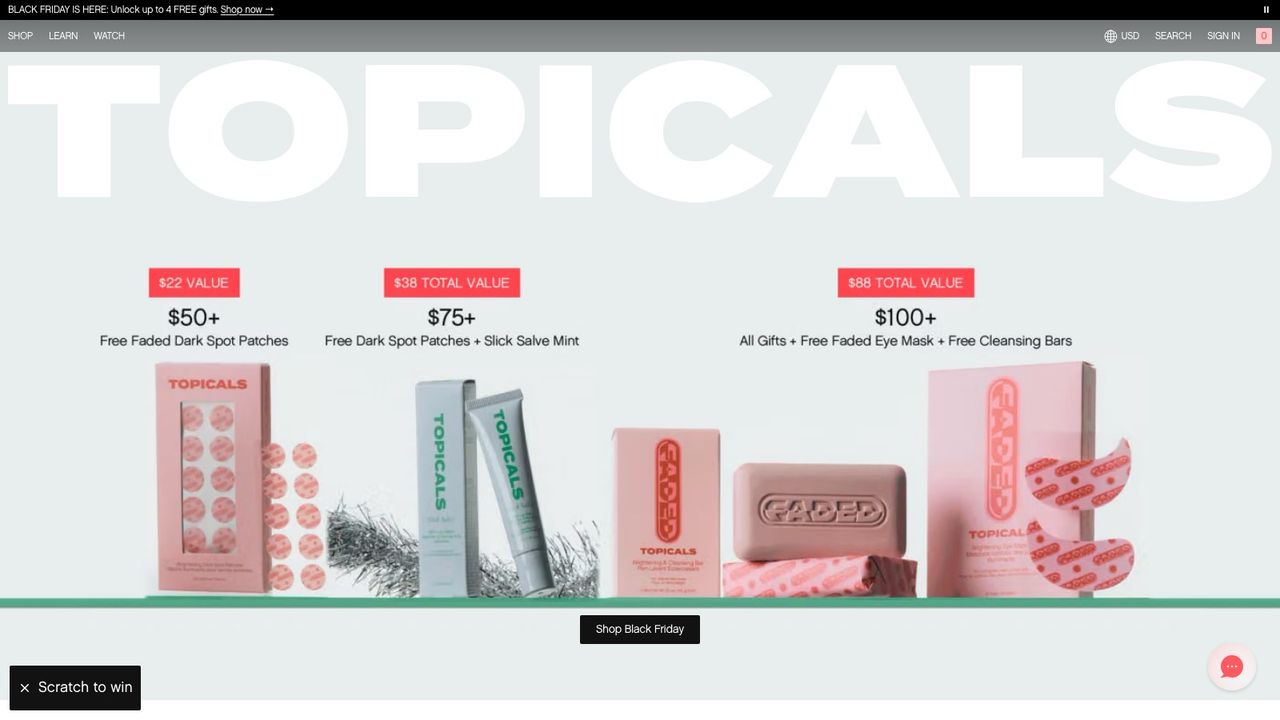
Topicals is the one store of the list that is not built on a theme. It is headless: the storefront is a custom app on Shopify's Hydrogen framework, hosted on Oxygen, with Shopify still running the products, cart and checkout. That gives the team full freedom on design, but it also means this exact layout cannot be installed from the Theme Store. There are dedicated pages for subscription and rewards.
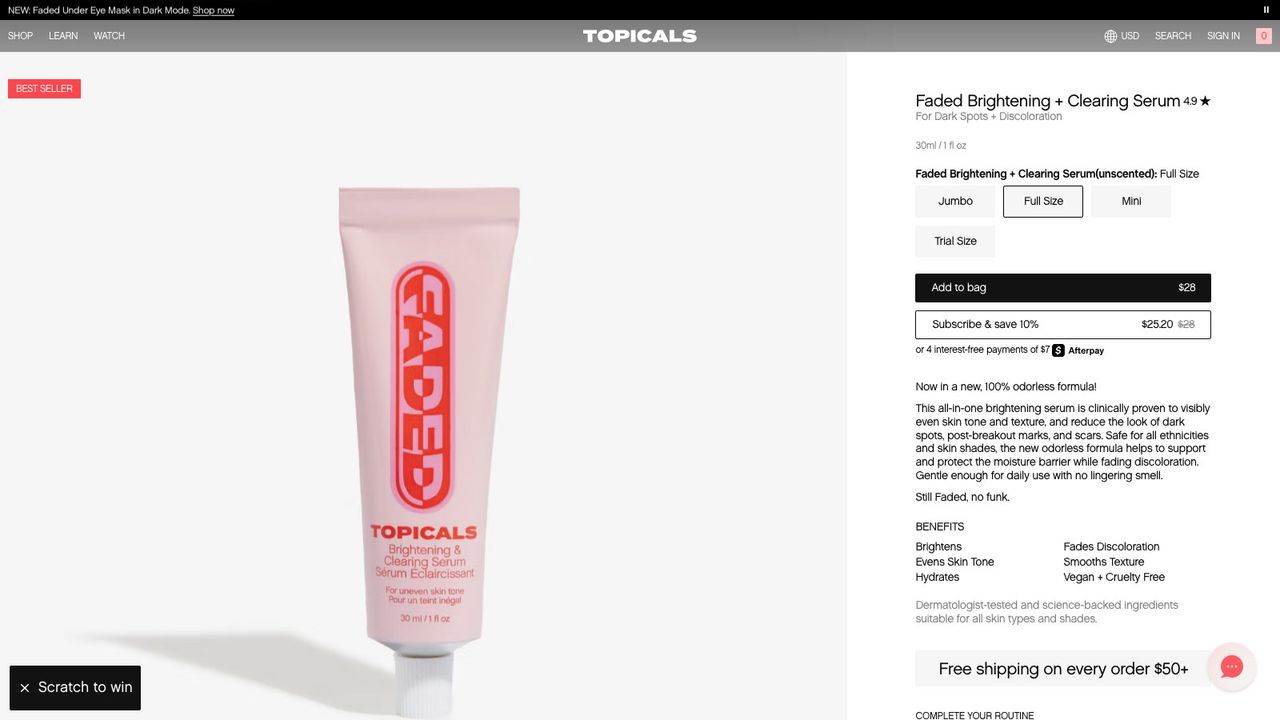
What to borrow: write product and section copy in your brand's voice, and give subscription and rewards their own page. You can do both on a normal theme.
12. Glossier (US)
Glossier(opens in a new tab) built its name on skincare and simple makeup, and the store now puts fragrance first: the menu starts with Fragrance and a Glossier You entry, with the scents Doux, Soie, Rêve and Fleur listed one by one. After it come Makeup, Skincare, Balms, Body, Save with Sets and Stores. When we looked, the home page was a sale page with a short row of bestsellers: Glossier You, Boy Brow, Lash Slick, Balm Dotcom and Cloud Paint.
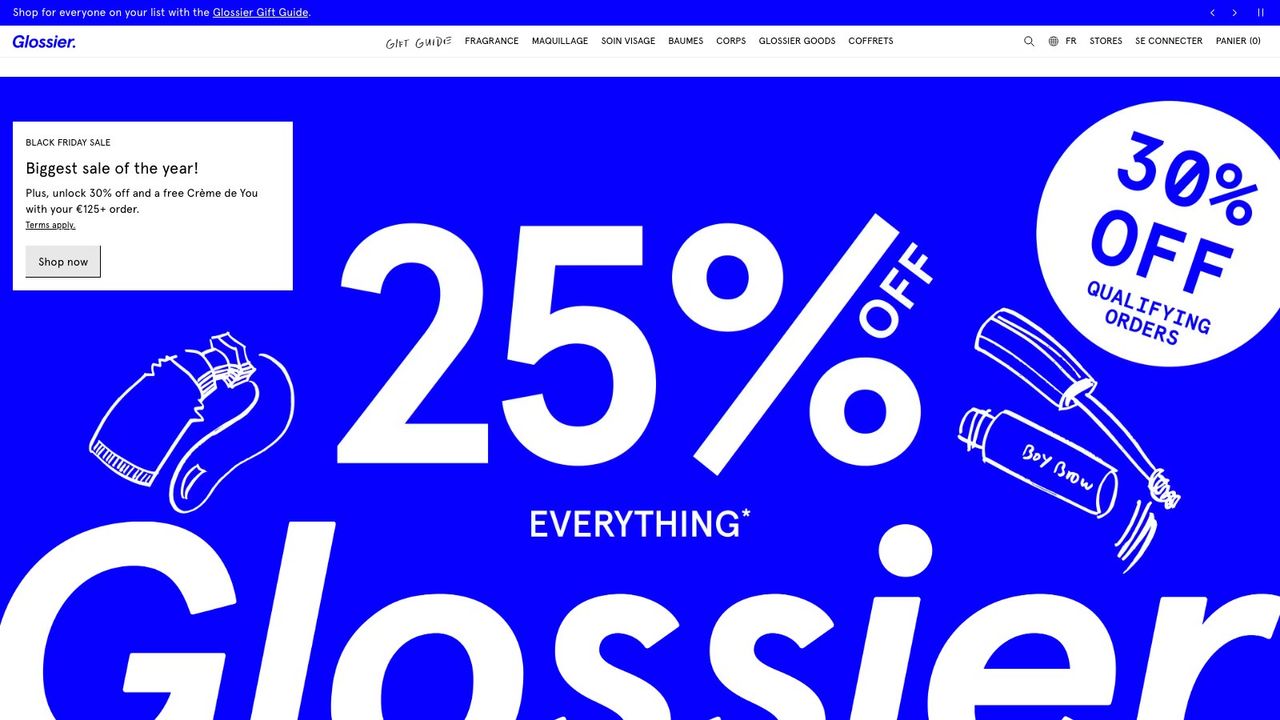
Glossier runs a custom theme. Products such as Glossier You and Boy Brow carry subscription options built with selling plans (a delivery every 1 to 5 months, with a 25% discount when we looked), and Boy Brow has 7 shades. The cart is called the bag and shows a "Buy more + save" tiered offer, plus a free gift on orders of $100 or more at the time. The theme code also includes a shade finder quiz.
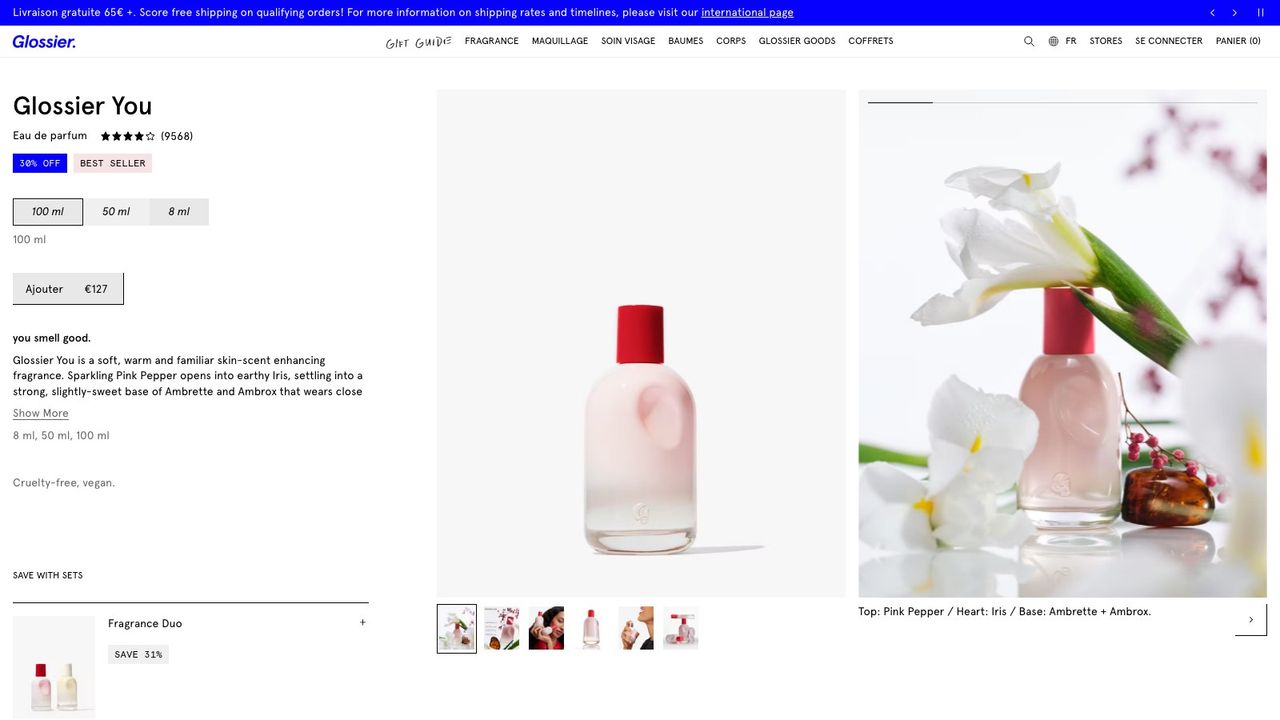
What to borrow: give your hero product its own menu entry with one line per variant, and show the tiered savings inside the cart.
13. Milk Makeup (US)
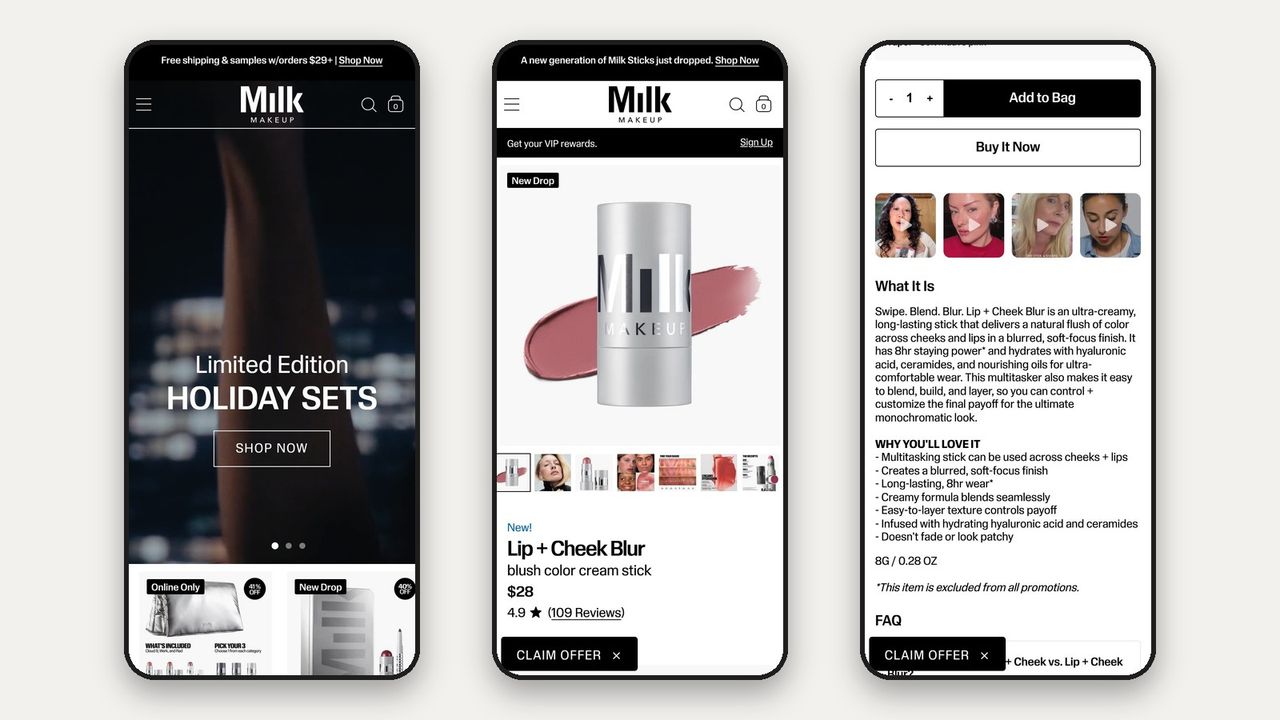
Milk Makeup(opens in a new tab)'s menu is built around product types (Eye, Face, Lip, Skincare and Milk Sticks) with Sets and Best Sellers next to them. Under it sit shortcuts such as the Hydro Grip Collection, Throwback Collection, Online Exclusives, Travel Friendly and Gifts Under $50, so a shopper can enter by collection, by size or by budget.
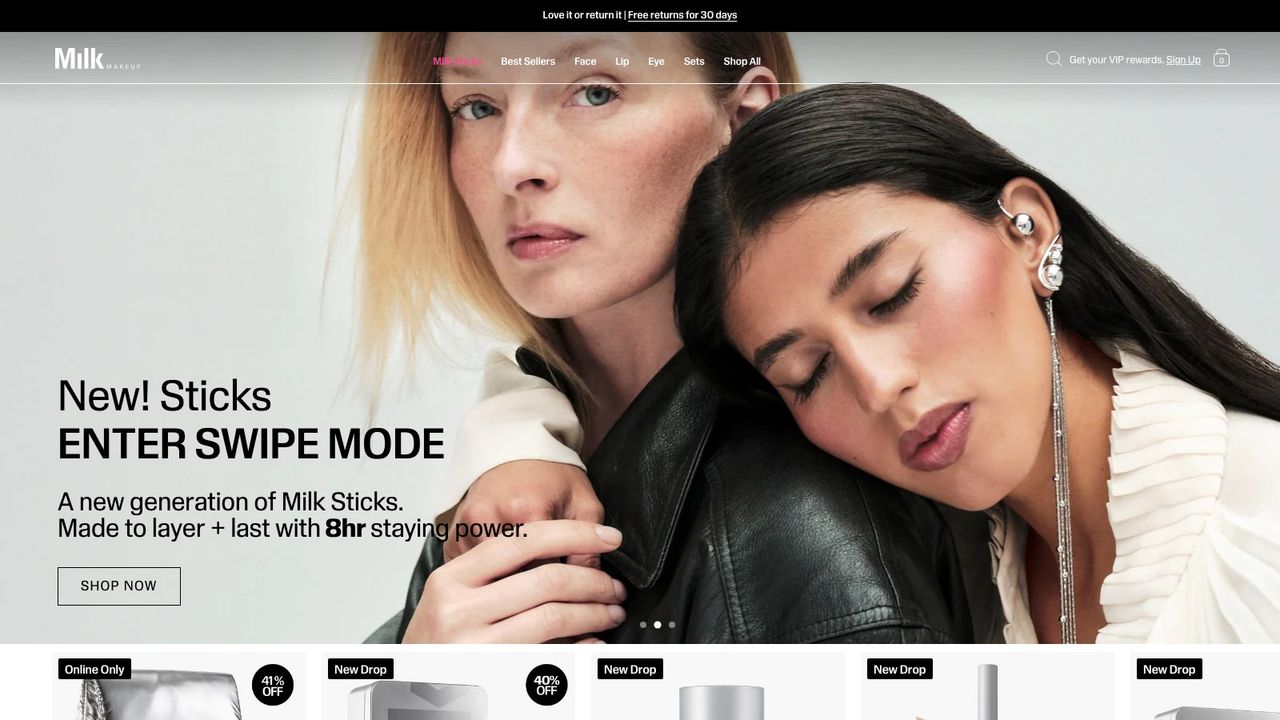
The help to choose sits inside the product content: a skin tint shade finder, a concealer shade finder and a primer quiz are linked from the product pages, and shades are real variants (Lip + Cheek Blur has 8). In the cart, a bar shows how far you are from free shipping and samples ($29 when we looked), and a build-your-own mini primer and setting spray duo comes with a 35% discount. The store runs a custom theme.
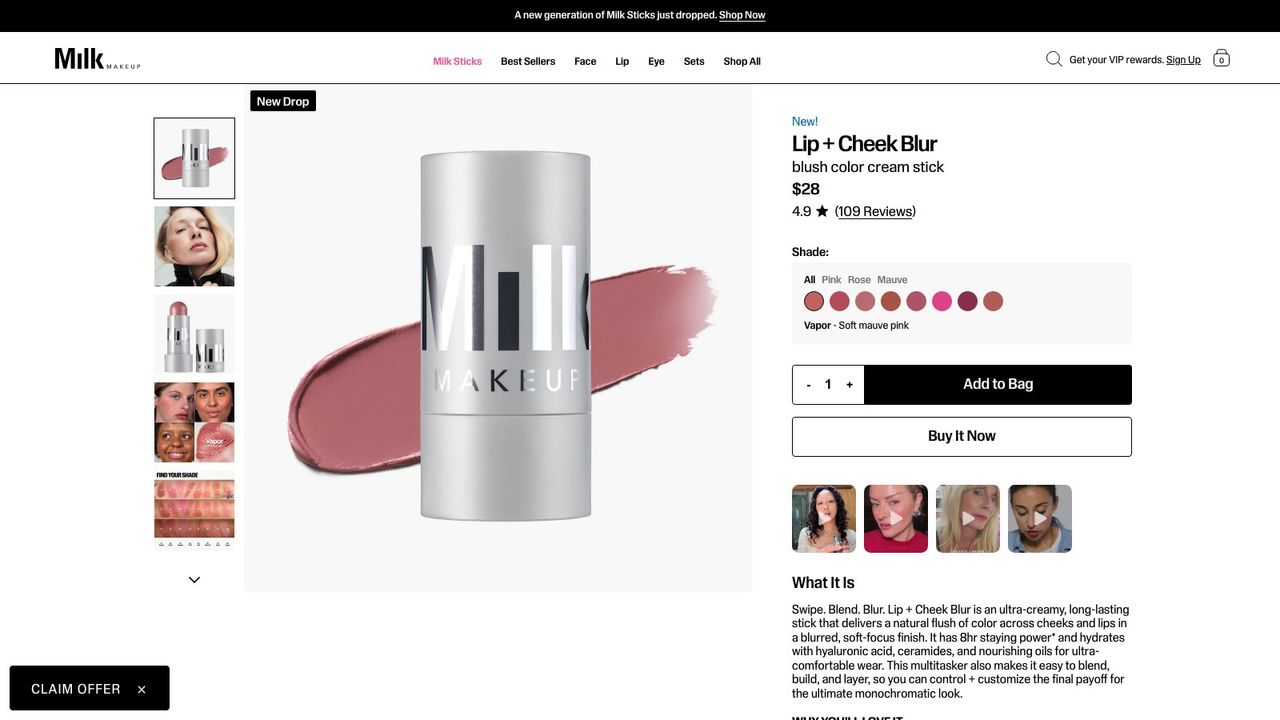
What to borrow: link the shade finder on the product page, where the question is asked, and use a cart bar for free shipping plus samples.
14. OUAI (US)
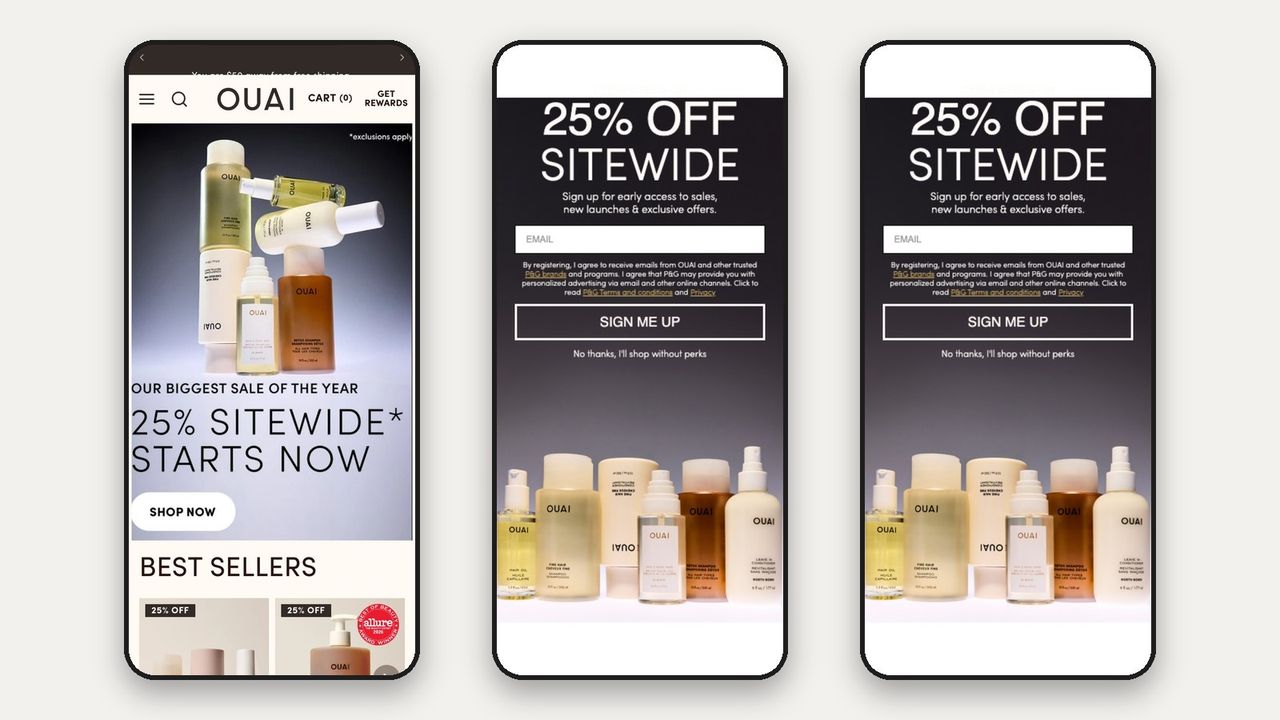
OUAI(opens in a new tab) is a haircare brand that grew into body care and fragrance. Its menu is organised by what you buy and how: Shop All, New, Best Sellers, Kits and Gift Shop, then hair by product (Shampoo, Conditioner, Hair Treatment) and by format (Jumbo, Refill, Travel). Fragrance has a Shop by Scent entry named after places such as St. Barts, Melrose Place, Santorini and Ibiza, which helps choose a scent without smelling it.
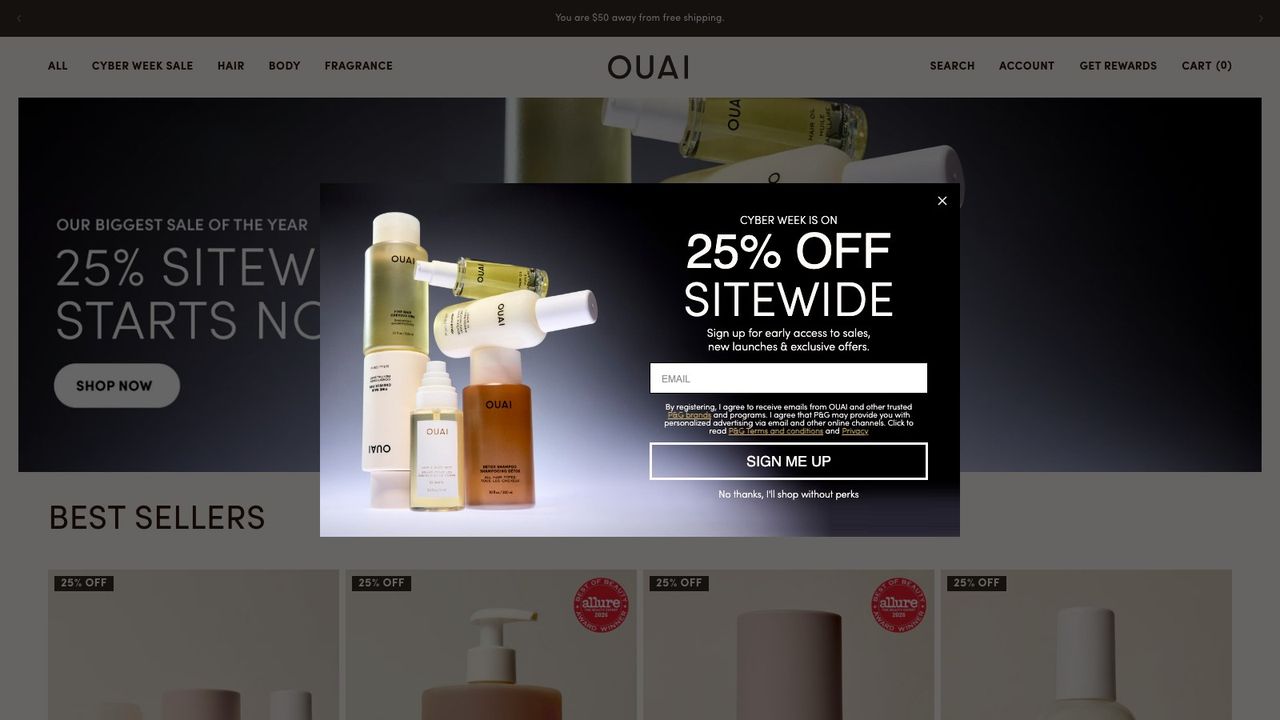
Subscriptions exist on products: Bond Repair Balm offers a delivery every 30, 60 or 90 days. The cart shows a free shipping bar ($50 when we looked), and a Club OUAI rewards page is linked from the footer. The store runs a custom theme named OUAI.
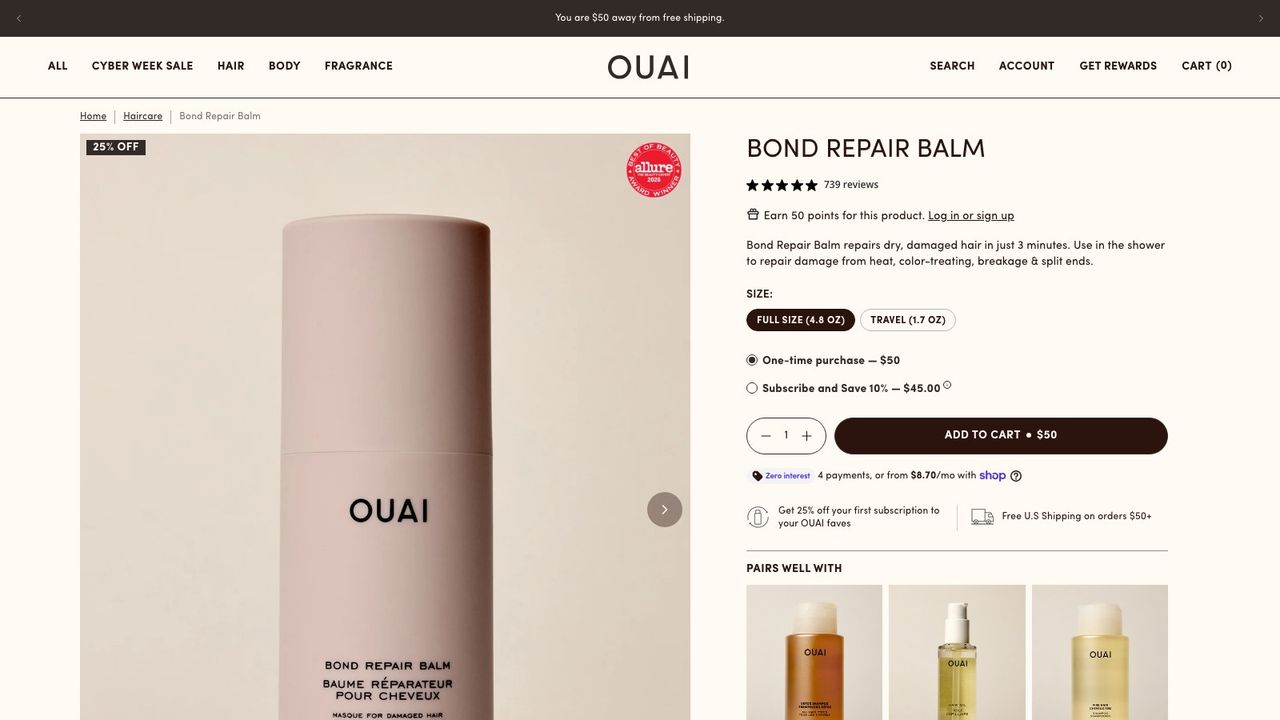
What to borrow: list sizes and refills (Jumbo, Refill, Travel) as menu entries, and name scents after places so they tell a story.
15. Westman Atelier (US)
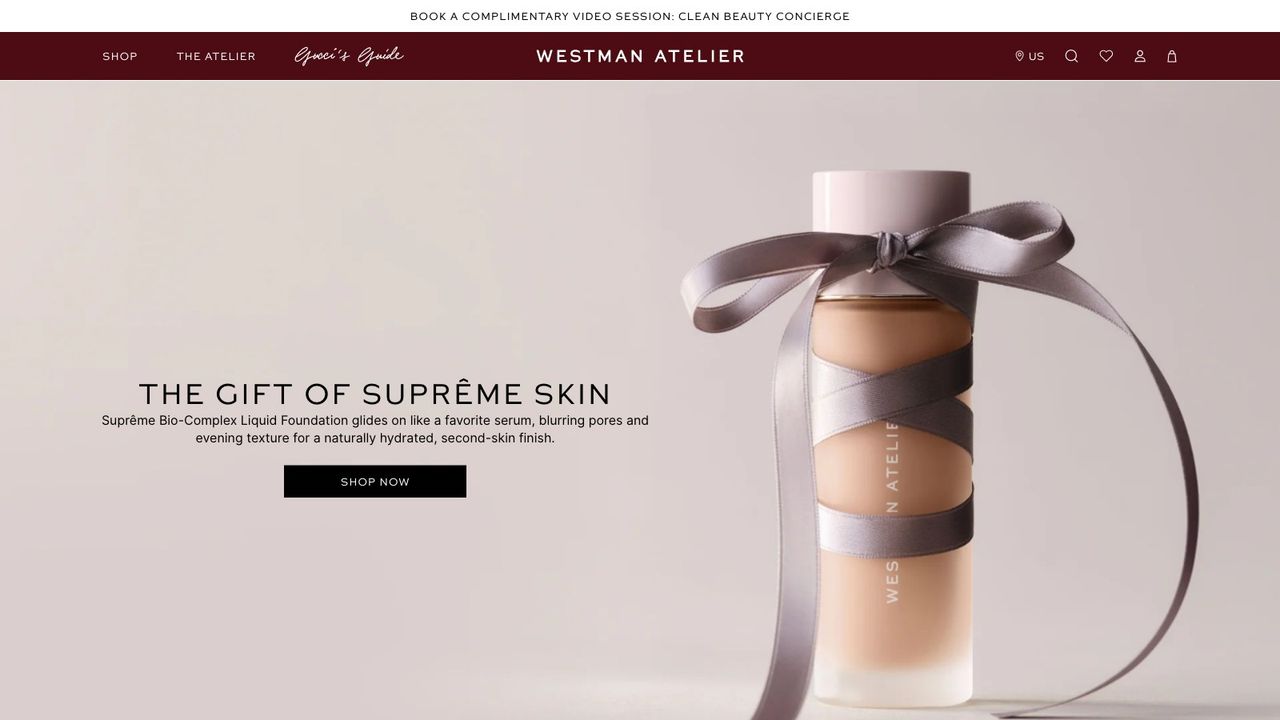
Westman Atelier(opens in a new tab) sells luxury clean makeup, and the store feels closer to a boutique than a catalogue. The Shop menu splits makeup into Complexion, Cheek, Lip and Eye, then adds Skincare, Brushes, Custom sets and Gift Sets, with a Find Your Shade tile inside it. A banner above the menu invites shoppers to book a free video session with the Clean Beauty Concierge.
Each shade of a product has its own product page (the Baby Cheeks Blush Stick, for example), and the cart drawer upsells other products with a Select Shade button, so the shade is chosen without leaving the cart. The cart also offers a picker for 2 samples. Subscribe & Save gives 10% off a delivery every 1, 2 or 3 months on products like the blush stick, and the foundations are tagged for a shade matching quiz. The store runs a custom theme.
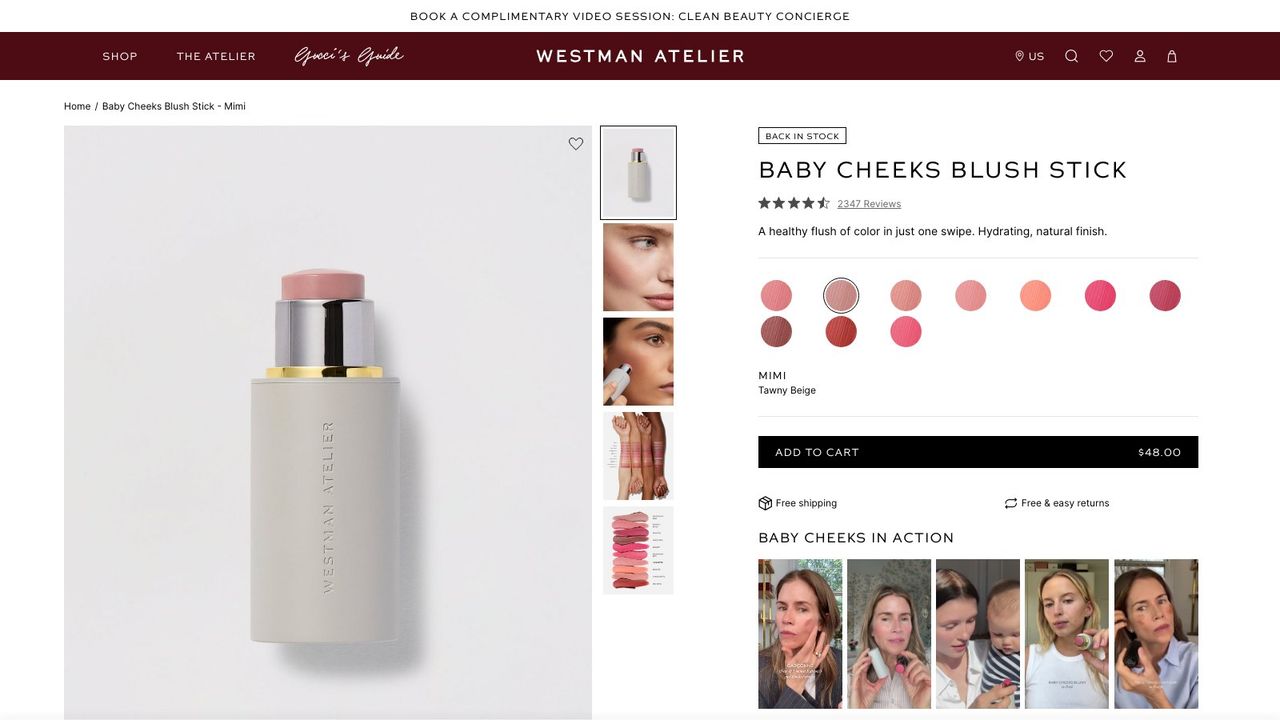
What to borrow: let shoppers pick a shade inside the cart upsell, offer samples, and add a human option such as a free video consultation.
What the best beauty Shopify stores have in common
A shade finder in the main menu. Rare Beauty, Merit, Saie, Kosas, Jones Road and Westman Atelier all link their shade finder or quiz from the navigation, and Milk Makeup links its own from the product pages, because choosing the wrong shade is the main reason for hesitation in makeup.
Navigation by concern. Tower 28 and Dieux organise skincare by problem (eczema, redness, dark circles) instead of product type, which matches how people search.
Sets and kits one click away. Most of the stores put sets, kits or gift entries in the menu, and Gisou, Fenty, Jones Road, Glossier, OUAI and Westman Atelier name them directly.
Free gifts and samples. Merit offers a free bag with the first order, Dieux a sample picker in the cart, Westman Atelier a picker for 2 samples, Milk Makeup a free shipping and samples bar, and Jones Road and Glossier a tiered discount bar. All of them raise the order value without a pop-up.
Learning content in the menu. Gisou has a Hair Hub, Saie a Makeup Class, and Dieux a Learn menu with a Sunscreen Decoder.
A cause or brand page. Rare Beauty has Rare Impact, Saie an impact report, Rhode its Futures and Impact pages, and Topicals a mission built into the tone of the store.
Subscriptions sit on repeat-purchase products. Kosas, Glossier, OUAI and Westman Atelier offer them on selected products (a concealer, a fragrance, a bond repair balm, a blush stick), and Topicals has a subscription page. We did not see one on the other stores.
No store runs a Theme Store theme. All 15 are custom builds, and one is headless. That does not mean you need a custom build: most of the features above are sections and blocks that a modern theme can already give you.
How to build a beauty store like these with Cama or Pops
As said at the start, we develop both themes below, so take this section with that in mind. If you have a small budget and a focused catalogue, Cama is a minimal, on-budget theme at $240 one-time, and it includes a Vanity preset made for beauty and skincare. If you have a bigger catalogue, more products per collection and more marketing needs, Pops is a bolder theme at $400 one-time with more built-in features, such as a mega menu, a build-a-box section and selling plans for subscriptions.
Here is what we saw in the stores above, and whether each theme covers it. The Pops column was checked in the theme code, and the Cama column comes from the Cama theme page.
Feature seen | Seen on | Cama | Pops |
Shade swatches on product pages | Kosas, Merit | ✅ Yes | ✅ Yes |
Mega menu with named products and sets | Gisou, Fenty Beauty | ❌ No | ✅ Yes |
Cart drawer | Dieux, Jones Road | ✅ Yes | ✅ Yes, with a free shipping bar and an upsell slider |
Subscriptions | Kosas, Glossier, OUAI, Westman Atelier, Topicals | ✅ Yes, through a subscription app block | ✅ Yes, selling plans built in |
Shade finder quiz | Rare Beauty, Merit, Saie, Kosas, Jones Road, Milk Makeup, Westman Atelier | ❌ No, use a quiz app | ❌ No, use a quiz app |
Kit or box builder | Fenty Beauty, Jones Road, Milk Makeup | ❌ No, use Snap Bundle | ✅ Yes, build-a-box section |
Two things stay outside the theme on both options: the shade finder quiz, which needs a quiz app, and kits or routine bundles with quantity discounts. For the second one, we also develop Snap Bundle(opens in a new tab), a Shopify app for bundles and volume discounts that works with any theme, so a "Complexion Set" or a "buy 3, save 15%" offer does not depend on the theme you pick.
See the Pops theme and the Cama theme for presets and demos. If you sell other products, we also reviewed matcha Shopify store examples and kombucha Shopify store examples.
FAQ
What is the best Shopify theme for a beauty store?
It depends on budget and catalogue size. For a small budget and a focused range, Cama ($240) has a Vanity preset made for beauty and skincare. For a bigger catalogue with a mega menu, subscriptions and kits, Pops ($400) has more built in. We develop both, so compare them on your own products.
Do the best beauty brands use a theme from the Shopify Theme Store?
None of the 15 we looked at. All use custom themes, and Topicals is headless on Hydrogen. The features that make them work (shade finder links, concern menus, sets, samples, subscriptions) are sections, menus and apps that a normal theme can also give you.
How do I add a shade finder to my Shopify store?
Use a quiz or shade finder app, then link it from your main menu and your home page, like Rare Beauty, Saie and Kosas do. Neither Cama nor Pops includes a quiz. Both include colour swatches for the shade selection on product pages.
Can I sell beauty subscriptions on Shopify?
Yes, with selling plans from a subscription app. Kosas, Glossier, OUAI and Westman Atelier offer one on selected products, and Topicals has a subscription page. Pops has selling plans built into the product page, and Cama supports a subscription app block.
How can I sell sets and kits in a beauty store?
Create the kit as a bundle product, or use a bundle app such as Snap Bundle for set discounts and quantity breaks on any theme. Pops also has a build-a-box section, where customers choose their own products for the kit.

Keep reading

Product Photos That Convert: Build a High-Converting Product Page Gallery
Product photos decide whether a visit converts. What each slot of your product page gallery should show, when to add text, scale, video, image sizes and a checklist.

Digital Dropshipping: What It Really Is, PLR vs MRR, and How to Start on Shopify
Digital dropshipping explained: PLR vs MRR rights, whether it is legit, what to check before buying a pack, and how to sell digital products on Shopify.

How to Remove “Powered by Shopify” From Your Store: 3 Methods (Horizon, Dawn, Pops)
Remove “Powered by Shopify” from your footer in 2 minutes: a checkbox, theme content or Liquid code. Methods checked on Horizon, Dawn and Pops.